AIBearishArs Technica – AI · Jun 267/10
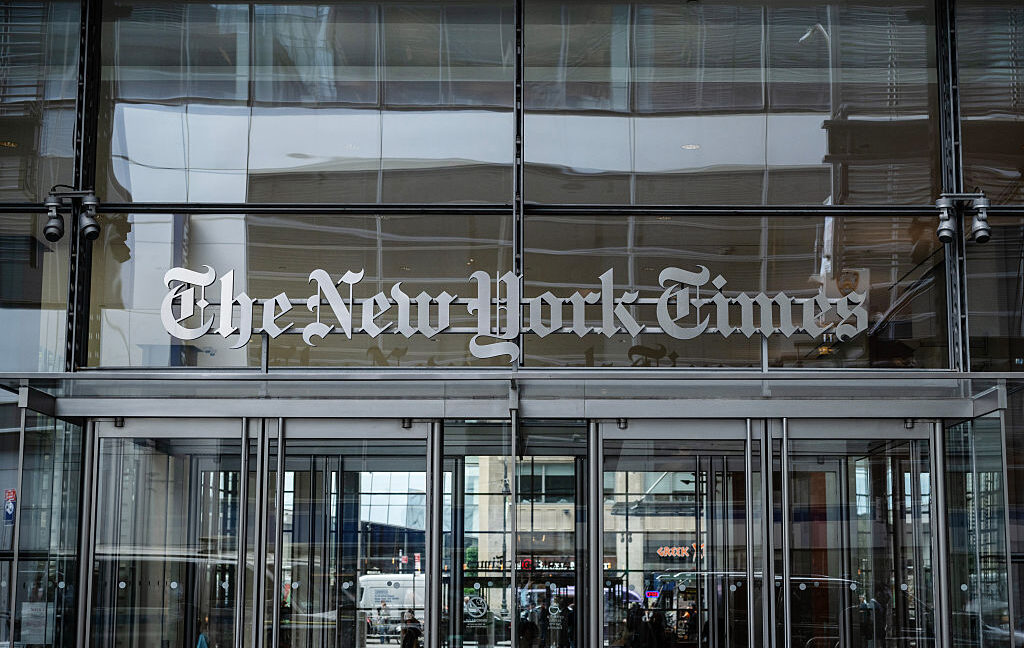
🧠The New York Times has shifted its copyright infringement allegations against OpenAI and Microsoft, now claiming Microsoft built a supercomputer specifically to facilitate copyright violations. This legal repositioning follows a Supreme Court ruling against Sony that potentially weakened fair-use defenses in AI training contexts.
🏢 OpenAI
AIBearishCrypto Briefing · Jun 227/10
🧠The New York Times has filed a lawsuit against OpenAI over AI training on copyrighted content, with the case potentially reshaping how AI companies can use published materials. The lawsuit's outcome could establish legal precedent for intellectual property protection in AI development and fundamentally alter the economics of journalism and content licensing.
🏢 OpenAI
AIBullishCrypto Briefing · Jun 227/10
🧠OpenAI has signed a multi-year licensing agreement with Getty Images to use Getty's visual content in ChatGPT, establishing a model where AI platforms compensate creators for content used in training. This deal signals an industry shift toward legal compliance and creator compensation rather than unauthorized scraping.
🏢 OpenAI🧠 ChatGPT
AIBearishThe Verge – AI · Jun 207/10
🧠The Atlantic's Alex Reisner has created a searchable public database of four music datasets used to train AI models, including two massive collections with 12 million and 9 million tracks respectively. The datasets, confirmed to be used by companies like Google and Stability AI, raise significant copyright concerns as many songs were included without explicit artist consent.
AIBearisharXiv – CS AI · May 297/10
🧠Researchers have established the first comprehensive evaluation framework for dataset watermarking in fine-tuned diffusion models, revealing significant vulnerabilities in existing protection methods. While current watermarking techniques show promise in universality and transmissibility, the study demonstrates practical watermark removal methods that can eliminate these protections without degrading model performance, exposing critical gaps in copyright and security safeguards.
AIBearishFortune Crypto · Apr 157/10
🧠Major news outlets including the New York Times and USA Today are blocking the Internet Archive's Wayback Machine from crawling their content, citing concerns that the archived material could be used to train AI language models without permission or compensation. This move reflects growing tensions between content creators and AI companies over unauthorized use of copyrighted material for model training.
AIBearishTechCrunch – AI · Mar 167/10
🧠Encyclopedia Britannica and Merriam-Webster have filed a lawsuit against OpenAI, alleging copyright infringement of nearly 100,000 articles used in training their large language models. This legal action adds to growing concerns about AI companies' use of copyrighted content for model development.
🏢 OpenAI
AIBullisharXiv – CS AI · Mar 127/10
🧠Researchers introduce Targeted Reasoning Unlearning (TRU), a new method for removing specific knowledge from large language models while preserving general capabilities. The approach uses reasoning-based targets to guide the unlearning process, addressing issues with previous gradient ascent methods that caused unintended capability degradation.
AINeutralArs Technica – AI · Mar 107/10
🧠The article explores the legal complexities surrounding AI's ability to rewrite open source code and whether such modifications constitute legitimate reverse engineering or create derivative works that must comply with original licensing terms. This raises important questions about intellectual property rights and licensing obligations in AI-generated code.
AIBearisharXiv – CS AI · Feb 277/107
🧠Researchers discovered a vulnerability in AI music and video generation systems where phonetic prompts can bypass copyright filters. The 'Adversarial PhoneTic Prompting' attack achieves 91% similarity to copyrighted content by using sound-alike phrases that preserve acoustic patterns while evading text-based detection.
$NEAR$APT
AIBearishArs Technica – AI · Feb 237/106
🧠Research reveals that large language models (LLMs) can reproduce near-exact copies of novels and other content from their training datasets, indicating these AI systems memorize significantly more training data than previously understood. This discovery raises important concerns about copyright infringement, data privacy, and the extent of memorization in AI training processes.
$NEAR
AIBullishOpenAI News · Apr 27/106
🧠The article presents recommendations to the UK government's copyright consultation, advocating for pro-innovation policies in AI development. The proposals aim to position the UK as Europe's leading AI hub through favorable regulatory frameworks.
AINeutralarXiv – CS AI · Jun 16/10
🧠Researchers propose Gap-K%, a novel method for detecting whether text was part of an LLM's pretraining data by analyzing the probability gap between a model's top prediction and the actual target token. The technique outperforms existing approaches on standard benchmarks and addresses critical privacy and copyright concerns surrounding the opaque datasets used to train large language models.
AINeutralTechCrunch – AI · May 266/10
🧠Universal Music Group and TikTok have renewed their agreement to combat unauthorized AI-generated music on the platform. The deal reflects UMG's ongoing effort to establish stricter content moderation standards across digital platforms and AI companies, addressing growing concerns about copyright infringement and uncompensated AI music generation.
AINeutralOpenAI News · May 256/10
🧠OpenAI has announced a strategic partnership with Brazilian media groups Grupo Folha and Grupo UOL to integrate their journalism into ChatGPT with proper attribution and transparency. This deal expands ChatGPT's access to trusted news sources while establishing a model for compensating publishers in the AI era.
🏢 OpenAI🧠 ChatGPT
AIBearisharXiv – CS AI · Apr 66/10
🧠Researchers introduce VLM-UnBench, the first benchmark for evaluating training-free visual concept unlearning in Vision Language Models. The study reveals that realistic prompts fail to genuinely remove sensitive or copyrighted visual concepts, with meaningful suppression only occurring under oracle conditions that explicitly disclose target concepts.
AIBearishThe Verge – AI · Apr 56/10
🧠AI music platform Suno's copyright filters can be easily bypassed with minimal effort, allowing users to generate AI imitations of popular songs from artists like Beyoncé, Black Sabbath, and Aqua. Despite Suno's policy prohibiting copyrighted material use, the platform's detection system proves inadequate at preventing copyright infringement.
AINeutralarXiv – CS AI · Mar 176/10
🧠Researchers developed a framework to assess public summaries of AI training data required by EU's AI Act Article 53(1)(d), evaluating transparency and usefulness for stakeholder rights enforcement. The study analyzed 5 public summaries from GPAI model providers as of January 2026, creating guidelines for compliance and a public resource website.
AIBearishThe Verge – AI · Mar 166/10
🧠Encyclopedia Britannica and Merriam-Webster filed a lawsuit against OpenAI, alleging the company used their copyrighted content without permission to train ChatGPT and other AI models. The publishers claim GPT-4 has 'memorized' their content and can output near-verbatim copies of significant portions on demand.
🏢 OpenAI🧠 GPT-4🧠 ChatGPT
AIBearishThe Register – AI · Mar 66/10
🧠UK House of Lords peers are warning that proposed changes to weaken AI copyright laws could severely damage the country's creative industries. The concerns center around potential legislation that would allow AI systems broader access to copyrighted material without proper compensation or consent from creators.
AIBearishWired – AI · Mar 56/10
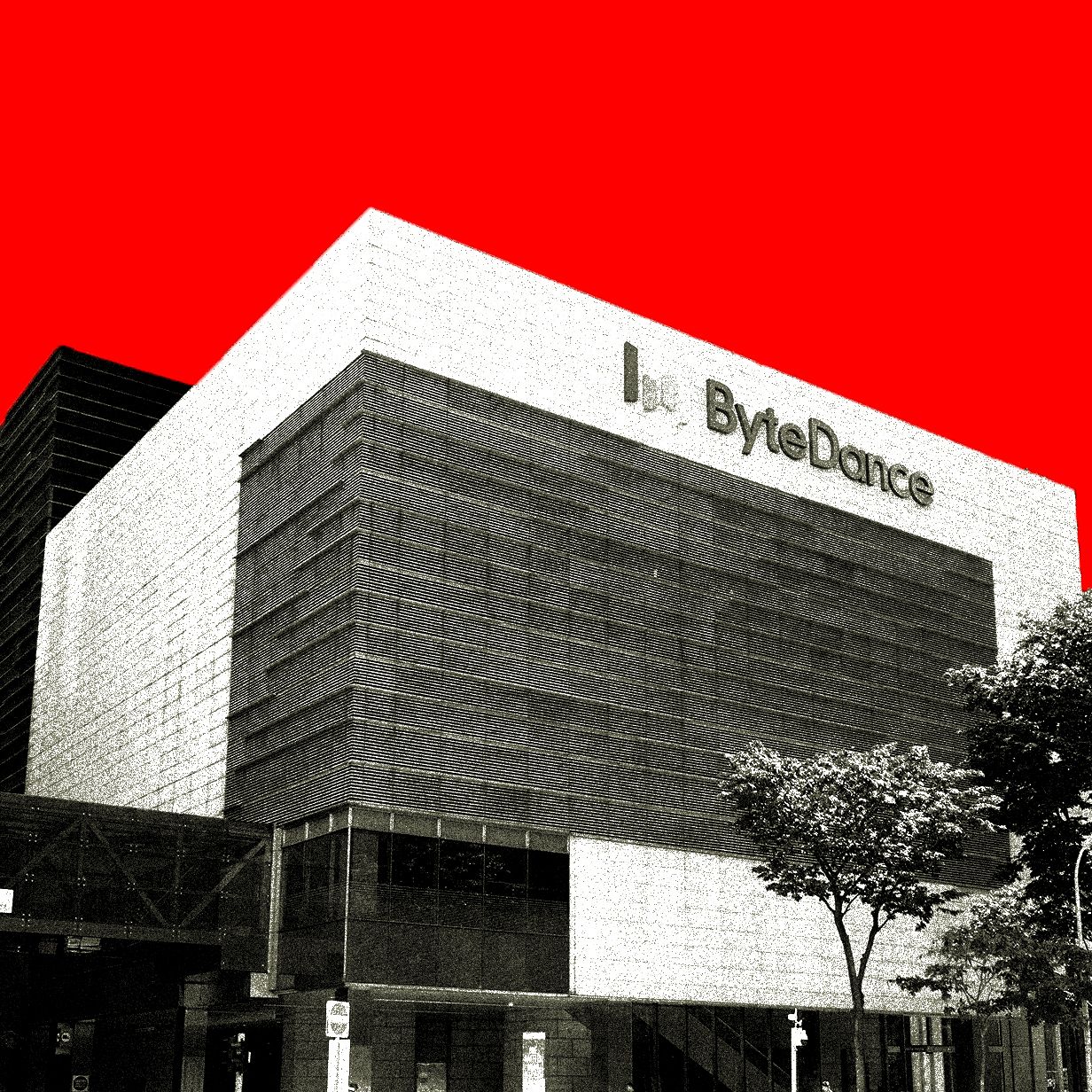
🧠ByteDance's new AI video model Seedance 2.0 is facing significant operational challenges due to compute capacity limitations and mounting copyright complaints. The company's AI ambitions are being constrained by infrastructure bottlenecks and legal concerns over content generation.
AIBearishWired – AI · Mar 45/101
🧠Grammarly's recently-rebranded company Superhuman is offering an AI tool that provides writing feedback based on the styles of famous authors, both living and deceased, without obtaining permission from these writers or their estates.
AIBullisharXiv – CS AI · Mar 37/107
🧠Researchers introduce GUARD, a novel framework to prevent text-to-image AI models from memorizing and reproducing training data that could lead to privacy or copyright issues. The method uses attention attenuation to guide image generation away from original training data while maintaining prompt alignment and image quality.
$NEAR
AINeutralarXiv – CS AI · Mar 37/107
🧠Researchers introduce SurgUn, a surgical unlearning method for text-to-image diffusion models that enables precise removal of specific visual concepts while preserving other capabilities. The approach addresses challenges in copyright compliance and content policy enforcement by applying targeted weight-space updates based on retroactive interference theory.
AIBullisharXiv – CS AI · Mar 37/106
🧠Researchers propose Attention Smoothing Unlearning (ASU), a new framework that helps Large Language Models forget sensitive or copyrighted content without losing overall performance. The method uses self-distillation and attention smoothing to erase specific knowledge while maintaining coherent responses, outperforming existing unlearning techniques.