AINeutralarXiv – CS AI · Jun 236/10
🧠Researchers introduce AgentMeter, a benchmark for evaluating how language models perform with different command-line interfaces (CLIs) in local task-solving agents. The study reveals that model selection and CLI choice significantly impact performance metrics, cost, and token efficiency, demonstrating that deployment decisions require evaluating model-CLI pairs as integrated units rather than separately.
🧠 GPT-5
AINeutralarXiv – CS AI · Jun 236/10
🧠Researchers propose a Stackelberg game framework for managing computational resource allocation in multi-turn LLM agents, balancing quality targets against finite budgets. Testing on 300 API turns demonstrates 17.4% token cost reduction versus baseline without significant quality degradation, though results represent a promising operating point rather than a certified equilibrium.
AIBullishCrypto Briefing · Jun 106/10
🧠AWS announced Graviton5, its latest custom silicon chip designed to optimize AI workload performance in cloud environments. The advancement signals intensifying competition in custom processor design and could reshape cloud economics by pressuring competitors to accelerate their own silicon innovation.
AIBullisharXiv – CS AI · Jun 96/10
🧠Researchers have developed a lightweight transformer-based method to detect reward hacking in AI systems that operates at a fraction of the cost of existing approaches. The technique achieves comparable performance to LLM-based judges while demonstrating superior true positive rates, suggesting efficient alternatives to expensive AI evaluation methods are feasible.
AINeutralarXiv – CS AI · Jun 56/10
🧠Researchers introduce MetaRouter, a meta-learning framework that optimizes Large Language Model routing by learning individual users' implicit cost-performance preferences through minimal interaction. The system enables personalized query routing across multiple models, balancing expense reduction with performance maintenance more effectively than existing methods.
AIBullishTechCrunch – AI · Jun 46/10
🧠Meta is adopting a cost-reduction strategy inspired by Tesla by constructing data centers in temporary tent structures to reduce capital expenditure on infrastructure. This unconventional approach reflects the tech industry's urgent need to contain soaring AI compute costs amid intensifying competition for computational resources.
AINeutralCrypto Briefing · Jun 46/10
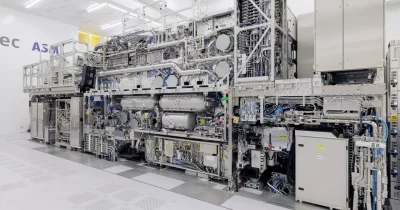
🧠TSMC's CEO is addressing the cost challenges associated with High-NA EUV lithography adoption, signaling the company's cautious approach to implementing next-generation semiconductor manufacturing technology. The effort reflects broader industry tensions between technological advancement and economic viability in advanced chip production.
AIBullishMIT News – AI · Jun 36/10
🧠MIT researchers demonstrated that smaller AI models can outperform larger ones at asking strategic questions by using the classic game Battleship as a training framework. The findings suggest that efficient questioning strategies could reduce AI inference costs by up to 99 percent while improving performance.
AINeutralDecrypt – AI · Jun 36/10
🧠Perplexity has introduced a hybrid inference system that distributes AI computational tasks between user devices and cloud servers automatically. The approach aims to reduce server costs, improve privacy, and lower latency by leveraging local processing power where feasible.
🏢 Perplexity
AIBullishCrypto Briefing · Jun 26/10
🧠Former staffers from the Department of Government Efficiency (DOGE) have launched an AI venture designed to apply cost-cutting strategies from the government sector to private enterprise. The initiative targets investors interested in efficiency-focused AI solutions that could reduce operational waste across industries.
$DOGE
AINeutralarXiv – CS AI · Jun 26/10
🧠Researchers propose a practical framework for building LLM-based agentic systems that prioritizes simplicity, cost predictability, and controllability over maximum optimization. The framework uses modular "pseudo-tools" and fixed workflows, demonstrating that hand-engineered agents often outperform dynamically-planned systems in production environments.
AIBullisharXiv – CS AI · Jun 26/10
🧠Researchers propose a Bayesian stopping strategy that reduces LLM inference costs by up to 50% while maintaining answer accuracy. The method samples multiple LLM responses and stops once sufficient consistency is detected, using an efficient L-aggregated policy that tracks only the top 3 answer frequencies and achieves theoretical optimality.
AINeutralarXiv – CS AI · May 296/10
🧠Researchers introduce LogDx-CI, a benchmark comparing 11 log-reduction tools for debugging CI failures using LLMs, finding that hybrid grep+tail routers achieve the best cost-quality tradeoff while agent-loop systems can recover from weak contexts through iterative tool calls, though at higher computational cost.
🏢 OpenAI🧠 GPT-5🧠 Claude
AIBullishTechCrunch – AI · May 296/10
🧠Enterprise AI search startup Glean has crossed $300M in annual revenue, tripling its top line despite increased competition from major tech giants entering the market. The company's growth is primarily driven by its value proposition around cost reduction for AI implementations, positioning budget optimization as a key differentiator in an increasingly crowded enterprise AI landscape.
AIBullisharXiv – CS AI · May 286/10
🧠TCP-MCP introduces a co-evolution framework that simultaneously optimizes AI agent prompts and communication network topologies, achieving state-of-the-art accuracy on multiple benchmarks while reducing token consumption by up to 5.69x compared to existing multi-agent systems. The approach treats prompt design and communication structure as interdependent variables rather than independent parameters, offering a practical methodology for cost-efficient multi-agent AI system design.
AINeutralarXiv – CS AI · May 126/10
🧠SkillLens introduces a hierarchical framework for organizing and reusing skills in LLM agents at multiple granularity levels, reducing computational costs while maintaining relevance. The system retrieves and adapts skills selectively rather than injecting entire skill blocks, achieving measurable performance gains on benchmark tasks.
AINeutralarXiv – CS AI · May 126/10
🧠Researchers present a communication-theoretic framework that unifies LLM reliability techniques (retry, majority voting, self-consistency) under classical information theory, introducing a cost-aware router that achieves 56% lower costs than fixed approaches while maintaining quality. The work demonstrates that no single reliability technique dominates across all tasks, supporting dynamic per-task allocation strategies.
AIBullisharXiv – CS AI · May 126/10
🧠Researchers introduce LEVI, an open-source evolutionary search framework that achieves superior results on AI research benchmarks while reducing computational costs by 3.3x to 35x compared to existing methods. By optimizing search architecture rather than relying on larger language models, LEVI demonstrates that algorithmic efficiency can significantly reduce the expense of LLM-guided evolutionary discovery.
AINeutralarXiv – CS AI · May 126/10
🧠Nautilus Compass is a black-box persona drift detector for LLM coding agents that operates without access to model weights, making it compatible with closed APIs like Claude and GPT-4. The system detects when production agents forget user constraints or contradict prior agreements using embedding-based similarity matching, achieving 0.83 ROC AUC on drift detection while costing $3.50 per evaluation—substantially cheaper than alternatives.
🧠 GPT-4🧠 Claude
AINeutralarXiv – CS AI · May 116/10
🧠A comprehensive empirical study reveals that reported inefficiencies in multi-LLM routing systems are substantially inflated by evaluation artifacts rather than genuine model limitations. Researchers found that LLM-as-a-judge biases, output truncation, and format mismatches account for a significant portion of measured failures, suggesting current routing cost-quality tradeoff estimates significantly overstate the actual unsolvability ceiling.
🧠 Llama
AIBullisharXiv – CS AI · May 96/10
🧠Researchers propose a reinforcement learning-based policy for routing intermediate reasoning steps across language models of varying sizes, reducing inference costs while maintaining accuracy on math benchmarks. The method uses threshold calibration to balance performance and efficiency without requiring large process reward models, outperforming handcrafted routing strategies.
AINeutralarXiv – CS AI · May 46/10
🧠Researchers challenge the necessity of expensive high-bandwidth networks for Mixture-of-Experts LLM serving, demonstrating that lower-cost switchless topologies deliver 20.6-56.2% better cost-effectiveness than industry-standard scale-up architectures. The analysis reveals current network infrastructure is over-provisioned, with implications for data center economics and AI deployment efficiency.
AIBullisharXiv – CS AI · Apr 156/10
🧠Researchers propose Heuristic Classification of Thoughts (HCoT), a novel prompting method that integrates expert system heuristics into large language models to improve structured reasoning on complex problems. The approach addresses LLMs' stochastic token generation and decoupled reasoning mechanisms by using heuristic classification to guide and optimize decision trajectories, demonstrating superior performance and token efficiency compared to existing methods like Chain-of-Thoughts and Tree-of-Thoughts prompting.
AINeutralarXiv – CS AI · Apr 146/10
🧠Researchers present the first systematic study of performance-energy trade-offs in multi-request LLM inference workflows, using NVIDIA A100 GPUs and vLLM/Parrot serving systems. The study identifies batch size as the most impactful optimization lever, though effectiveness varies by workload type, and reveals that workflow-aware scheduling can reduce energy consumption under power constraints.
🏢 Nvidia
AINeutralarXiv – CS AI · Apr 146/10
🧠ConfigSpec introduces a profiling-based framework for optimizing distributed LLM inference across edge-cloud systems using speculative decoding. The research reveals that no single configuration can simultaneously optimize throughput, cost efficiency, and energy efficiency—requiring dynamic, device-aware configuration selection rather than fixed deployments.