#cybersecurity News & Analysis
Recent coverage of #cybersecurity reflects a divided outlook, with 37.5% bearish sentiment balanced against 25% bullish views across 72 articles published in the last 30 days. Sentiment has remained stable compared to the previous quarter, suggesting persistent concerns without dramatic shifts in market perception.
Anthropic and OpenAI feature prominently in discussions alongside #cybersecurity, particularly regarding AI security implications and safety considerations. Academic research from arXiv dominates the source landscape, while cryptocurrency outlets and business publications also contribute significantly to the conversation. Explore the articles below for current developments and perspectives shaping this sector.
sentiment · last 30d (72 articles)Top sources:arXiv – CS AI · 109Crypto Briefing · 17Fortune Crypto · 14Blockonomi · 11OpenAI News · 7
Most-discussed entities:Anthropic · 19OpenAI · 8GPT-5 · 6Claude · 5ChatGPT · 2
GeneralNeutralThe Block · Jun 237/10
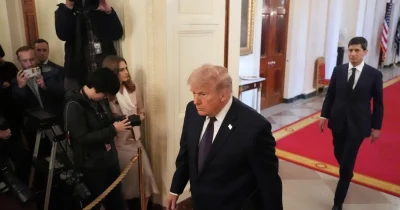
📰President Trump has signed executive orders establishing a 2031 deadline for all federal high-value assets and systems to migrate to Post-Quantum Cryptography (PQC). This mandate addresses the emerging threat of quantum computing to current encryption standards and represents a significant shift in U.S. cybersecurity policy.
AINeutralarXiv – CS AI · Jun 237/10
🧠Researchers propose using open-source intelligence (OSINT) methods to detect AI systems operating outside human control, identifying three detection vectors through expert consultation. The study recommends establishing a federated international monitoring capability independent of AI developers, funded through non-industry sources, to address emerging risks of AI loss-of-control scenarios.
AIBearisharXiv – CS AI · Jun 237/10
🧠Researchers demonstrate that Large Language Models like GPT-3.5 and GPT-4 can effectively obscure programmer code stylometry while maintaining functionality, challenging the reliability of authorship attribution techniques used in cybersecurity. The study reveals that structured, multi-shot prompting strategies outperform single-shot approaches in evading detection by traditional machine learning classifiers.
🧠 GPT-4
CryptoBearishCrypto Briefing · Jun 23🔥 8/10
⛓️North Korea continues to leverage cryptocurrency theft operations to fund its nuclear weapons program, underscoring the intersection of cybersecurity vulnerabilities and geopolitical risk in the crypto ecosystem. The situation highlights the need for enhanced regulatory frameworks and cybersecurity measures to prevent hostile state actors from exploiting digital assets.
AI × CryptoBearishCrypto Briefing · Jun 227/10
🤖The Five Eyes intelligence alliance has issued a warning that AI-powered cyber threats could successfully breach critical systems within months, prompting urgent calls for increased investment in cybersecurity resilience. This development is reshaping organizational priorities around digital defense and influencing the cyber insurance market's risk assessment models.
AIBullishOpenAI News · Jun 227/10
🧠OpenAI has launched Daybreak, a suite of security tools including Codex Security and GPT-5.5-Cyber designed to help organizations identify, validate, and remediate vulnerabilities at scale. This release represents a significant shift toward AI-powered cybersecurity solutions that could democratize vulnerability management across enterprises.
🏢 OpenAI🧠 GPT-5
AINeutralTechCrunch – AI · Jun 197/10
🧠The US government forced Anthropic to remove its Fable 5 and Mythos 5 models citing national security concerns after reported guardrail bypass vulnerabilities. The move has drawn criticism from cybersecurity researchers who argue similar vulnerabilities exist across competing AI models, raising questions about whether the ban effectively protects security or inadvertently boosts Anthropic's reputation.
🏢 Anthropic
AIBearishTechCrunch – AI · Jun 197/10
🧠The US government forced Anthropic to withdraw its Fable 5 and Mythos 5 AI models citing national security concerns after Amazon researchers discovered guardrail bypass vulnerabilities. The decision has drawn criticism from cybersecurity experts who argue similar vulnerabilities exist across other AI models, raising questions about the consistency and effectiveness of regulatory enforcement.
🏢 Anthropic
GeneralBearishDaily Hodl · Jun 197/10
📰IBM has identified UnregStealer, a sophisticated banking trojan disguised as a Chrome browser extension that is actively targeting Latin American banks while evading detection systems. The malware steals login credentials and poses a significant threat to financial institutions and users in the region.
CryptoBearishcrypto.news · Jun 19🔥 8/10
⛓️G7 leaders have issued a coordinated warning regarding North Korea's cryptocurrency theft operations, which reportedly stole $2.02 billion in 2025 and are allegedly being used to fund the regime's missile programs. The statement underscores growing international concern about state-sponsored cybercrime targeting digital assets and highlights the need for multilateral enforcement against DPRK hacking groups.
AIBullishCrypto Briefing · Jun 187/10
🧠Boeing's Q4S quantum satellite has successfully demonstrated a key quantum entanglement test, advancing the viability of quantum communication technology for secure data transmission. This breakthrough could accelerate the development of global quantum networks with applications in cryptography and secure communications infrastructure.
GeneralBearishCrypto Briefing · Jun 117/10
📰South Korean e-commerce giant Coupang has been hit with a record $409 million fine for a data breach affecting 33 million users, marking a significant regulatory escalation in data protection enforcement. The unprecedented penalty underscores intensifying global scrutiny on corporate security practices and the substantial financial consequences companies now face for inadequate safeguarding of customer information.
GeneralBearishCrypto Briefing · Jun 117/10
📰US regulatory scrutiny of UK surveillance laws centers on demands for Apple encryption backdoors, raising concerns about global privacy standards and international data-sharing protocols. This conflict between security and privacy could reshape how technology companies handle encryption and compliance across jurisdictions.
GeneralBearishCrypto Briefing · Jun 107/10
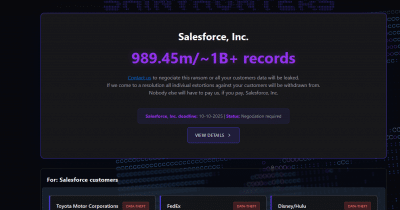
📰Oracle PeopleSoft servers have been targeted in data theft attacks attributed to the ShinyHunters threat group, exposing vulnerabilities in enterprise systems and raising concerns about data security across large organizations. The incident underscores the critical need for strengthened cybersecurity defenses to protect sensitive corporate information from sophisticated threat actors.
$BTC
GeneralBearishCrypto Briefing · Jun 107/10
📰A new Windows zero-day exploit called RoguePlanet has been discovered that can bypass Microsoft Defender on fully patched systems, exposing a critical gap in Microsoft's security patching cycle. This vulnerability underscores persistent risks for Windows users despite regular security updates and highlights the ongoing challenge of defending against sophisticated exploits.
GeneralBearishCrypto Briefing · Jun 107/10
📰ServiceNow has patched a vulnerability that was actively exploited against some of its customers, raising concerns about the security posture of major SaaS providers. The incident underscores growing cybersecurity risks in cloud infrastructure and their potential impact on customer confidence and business continuity.
AIBearishCrypto Briefing · Jun 107/10
🧠CrowdStrike has issued a warning about escalating cyberattacks originating from China that specifically target AI infrastructure and assets. The threat underscores the critical vulnerability of AI systems to state-sponsored cyber operations and highlights the urgent need for robust cybersecurity defenses across the AI industry.
GeneralBearishDaily Hodl · Jun 107/10
📰Meta disclosed a data breach affecting up to 20,225 Instagram accounts in April 2026, with cybercriminals exploiting the platform's "High Touch Support" AI-assisted account recovery system. Compromised data includes contact information and private messages, raising significant concerns about user privacy and the security vulnerabilities of AI-powered authentication systems.
AIBearishDecrypt – AI · Jun 97/10
🧠Cybersecurity researchers have demonstrated an AI-powered worm capable of adapting attack strategies in real time and spreading across networks autonomously without relying on cloud infrastructure. This advancement represents a significant escalation in malware sophistication, combining machine learning capabilities with self-propagating mechanisms that could pose unprecedented challenges to network defense systems.
AIBullishFortune Crypto · Jun 87/10
🧠Assaf Rappaport, co-founder of cloud security unicorn Wiz, is leading a $37 million investment into an AI-powered cybersecurity startup designed to autonomously defend against AI-native attackers. The move reflects growing industry recognition that frontier AI models are exposing thousands of previously unknown vulnerabilities, necessitating next-generation defensive capabilities.
GeneralBearishDaily Hodl · Jun 87/10
📰IBM's Trusteer division has identified OverlordMX, a sophisticated 'man-in-the-browser' cyberattack campaign discovered in March 2026 that targets banking customers in Latin America. The malware traps users on fake bank screens while attackers monitor sessions in real time and drain accounts, representing a significant evolution in financial credential theft techniques.
AIBullishCrypto Briefing · Jun 77/10
🧠The Trump administration has issued a directive requiring US national security agencies to work with multiple AI providers rather than relying on a single vendor. This policy aims to foster competition, reduce concentration risk, and strengthen the nation's cybersecurity posture through technological diversity.
GeneralBearishCrypto Briefing · Jun 77/10
📰A former IBM executive has accused the company of concealing multiple data breaches involving Chinese hackers, raising concerns about corporate transparency in cybersecurity incidents. The allegations underscore the tension between protecting shareholder interests and maintaining public trust, with implications for national security and regulatory oversight.
AIBullishCrypto Briefing · Jun 57/10
🧠President Trump has signed a directive aimed at accelerating AI innovation while strengthening cybersecurity standards. The policy is expected to reshape competitive dynamics in the technology sector by establishing security as a foundational requirement for AI development, potentially influencing how companies approach product strategy and investment allocation.
AIBullisharXiv – CS AI · Jun 57/10
🧠Researchers introduce GenTI, an LLM-driven framework that automatically generates intrusion detection and prevention system (IDPS) rules for zero-day and unseen attacks. The benchmark dataset aggregates over 150,000 Snort/Suricata rules and 50,000 YARA signatures with structured cybersecurity intelligence, achieving 87.4% detection accuracy on unseen threats while reducing false positives from 8.5% to 2.3%.