#deep-learning News & Analysis
Recent coverage of #deep-learning spans 272 indexed articles, with 41 pieces published in the last month. Academic research dominates the conversation, particularly through arXiv submissions in computer science and AI, though coverage also appears across machine learning-focused publications. Over the past 30 days, sentiment has remained largely stable at 51.2% bullish and 43.9% neutral, with minimal bearish commentary at 4.9%.
Perplexity, Gemini, and Nvidia have emerged as the most frequently discussed entities alongside #deep-learning, while related discussions often intersect with #machine-learning, #neural-networks, and #computer-vision. Scan the articles below for the latest developments in this area.
sentiment · last 30d (41 articles)Top sources:arXiv – CS AI · 227Apple Machine Learning · 3MarkTechPost · 2Crypto Briefing · 2
Most-discussed entities:Perplexity · 4Gemini · 2Nvidia · 2Llama · 1
AIBullisharXiv – CS AI · Mar 37/103
🧠Researchers developed NextHAM, a deep learning method for predicting electronic-structure Hamiltonians of materials, offering significant computational efficiency advantages over traditional DFT methods. The system introduces neural E(3)-symmetry architecture and a new dataset Materials-HAM-SOC with 17,000 material structures spanning 68 elements.
AIBullisharXiv – CS AI · Mar 37/105
🧠Researchers introduce ASEntmax, a new attention mechanism for transformer models that uses sparse attention with learnable temperature parameters. This approach significantly outperforms traditional softmax attention, achieving up to 1000x length extrapolation on synthetic tasks and better long-context performance in language modeling.
AIBullisharXiv – CS AI · Mar 37/104
🧠Researchers developed new activation functions for deep neural networks based on polynomial and trigonometric orthonormal bases that can successfully train models like GPT-2 and ConvNeXt. The work addresses gradient problems common with polynomial activations and shows these networks can be interpreted as multivariate polynomial mappings.
AINeutralarXiv – CS AI · Mar 37/104
🧠Researchers developed a novel algorithm using topological derivatives to automatically determine where and how to add new layers to neural networks during training. The approach uses mathematical principles from optimal control theory and topology optimization to adaptively grow network architecture, showing superior performance compared to baseline networks and other adaptation strategies.
AINeutralarXiv – CS AI · Mar 37/103
🧠Researchers introduce FSW-GNN, the first Message Passing Neural Network that is fully bi-Lipschitz with respect to standard WL-equivalent graph metrics. This addresses the limitation where standard MPNNs produce poorly distinguishable outputs for separable graphs, with empirical results showing competitive performance and superior accuracy in long-range tasks.
AIBullisharXiv – CS AI · Mar 37/102
🧠Researchers propose GradientStabilizer, a new technique to address training instability in deep learning by replacing gradient magnitude with statistically stabilized estimates while preserving direction. The method outperforms gradient clipping across multiple AI training scenarios including LLM pre-training, reinforcement learning, and computer vision tasks.
AINeutralarXiv – CS AI · Mar 37/104
🧠Researchers propose the Compression Efficiency Principle (CEP) to explain why artificial neural networks and biological brains develop similar representations despite different substrates. The theory suggests both systems converge on efficient compression strategies that encode stable invariants rather than unstable correlations, providing a unified framework for understanding intelligence across biological and artificial systems.
AINeutralarXiv – CS AI · Mar 37/104
🧠New research connects initial guessing bias in untrained deep neural networks to established mean field theories, proving that optimal initialization for learning requires systematic bias toward specific classes rather than neutral initialization. The study demonstrates that efficient training is fundamentally linked to architectural prejudices present before data exposure.
AIBullisharXiv – CS AI · Feb 277/106
🧠Researchers developed a method to improve foundation models in medical histopathology by introducing robustness losses during training, reducing sensitivity to technical variations while maintaining accuracy. The approach was tested on over 27,000 whole slide images from 6,155 patients across eight popular foundation models, showing improved robustness and prediction accuracy without requiring retraining of the foundation models themselves.
AIBullisharXiv – CS AI · Feb 277/107
🧠Researchers have developed a unified framework using Spectral Geometry and Random Matrix Theory to address reliability and efficiency challenges in large language models. The study introduces EigenTrack for real-time hallucination detection and RMT-KD for model compression while maintaining accuracy.
AINeutralarXiv – CS AI · Feb 277/105
🧠Researchers establish theoretical connections between Random Network Distillation (RND), deep ensembles, and Bayesian inference for uncertainty quantification in deep learning models. The study proves that RND's uncertainty signals are equivalent to deep ensemble predictive variance and can mirror Bayesian posterior distributions, providing a unified theoretical framework for efficient uncertainty quantification methods.
AIBullisharXiv – CS AI · Feb 277/108
🧠Researchers introduce a Confidence-Variance (CoVar) theory framework that improves pseudo-label selection in semi-supervised learning by combining maximum confidence with residual-class variance. The method addresses overconfidence issues in deep networks and demonstrates consistent improvements across multiple datasets including PASCAL VOC, Cityscapes, CIFAR-10, and Mini-ImageNet.
$NEAR
AIBullisharXiv – CS AI · Feb 277/107
🧠Researchers developed Residual Koopman Spectral Profiling (RKSP), a method that predicts transformer training instability from a single forward pass at initialization with 99.5% accuracy. The technique includes Koopman Spectral Shaping (KSS) which can prevent training divergence and enable 50-150% higher learning rates across various AI models including GPT-2 and LLaMA-2.
$NEAR
AIBullisharXiv – CS AI · Feb 277/105
🧠Researchers developed a convolutional neural network model that can automatically detect vulnerabilities in C source code using deep learning techniques. The model was trained on datasets from Draper Labs and NIST, achieving higher recall than previous work while maintaining high precision and demonstrating effectiveness on real Linux kernel vulnerabilities.
AINeutralarXiv – CS AI · Feb 277/105
🧠Researchers propose Geodesic Integrated Gradients (GIG), a new method for explaining AI model decisions that uses curved paths instead of straight lines to compute feature importance. The method addresses flawed attributions in existing approaches by integrating gradients along geodesic paths under a model-induced Riemannian metric.
AIBullisharXiv – CS AI · Feb 277/104
🧠Researchers developed RepGen, an AI-powered tool that automatically reproduces deep learning bugs with an 80.19% success rate, significantly improving upon the current 3% manual reproduction rate. The system uses LLMs to generate reproduction code through an iterative process, reducing debugging time by 56.8% in developer studies.
AIBullishNVIDIA AI Blog · Jan 247/104
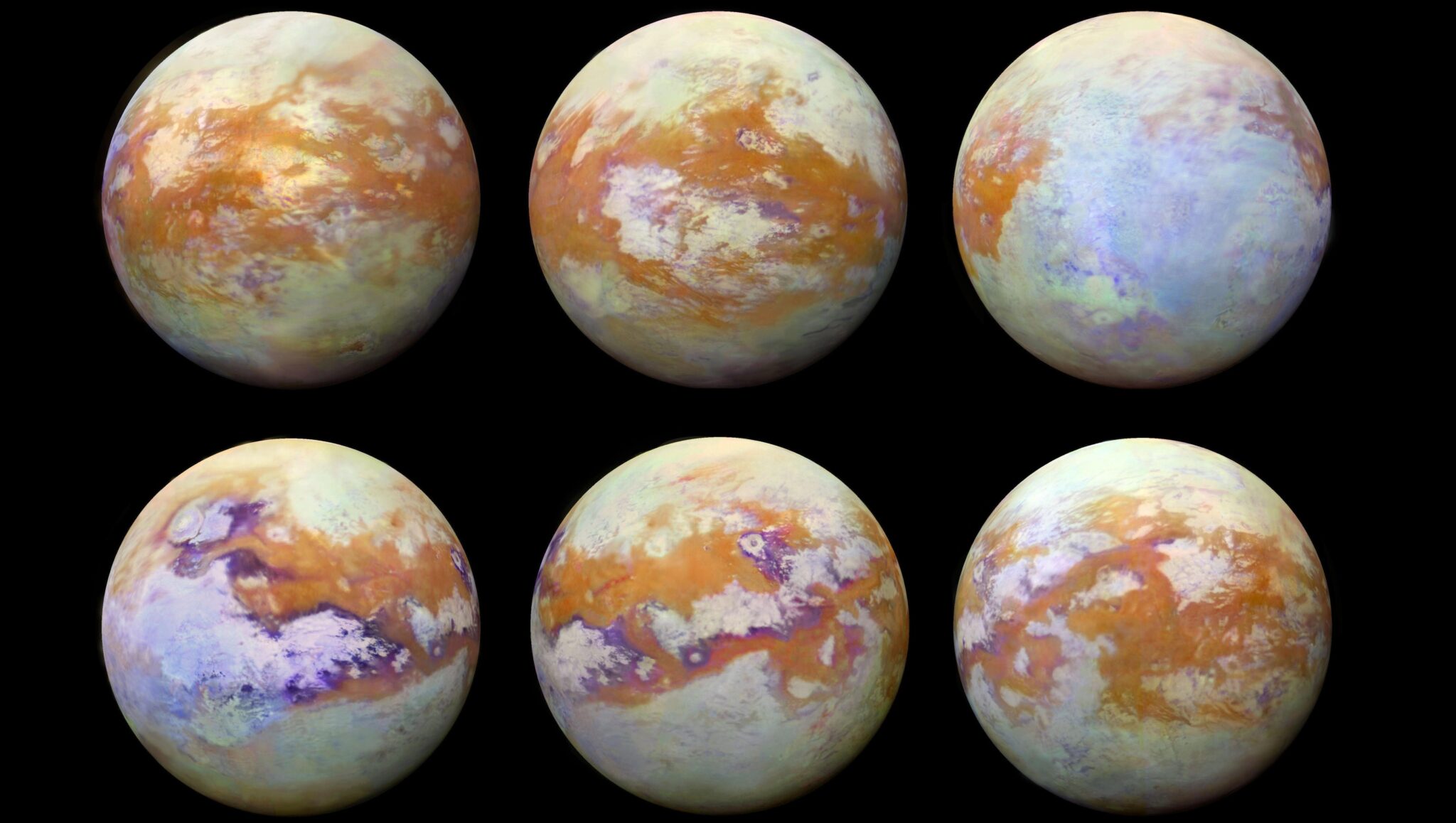
🧠NVIDIA GPUs enabled AI systems to process years of Cassini spacecraft data about Titan's methane clouds in just seconds, representing a major breakthrough in space exploration technology. This advancement demonstrates how AI and high-performance computing can dramatically accelerate scientific discovery and analysis of alien worlds.
AIBullishOpenAI News · Mar 147/107
🧠OpenAI has released GPT-4, a major advancement in their deep learning efforts that represents a multimodal AI model capable of processing both image and text inputs while generating text outputs. The model demonstrates human-level performance on various professional and academic benchmarks, though it still falls short of human capabilities in many real-world applications.
AINeutralOpenAI News · Dec 57/105
🧠Research reveals that deep learning models including CNNs, ResNets, and transformers exhibit a double descent phenomenon where performance improves, deteriorates, then improves again as model size, data size, or training time increases. This universal behavior can be mitigated through proper regularization, though the underlying mechanisms remain unclear and require further investigation.
AIBullishOpenAI News · Apr 237/105
🧠Researchers have developed the Sparse Transformer, a deep neural network that achieves new performance records in sequence prediction for text, images, and sound. The model uses an improved attention mechanism that can process sequences 30 times longer than previously possible.
AIBullishOpenAI News · Aug 167/103
🧠OpenAI's Dota 2 AI system demonstrated rapid improvement through self-play, advancing from matching high-ranked players to beating top professionals in just one month. The system showcases how self-play can drive AI performance from sub-human to superhuman levels when given sufficient computational resources.
AINeutralarXiv – CS AI · Jun 256/10
🧠Researchers propose HAS-KD, a knowledge distillation method that improves 3D semantic segmentation by transferring knowledge from multi-modal models and training snapshots to single-modal point cloud networks. The approach achieves state-of-the-art results on benchmark datasets while reducing computational costs and maintaining inference efficiency.
AINeutralarXiv – CS AI · Jun 256/10
🧠Researchers introduce TopoCast, a topology-based evaluation framework for time series forecasting that moves beyond traditional error metrics to assess structural fidelity in deep learning models. The framework uses persistent homology to detect phase shifts, oscillatory distortions, and timing errors that conventional metrics like MSE overlook, revealing that models with similar numerical accuracy can exhibit substantially different structural quality.
AINeutralarXiv – CS AI · Jun 256/10
🧠Researchers benchmarked data-quality metrics used to evaluate synthetic Earth observation images and found significant misalignment between automatic fidelity scores (FID, KID, IS, LPIPS, SSIM) and both human perception and downstream segmentation performance. Synthetic data flagged as low-quality by standard metrics actually improved model performance when combined with real data, suggesting current evaluation frameworks are inadequate for geospatial applications.
AINeutralarXiv – CS AI · Jun 256/10
🧠EchoStyle introduces a text-driven framework for high-fidelity video stylization that addresses long-standing challenges like style drift and motion distortion. The research includes a reverse-synthesis pipeline that creates V-Style20k, a 20k video-pair dataset, and employs sliding-window inference to handle arbitrary-length videos with performance comparable to leading proprietary solutions.