AIBearisharXiv – CS AI · Jun 257/10
🧠A longitudinal study of Civitai's monetized bounty marketplace reveals that the majority of AI-generated content commissions involve explicit material, with deepfakes of real individuals—disproportionately targeting female celebrities—comprising a significant portion despite platform policies. The findings expose governance and enforcement failures in community-driven generative AI platforms that monetize content creation.
AIBearishWired – AI · Jun 117/10
🧠A WIRED investigation discovered dozens of nonconsensual sexualized deepfakes hosted on Grok's platform, including depictions of celebrities and a US politician. The findings highlight persistent content moderation failures at the AI chatbot service despite growing awareness of deepfake harms.
🧠 Grok
GeneralBearishCrypto Briefing · Jun 107/10
📰X has determined that deepfake abuse targeting a Chinese activist does not violate its platform rules, raising concerns about content moderation consistency and potential regulatory exposure under European digital regulations. The decision highlights tension between platform policies and evolving legal frameworks that could impose substantial penalties for inadequate abuse protections.
AIBearishThe Verge – AI · Jun 97/10
🧠Apple has announced new AI-powered photo editing tools at WWDC 2026 that enable extensive image manipulation, reversing the company's previous stance that photos should accurately represent reality. The tools, building on features like Clean Up, raise significant concerns about authenticity, misinformation, and the blurring of lines between genuine photography and AI-generated content.
AIBearisharXiv – CS AI · Jun 97/10
🧠Researchers evaluated humans and advanced AI models on detecting synthetic legal evidence, finding both groups unreliable authenticators. Human accuracy dropped to near-chance levels (48-51%) against leading image generators, while AI models achieved perfect specificity but missed most synthetic outputs, suggesting visual evidence requires multi-layered verification in legal proceedings.
🧠 GPT-5🧠 Gemini
AIBearishCrypto Briefing · Jun 47/10
🧠A UK Member of Parliament has filed a lawsuit against xAI over a deepfake bikini image allegedly created by the Grok chatbot, raising significant questions about AI accountability and content moderation. The case is expected to establish important legal precedents regarding privacy rights, data protection, and the liability of AI companies for non-consensual intimate imagery generated by their systems.
🏢 xAI🧠 Grok
AI × CryptoBearishCrypto Briefing · Jun 37/10
🤖xAI is seeking to unmask anonymous plaintiffs in a lawsuit alleging that its Grok AI system generated non-consensual deepfake content, including of a minor victim. The legal move raises concerns about whether victims may be deterred from pursuing accountability if their identities are publicly disclosed.
🏢 xAI🧠 Grok
AIBearishCrypto Briefing · Jun 37/10
🧠A UK Member of Parliament has filed a lawsuit against Elon Musk's xAI company over the creation and distribution of non-consensual AI-generated sexual imagery. The case represents a landmark legal action that could establish critical precedents for AI accountability and reshape regulatory frameworks governing artificial intelligence technologies globally.
🏢 xAI
AIBearishFortune Crypto · May 307/10
🧠Taylor Swift's attempt to trademark her voice and image snippets reveals a critical gap in AI law: traditional copyright frameworks fail to protect against deepfakes and synthetic media. This legal blind spot exposes how existing intellectual property rules weren't designed for an era where AI can convincingly replicate human identity, creating vulnerability for public figures and raising urgent questions about regulatory modernization.
AIBearisharXiv – CS AI · May 287/10
🧠Research reveals that voice cloning technology doesn't faithfully replicate voices but instead applies systematic style transfer, making cloned voices sound more authoritative and trustworthy than originals. The findings expose significant limitations in current voice cloning models, including homogenization of speaker characteristics and potential risks related to human behavioral manipulation through altered voice perception.
AIBearishCrypto Briefing · May 277/10
🧠ElevenLabs has used AI to recreate Stan Lee's voice and visual likeness for new projects, sparking significant ethical debates about digital legacy rights and the commercialization of deceased celebrities' identities. The development highlights growing tensions between AI capabilities and questions of consent, ownership, and moral responsibility in the entertainment industry.
AIBearisharXiv – CS AI · May 277/10
🧠A comprehensive listening study of 1,768 participants reveals that while humans remain similarly accurate at detecting fake audio (71.2%), they have significantly eroded trust in authentic speech, with real sample detection dropping from 72.7% to 64.1% compared to 2021 baselines. Modern commercial and language model-generated deepfakes pose the greatest challenge to human perception, though ML detectors maintain >94.5% accuracy across all conditions.
AIBearishArs Technica – AI · May 267/10
🧠An FBI agent demonstrated how digital forensics can identify individuals creating non-consensual AI-generated sexual imagery, using a case where an Instagram saved post led to the discovery of an AI porn account. The case highlights vulnerabilities in anonymity practices and raises concerns about the growing ease of creating and distributing non-consensual deepfake content.
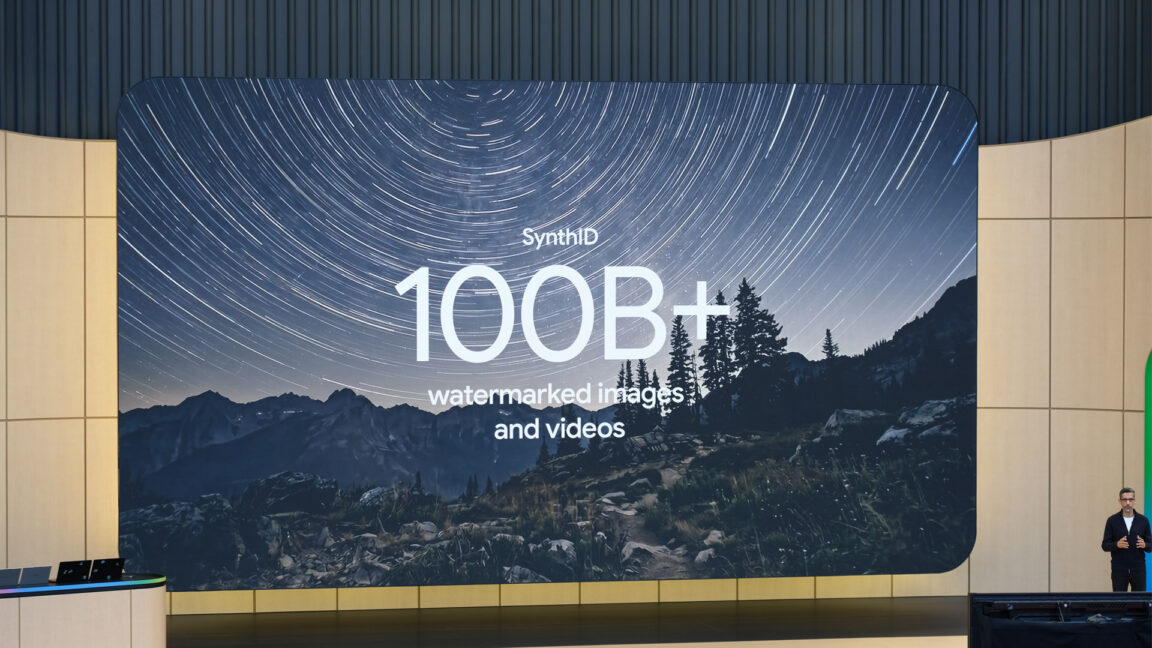
AIBullishArs Technica – AI · May 197/10
🧠Google's SynthID AI watermarking technology is being adopted by major AI companies including OpenAI and Nvidia to help identify AI-generated content and combat misinformation. This industry-wide adoption signals growing consensus around the need for content authentication tools as AI capabilities advance.
🏢 OpenAI🏢 Nvidia
AIBearisharXiv – CS AI · May 97/10
🧠Researchers introduce RobustSora, a benchmark dataset of 6,500 videos designed to isolate how AI-generated video detectors rely on watermarks versus actual generation artifacts. Testing across ten detection models reveals that watermark manipulation causes accuracy drops of up to 14 percentage points, demonstrating that current detectors are vulnerable to watermark-removal attacks and may not detect authentic AI-generated content when watermarks are absent.
🧠 Sora
AIBullishTechCrunch – AI · Apr 217/10
🧠YouTube is expanding its AI-powered likeness detection tool to help celebrities and their representatives identify and remove deepfake content featuring their likenesses. This extension of the platform's existing detection technology represents a significant step in addressing the growing problem of non-consensual synthetic media.
AIBearisharXiv – CS AI · Apr 147/10
🧠Researchers reveal a significant gap between laboratory performance and real-world reliability in AI-generated media detectors, demonstrating that models achieving 99% accuracy in controlled settings experience substantial degradation when subjected to platform-specific transformations like compression and resizing. The study introduces a platform-aware adversarial evaluation framework showing detectors become vulnerable to realistic attack scenarios, highlighting critical security risks in current AI detection benchmarks.
AIBearishWired – AI · Apr 117/10
🧠The proliferation of AI-generated content and restricted information sources has degraded the internet's ability to verify authenticity, creating systemic challenges for truth verification. This breakdown in verification infrastructure has broad implications for trust in digital information across sectors including finance, media, and technology.
AINeutralarXiv – CS AI · Apr 77/10
🧠Researchers developed a new AI-generated video detection framework using a large-scale dataset of 140K videos from 15 generators and the Qwen2.5-VL Vision Transformer. The method operates at native resolution to preserve high-frequency forgery artifacts typically lost in preprocessing, achieving superior performance in detecting synthetic media.
AI × CryptoBearishCoinTelegraph · Apr 67/10
🤖Cybercriminals on the darknet are selling a new AI-powered fraud kit designed to bypass KYC verification systems used by cryptocurrency exchanges and banks. The tool uses deepfake technology and real-time voice manipulation to trick identity verification processes on financial platforms.
AINeutralarXiv – CS AI · Apr 67/10
🧠Researchers introduce SAGA, a comprehensive framework for identifying the specific AI models used to generate synthetic videos, moving beyond simple real/fake detection. The system provides multi-level attribution across authenticity, generation method, model version, and development team using only 0.5% of labeled training data.
AIBearisharXiv – CS AI · Mar 97/10
🧠Research paper identifies a 'malicious technical ecosystem' comprising open-source face-swapping models and nearly 200 'nudifying' software programs that enable creation of AI-generated non-consensual intimate images within minutes. The study exposes significant gaps in current AI governance frameworks, showing how existing technical standards fail to regulate this harmful ecosystem.
AINeutralCrypto Briefing · Jun 246/10
🧠OpenAI has publicly endorsed the bipartisan DEFIANCE Act, legislation designed to combat explicit deepfakes. This endorsement reflects growing recognition within the AI industry that voluntary compliance is insufficient and that formal legal frameworks are necessary to address potential harms from advanced AI technologies.
🏢 OpenAI
GeneralBearishWired – AI · Jun 226/10
📰World Cup scams are becoming increasingly sophisticated, leveraging AI technology to create convincing fake tickets and cloned websites that deceive fans. The proliferation of these schemes raises questions about consumers' ability to verify authenticity in an era of advanced digital manipulation.
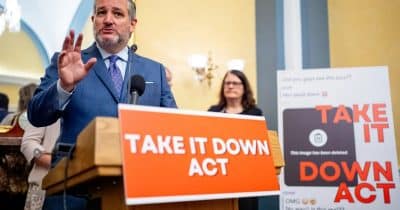
AINeutralCrypto Briefing · Jun 186/10
🧠An anti-deepfake bill has advanced to the Senate floor, introducing new regulatory requirements for AI-generated content. The legislation's swift passage reflects growing Congressional momentum on AI regulation and signals broader policy shifts that may accelerate future technology oversight.