AIBullisharXiv – CS AI · Jun 27/10
🧠Researchers have developed a foundation model for wearable health data trained on over one trillion minutes of sensor signals from five million participants. The model demonstrates strong performance across 35 health prediction tasks and enables few-shot learning and personalized health insights through integration with LLM agents, validated by clinician feedback.
AIBullisharXiv – CS AI · May 297/10
🧠Researchers propose Small Agent Group (SAG), a collaborative multi-agent approach to clinical AI that outperforms single large language models while reducing deployment costs and improving reliability. The study challenges the prevailing 'scaling-first' philosophy in digital health, suggesting that distributed reasoning across specialized agents can achieve superior clinical outcomes more efficiently.
AIBullisharXiv – CS AI · May 127/10
🧠Researchers have developed M2AE, a cross-modal foundation model trained on 3.4 million paired ECG and PPG signals that creates compact 'biosignal fingerprints' for cardiovascular monitoring. These privacy-preserving representations enable accurate disease detection and risk prediction across multiple clinical tasks while functioning with single-sensor wearables, addressing the scalability gap between diagnostic-grade ECG and ubiquitous PPG sensors.
AIBullisharXiv – CS AI · May 127/10
🧠Researchers have developed a deep learning model trained on ~65,000 speech samples from over 23,000 U.S. subjects that can detect depression and anxiety from voice biomarkers with 71% accuracy in sensitivity and specificity. The model extracts content-agnostic acoustic features combined with lexical information, demonstrating that raw speech analysis outperforms traditional hand-engineered acoustic descriptors for mental health screening.
🏢 Hugging Face
AIBullishTechCrunch – AI · Mar 107/10
🧠Amazon has launched a healthcare AI assistant on its website and mobile app that can answer health questions, explain medical records, manage prescription renewals, and book appointments. This represents Amazon's significant expansion into AI-powered healthcare services, potentially disrupting traditional healthcare delivery models.
GeneralNeutralMIT Technology Review · Jun 235/10
📰Rob Morris, an MIT graduate, founded Koko, a tech nonprofit addressing mental health accessibility through digital tools. The initiative stems from Morris's personal experience with depression and lack of mental health resources, aiming to democratize mental health support online.
AINeutralarXiv – CS AI · Jun 235/10
🧠PsyBridge is a hybrid AI framework that integrates validated mental health screening tools (PHQ-9, GAD-7) with cognitive and personality assessments to provide interpretable, multi-dimensional mental health risk classification. The framework achieved 84% accuracy on a 500-patient semi-synthetic dataset, outperforming isolated screening instruments and demonstrating potential for digital healthcare and telehealth applications.
AINeutralarXiv – CS AI · Jun 236/10
🧠A qualitative study of 20 peer supporters in Singapore examines how digital platforms mediate mental health support outside clinical systems. The research identifies design opportunities for culturally responsive AI tools that enhance rather than replace human connection in peer support contexts.
AINeutralarXiv – CS AI · Jun 86/10
🧠Researchers deployed a reinforcement learning-based contextual bandit system to dynamically deliver mental healthcare and wellness interventions as a unified care journey. A four-week study (N=38) revealed that RL-optimized intervention sequences showed delayed benefits post-intervention and that users with higher engagement in RL-generated prompts sustained motivation better than those on fixed interventions, raising critical questions about pacing and intensity in blended clinical-wellness digital health systems.
GeneralBullishFortune Crypto · Jun 76/10
📰Howie Mandel's mental health advocacy campaign with NOCD, a telehealth platform for OCD treatment, has generated significant celebrity interest and helped establish the company as a major player in digital mental health. The initiative demonstrates how celebrity endorsements can accelerate growth in the healthtech sector, with NOCD now valued at hundreds of millions of dollars.
GeneralNeutralGoogle Research Blog · Jun 46/10
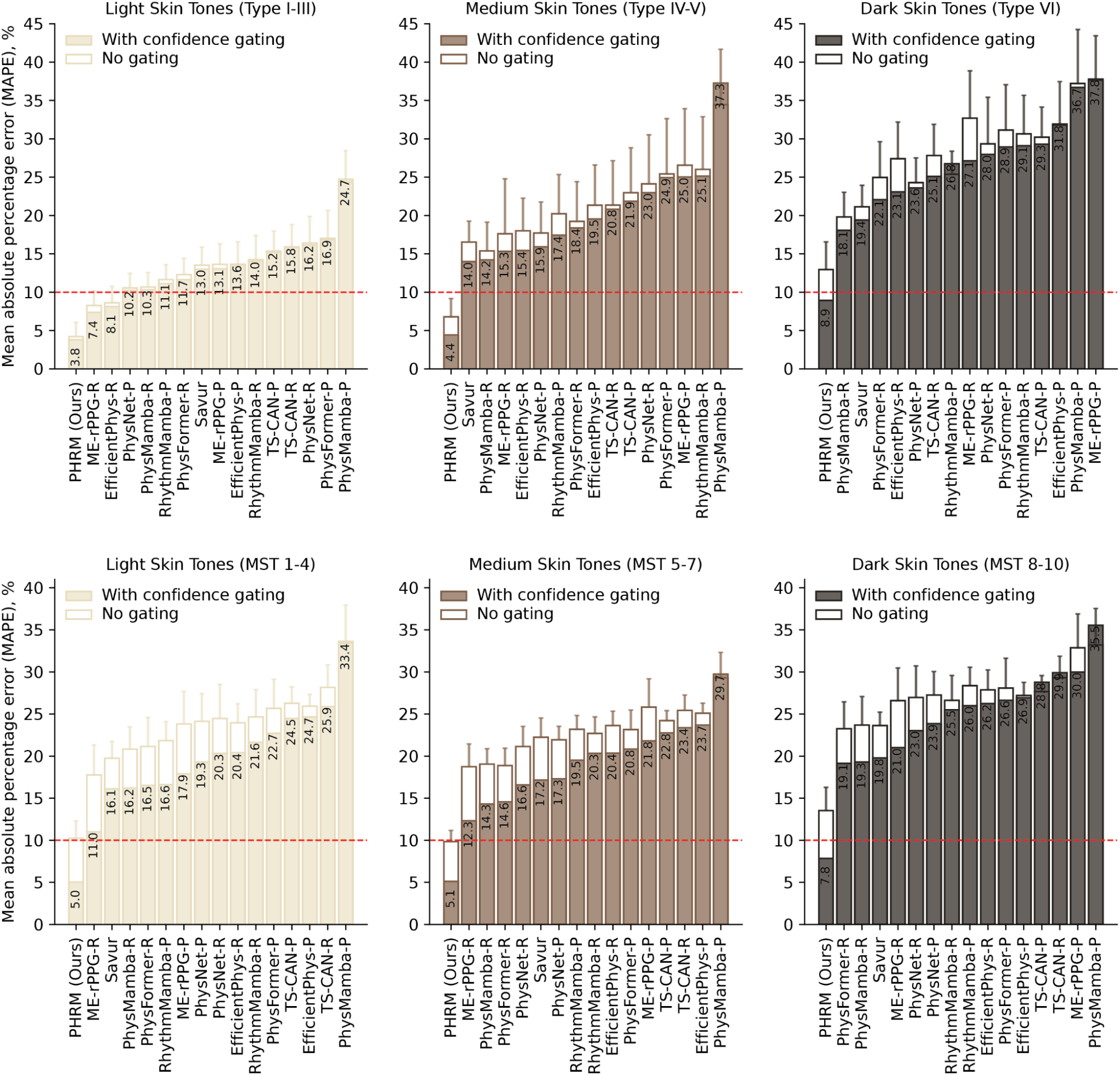
📰Researchers have developed a smartphone camera-based system for passive heart health monitoring, enabling non-invasive cardiovascular assessment through video analysis of facial blood flow changes. This advancement could democratize heart health tracking by leveraging ubiquitous smartphone technology without requiring specialized hardware.
AINeutralarXiv – CS AI · Jun 26/10
🧠Researchers propose a human-centered AI framework designed to support nurses in cancer care navigation by integrating empathic and agentic approaches grounded in nursing ethics. The framework aims to address gaps in care coordination in under-resourced areas of the United States where trained nurse navigators are scarce, augmenting rather than replacing human clinical judgment.
AIBullisharXiv – CS AI · Jun 26/10
🧠Researchers developed Quantitative Movement Testing (QMT), a computer vision system that measures patient movement from smartphone videos with clinical-grade accuracy. The technology uses deep learning-based 3D pose estimation to extract kinematic biomarkers, validated against optical motion capture in lab settings and tested in real-world chronic pain studies.
AINeutralarXiv – CS AI · Jun 16/10
🧠Researchers developed a generative AI-augmented user experience research methodology designed to improve digital health platforms for marginalized populations, specifically MSM and transgender individuals with HIV/AIDS in Nigeria. The framework combines AI-supported hypothesis generation with ethical guardrails to create psychologically safe, low-cognitive-load health interventions while protecting vulnerable users in restrictive regulatory environments.
AINeutralarXiv – CS AI · May 286/10
🧠Researchers propose that human behavioral variability stems from dynamic latent states—weighted neural-psychological conditions that determine how individuals process decisions moment-to-moment. Drawing on 24 months of data from 200,000+ users, the framework suggests human outcomes are causally controllable through state-targeted interventions, with implications for AI personalization, digital health, and behavioral prediction systems.
AINeutralarXiv – CS AI · May 275/10
🧠Rwanda's healthcare system conducted a stakeholder assessment to evaluate readiness for implementing big data analytics and machine learning in diabetes management. The study identified both opportunities and challenges in deploying these technologies within the country's expanding electronic medical records infrastructure, proposing a practical framework using explainable machine learning models.
AIBullisharXiv – CS AI · May 126/10
🧠SGC-RML is a new AI framework that improves Parkinson's disease assessment by combining speech, gait, and wearable sensor data while providing reliability estimates and confidence measures. The model achieves strong predictive performance across multiple datasets and can reject uncertain assessments or recommend retesting, addressing critical gaps in real-world digital health monitoring.
AINeutralAI News · May 76/10
🧠The UK's NHS is leveraging artificial intelligence to alleviate operational strain and reduce its 7.25 million patient waiting list. New AI-driven policies aim to shift patient care away from hospital settings, addressing the institution's chronic capacity challenges.
AIBullishBlockonomi · Mar 117/10
🧠Amazon has expanded its AI Health Assistant to all U.S. customers nationwide through Amazon.com. Prime members receive additional benefits including up to five complimentary healthcare provider consultations.
AINeutralarXiv – CS AI · Mar 94/10
🧠A 4-week study comparing bandit algorithms and LLM architectures for personalized health behavior interventions found that LLM-based messaging approaches were rated more helpful than templates, but contextual bandit optimization provided no additional benefit over LLM-only methods. The research reveals a trade-off between structured exploration of behavior change techniques and generative flexibility in AI health systems.