AI × CryptoBearishCrypto Briefing · Jun 23🔥 8/10
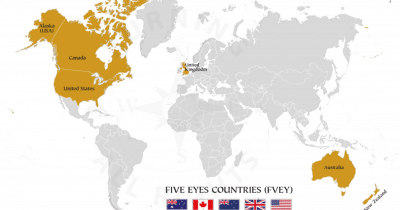
🤖The Five Eyes intelligence alliance has issued a warning that artificial intelligence could enable significantly more severe cyberattacks within months, driven by AI's ability to increase attack sophistication and lower barriers to entry for malicious actors. The alert underscores the urgent need for comprehensive cybersecurity infrastructure upgrades across government and private sectors.
GeneralBearishCrypto Briefing · Jun 20🔥 8/10
📰Ukraine conducted a long-range drone strike on the Tyumen oil refinery located 2,000 kilometers inside Russian territory, marking an escalation in attacks on Russian economic infrastructure. Such strikes on energy facilities risk destabilizing global energy markets and intensifying the broader conflict through targeting of critical civilian infrastructure.
DeFiBearishcrypto.news · Jun 107/10
💎Raydium, a major Solana-based automated market maker, suffered a $1.3 million exploit targeting legacy liquidity pools and has committed to full reimbursement of affected users. The attack, identified by security firms PeckShield and Specter, exploited outdated infrastructure, raising questions about the security practices surrounding retired smart contracts in the DeFi ecosystem.
$MKR$SOL
AIBearishCrypto Briefing · Jun 107/10
🧠CrowdStrike has issued a warning about escalating cyberattacks originating from China that specifically target AI infrastructure and assets. The threat underscores the critical vulnerability of AI systems to state-sponsored cyber operations and highlights the urgent need for robust cybersecurity defenses across the AI industry.
GeneralBearishCrypto Briefing · Jun 97/10
📰China Unicom has warned that proposed US restrictions on Chinese telecommunications companies could fragment global telecom networks and force reliance on less secure communication infrastructure. The company's statement highlights geopolitical tensions in the telecom sector and potential consequences for international connectivity standards.
GeneralBearishCrypto Briefing · Jun 8🔥 8/10
📰Russian drone strikes targeted a nuclear-fuel storage facility near Chornobyl in Ukraine, raising significant concerns about nuclear safety in active conflict zones. The attack demonstrates escalating risks of catastrophic consequences if containment systems fail during ongoing military operations.
AINeutralarXiv – CS AI · Jun 17/10
🧠A comprehensive analysis of 25 studies reveals that cybersecurity organizations are systematically adopting generative AI through modified frameworks and hybrid processes, with success heavily dependent on organizational maturity, regulatory pressure, and investment in human capital. Financial institutions and critical infrastructure sectors lead adaptation efforts, though persistent challenges around privacy, bias, and adversarial defense remain unresolved.
AI × CryptoBearishCrypto Briefing · May 287/10
🤖Kevin O'Leary warns that rapid AI advancement could trigger an economic depression by 2028, with significant implications for global job markets and industrial restructuring. The article examines technology's dual role in driving innovation while exploring geopolitical risks from Chinese interference in US infrastructure projects.
GeneralBearishCrypto Briefing · May 277/10
📰Dutch financial authorities seized 800 servers from data centers in a major operation targeting infrastructure allegedly linked to Russian cyberattacks. The raid highlights intensifying regulatory enforcement on digital infrastructure and the broader push to combat sanctions evasion through compliance mechanisms.
AIBearisharXiv – CS AI · May 277/10
🧠Researchers red-teamed ChatGPT and Claude Opus as TEE security advisors, finding both LLMs hallucinate mechanisms and overclaim guarantees in sensitive infrastructure guidance. The study demonstrates some failure patterns transfer across models (up to 12%) and proposes an 80.62% failure reduction through policy gating, retrieval grounding, and verification checks.
🧠 ChatGPT🧠 Claude
AI × CryptoBearishDecrypt · Apr 207/10
🤖Vercel, a cloud platform hosting infrastructure for numerous cryptocurrency frontends, suffered a security breach involving AI-powered hackers described as 'highly sophisticated' by the CEO. The incident compromised customer credentials, raising concerns about the security of crypto user interfaces and the broader infrastructure layer supporting digital asset platforms.
AIBullisharXiv – CS AI · Jun 256/10
🧠Researchers propose a cryptographic framework for securing Model Context Protocol (MCP) tool-use manifests in LLM pipelines, adding digital signatures, freshness validation, and tamper-evident audit logs. Testing across GPT-5.3, LLaMA-3.5, and DeepSeek-V3 demonstrates near-linear scalability with sub-10ms verification latency and 98.7%+ rejection rates for non-compliant manifests.
🧠 GPT-5
AINeutralCrypto Briefing · Jun 96/10
🧠BT has joined Anthropic's Project Glasswing initiative to leverage AI for enhanced cybersecurity vulnerability scanning. The partnership underscores growing institutional adoption of AI-powered security tools, though experts flag concerns about data concentration risks inherent in centralizing security intelligence.
🏢 Anthropic
AINeutralarXiv – CS AI · Jun 56/10
🧠Researchers propose a Cognitive Threat Intelligence framework combining Federated Learning and Explainable AI to detect cyber threats across distributed infrastructure systems while preserving data privacy. The approach eliminates the need to transmit sensitive network traffic to centralized servers, instead training models locally and sharing only encrypted parameters.
AINeutralarXiv – CS AI · May 126/10
🧠Researchers present a game-theoretic model showing that unequal access to AI-powered cybersecurity tools creates persistent vulnerabilities, with weak defenders unable to afford strong protection. They propose that targeted subsidies for committed defenders adopting advanced AI defenses significantly improve overall system resilience and suppress attacks more effectively than commitment alone.