
GeneralNeutralarXiv – CS AI · Jun 125/10
#privacy News & Analysis
Recent coverage of #privacy has grown substantially, with 136 articles published in the last 30 days across the indexed collection of 441 total pieces. Discussion sentiment has shifted notably bullish, rising to 86.8% positive—an 18.8 percentage point increase compared to the previous quarter. The conversation centers heavily on artificial intelligence systems, with OpenAI, ChatGPT, and Gemini featuring prominently alongside broader concerns about #security and #machine-learning. Academic research from arXiv dominates the source landscape, complemented by specialist coverage from crypto-focused outlets. The topic frequently intersects with blockchain discussions, particularly around Bitcoin and Ethereum. Scan the articles below to explore how privacy considerations are shaping current debates across technology and digital assets.
sentiment · last 30d (136 articles) · +18.8pp bullish vs prior 90d
Top sources:arXiv – CS AI · 194Blockonomi · 20CoinDesk · 16crypto.news · 15U.Today · 14
Most-discussed entities:OpenAI · 8ChatGPT · 7Gemini · 6Claude · 6Anthropic · 6
1175 articles
GeneralNeutralarXiv – CS AI · Jun 125/10
GeneralNeutralarXiv – CS AI · Jun 125/10
GeneralNeutralarXiv – CS AI · Jun 125/10
GeneralNeutralarXiv – CS AI · Jun 125/10
GeneralNeutralarXiv – CS AI · Jun 125/10
GeneralNeutralarXiv – CS AI · Jun 125/10
AIBullishCrypto Briefing · Jun 116/10
🧠
Nvidia RTX Spark streamlines design workflows with agentic AI
Nvidia has unveiled RTX Spark, a local AI processing solution designed to enhance creative workflows through agentic AI capabilities. The technology prioritizes on-device computation to reduce latency and minimize data exposure, positioning itself as a privacy-focused alternative to cloud-based design tools.

🏢 Nvidia
GeneralNeutralCrypto Briefing · Jun 116/10
📰
US lawmakers leave without extending FISA Section 702 authority
US lawmakers have allowed FISA Section 702 authority to lapse without renewal, triggering renewed debate over the balance between national security surveillance powers and privacy rights. This development could have indirect implications for cryptocurrency regulation and digital asset oversight.

AINeutralarXiv – CS AI · Jun 116/10
🧠
Robust Privacy: Inference-Stage Privacy through Certified Robustness
Researchers introduce Robust Privacy (RP), an inference-stage privacy framework that leverages certified robustness principles to prevent adversaries from inferring sensitive attributes or reconstructing training data from model predictions. The approach significantly outperforms differential privacy methods, reducing model inversion attack success rates from 73% to 4% while maintaining 98.4% accuracy, though it remains vulnerable to function-level extraction through model distillation.
GeneralNeutralCrypto Briefing · Jun 106/10
📰
Canada introduces teen social media ban with Big Tech off-ramp
Canada is implementing a social media age restriction targeting teens while offering Big Tech companies a compliance pathway. The policy aims to enhance youth safety but raises questions about age verification methods and their privacy implications, potentially driving demand for identity verification technologies.

CryptoNeutralCrypto Briefing · Jun 106/10
⛓️
Helius acquires Light Protocol to build Solana’s onchain privacy layer
Helius has acquired Light Protocol to develop privacy infrastructure for the Solana blockchain, potentially broadening institutional adoption by addressing confidentiality concerns. The move carries significant regulatory uncertainty as privacy-enhancing technologies face increased scrutiny from financial regulators globally.

$SOL
CryptoBullishThe Block · Jun 106/10
⛓️
Solana infrastructure firm Helius acquires Light Protocol to expand onchain privacy
Helius, a Solana infrastructure provider, has acquired Light Protocol to strengthen its onchain privacy capabilities. The move reflects broader industry consolidation and a renewed focus on privacy solutions within the cryptocurrency sector.

$SOL
AINeutralThe Verge – AI · Jun 106/10
🧠
Google will save your Lens photos, Search Live recordings, and Translate audio for AI training
Google is implementing a new 'Search Services History' setting that will save images, audio, video, and files from Google Lens, Search Live, voice searches, and Translate for AI training purposes. Users can disable this feature, but the change reflects Google's broader effort to collect multimodal data for training its AI models.

AINeutralThe Verge – AI · Jun 96/10
🧠
Apple’s AI promises are finally, almost, sort of, here
Apple announced a comprehensive AI overhaul centered on a revamped Siri at its developer conference, positioning the virtual assistant as a multimodal AI agent that integrates across its device ecosystem. The announcement represents Apple's attempt to catch up in AI innovation after largely neglecting Siri and delaying AI commitments throughout 2025, with the company emphasizing privacy protections alongside new capabilities.

AINeutralArs Technica – AI · Jun 96/10
🧠
Apple says its AI is still private, even when it's running on Google's servers
Apple claims its AI models maintain user privacy even when running on Google's cloud infrastructure, asserting that Google cannot access the data or model computations. This arrangement highlights the growing tension between leveraging third-party cloud providers for computational efficiency while preserving proprietary privacy guarantees.
AINeutralThe Verge – AI · Jun 96/10
🧠
Apple’s AI pitch will live or die by its privacy promise
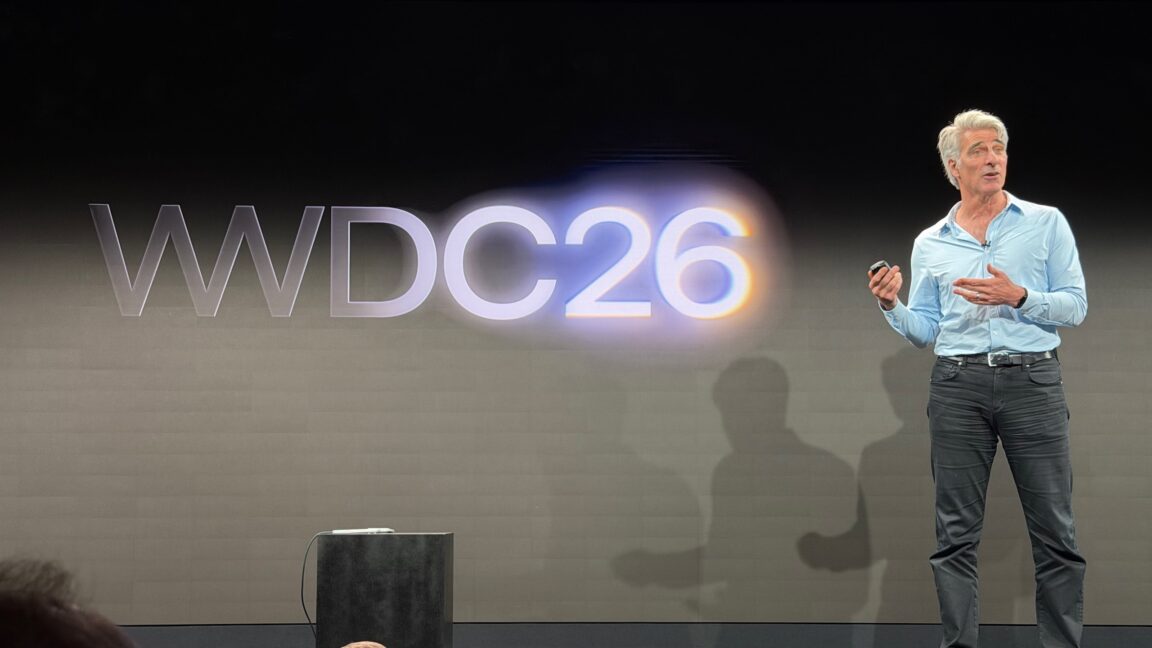
Apple unveiled its AI strategy at WWDC 2026, emphasizing privacy as its competitive differentiator by processing AI features on-device and through a new 'Private Cloud Compute' service. The company is expanding cloud processing to Google's servers while claiming equivalent privacy protections, betting that its privacy-first approach will justify its late entry into the AI market.

🧠 ChatGPT
AINeutralarXiv – CS AI · Jun 96/10
🧠
Causal Unlearning in Collaborative Optimization: Exact and Approximate Influence Reversal under Adversarial Contributions
Researchers present HF-KCU, a federated learning method that efficiently removes clients' data contributions while maintaining privacy compliance, achieving 47.75x speedup over retraining while preserving model accuracy. The technique uses Krylov subspace approximations and causal weighting to handle data deletion requests in production systems without compromising unaffected participants.
AINeutralarXiv – CS AI · Jun 96/10
🧠
TRACER: Token ReAssignment for Concept ERasure in Generative Recommendation
Researchers introduce TRACER, a novel framework for removing sensitive concepts from generative recommendation systems while preserving overall utility. The method uses token reassignment to handle the unique challenge that semantic IDs in recommendation systems are shared across items to forget and retain, unlike discrete tokens in language models.
AIBullishTechCrunch – AI · Jun 96/10
🧠
Why Apple’s slow-and-steady AI bet is starting to look pretty smart
Apple is making strategic progress in artificial intelligence through a measured, integration-focused approach rather than chasing headline-grabbing AI models. The company's deliberate strategy appears vindicated as it positions itself competitively in the AI industry race, potentially defusing concerns about being left behind by more aggressive competitors.
AIBearishWired – AI · Jun 86/10
🧠
Meta Deletes Face-Recognition System From Its Smart Glasses App After WIRED Report
Meta has removed face-recognition code from its Meta AI smart glasses app following a WIRED investigation, though the company has not disclosed why or whether the feature will return. The deletion raises questions about Meta's privacy practices and the oversight of facial recognition technology in consumer devices.

🏢 Meta
CryptoNeutralDecrypt – AI · Jun 86/10
⛓️
What is Zcash (ZEC)? The Privacy Coin Using Zero-Knowledge Proofs
Zcash is a privacy-focused cryptocurrency that uses zk-SNARKs (zero-knowledge succinct non-interactive arguments of knowledge) to enable users to conceal transaction details while maintaining blockchain verification. This technology represents a significant approach to balancing privacy and transparency in distributed ledger systems.

AINeutralarXiv – CS AI · Jun 86/10
🧠
Standard vs. Modular Sampling: Best Practices for Reliable LLM Unlearning
Researchers challenge conventional LLM unlearning practices by demonstrating that single neighbor sets and standard 1:1 sampling methods are suboptimal for removing knowledge while preserving model utility. The study proposes Modular Entity-Level Unlearning (MELU) as a more effective alternative, establishing new best practices for reliable AI model unlearning.
GeneralBullishCrypto Briefing · Jun 76/10
📰
Senate rejects warrantless surveillance law, raising doubts on its future
The U.S. Senate rejected reauthorization of warrantless surveillance provisions, signaling bipartisan concern over privacy rights. This decision could reshape how tech companies and digital platforms handle user data and compliance with government requests, with implications for the broader regulatory landscape affecting cryptocurrency and decentralized platforms.

GeneralBearishDaily Hodl · Jun 66/10
📰
Google To Hand Out $8,250,000 To Settle Lawsuit Alleging Collection of Personal Information From Under 13-Year-Olds Without Parental Consent
Google has agreed to settle an $8.25 million class action lawsuit alleging the tech giant illegally collected personal information from children under 13 without parental consent through its AdMob platform. The 2023 lawsuit, filed in California's Northern District, highlights ongoing regulatory scrutiny of big tech companies' data practices involving minors and their compliance with child privacy laws.
