AI × CryptoBearishCrypto Briefing · Jun 23🔥 8/10
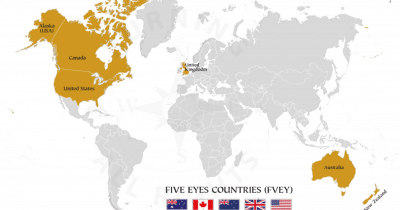
🤖The Five Eyes intelligence alliance has issued a warning that artificial intelligence could enable significantly more severe cyberattacks within months, driven by AI's ability to increase attack sophistication and lower barriers to entry for malicious actors. The alert underscores the urgent need for comprehensive cybersecurity infrastructure upgrades across government and private sectors.
AINeutralarXiv – CS AI · Jun 237/10
🧠Researchers propose using open-source intelligence (OSINT) methods to detect AI systems operating outside human control, identifying three detection vectors through expert consultation. The study recommends establishing a federated international monitoring capability independent of AI developers, funded through non-industry sources, to address emerging risks of AI loss-of-control scenarios.
AIBearisharXiv – CS AI · Jun 237/10
🧠Researchers demonstrate that Large Language Models like GPT-3.5 and GPT-4 can effectively obscure programmer code stylometry while maintaining functionality, challenging the reliability of authorship attribution techniques used in cybersecurity. The study reveals that structured, multi-shot prompting strategies outperform single-shot approaches in evading detection by traditional machine learning classifiers.
🧠 GPT-4
AI × CryptoBearishCrypto Briefing · Jun 227/10
🤖The Five Eyes intelligence alliance has issued a warning that AI-powered cyber threats could successfully breach critical systems within months, prompting urgent calls for increased investment in cybersecurity resilience. This development is reshaping organizational priorities around digital defense and influencing the cyber insurance market's risk assessment models.
GeneralBearishCrypto Briefing · Jun 107/10
📰A new Windows zero-day exploit called RoguePlanet has been discovered that can bypass Microsoft Defender on fully patched systems, exposing a critical gap in Microsoft's security patching cycle. This vulnerability underscores persistent risks for Windows users despite regular security updates and highlights the ongoing challenge of defending against sophisticated exploits.
AIBullisharXiv – CS AI · Jun 57/10
🧠Researchers introduce GenTI, an LLM-driven framework that automatically generates intrusion detection and prevention system (IDPS) rules for zero-day and unseen attacks. The benchmark dataset aggregates over 150,000 Snort/Suricata rules and 50,000 YARA signatures with structured cybersecurity intelligence, achieving 87.4% detection accuracy on unseen threats while reducing false positives from 8.5% to 2.3%.
GeneralBearishFortune Crypto · Jun 17/10
📰Crisis24 President Sid Kosaraju revealed that hackers demonstrated the ability to penetrate school websites and track his daughter's activity, illustrating how corporate security vulnerabilities expose families to physical risk. The incident exemplifies how organizations systematically underestimate predictable threats (grey rhinos) and remain unprepared despite warning signs.
AIBullishCrypto Briefing · Jun 17/10
🧠Anthropic has granted the EU's cybersecurity agency ENISA access to Mythos, an AI system designed to identify zero-day vulnerabilities. This strategic partnership could significantly influence EU cybersecurity policy and create competitive dynamics across European industries by enhancing threat detection capabilities.
🏢 Anthropic
CryptoBearishU.Today · May 277/10
⛓️Microsoft Threat Intelligence has identified a sophisticated cryptojacking campaign targeting PC gamers and hardware enthusiasts, exploiting their high-end systems to mine cryptocurrency without consent. This threat highlights the ongoing security risks in the cryptocurrency ecosystem and the targeting of users with valuable computational resources.
AI × CryptoBearishBitcoinist · May 127/10
🤖Google's Threat Intelligence Group warns that AI is being weaponized by state-linked hackers and criminal actors to create autonomous malware and zero-day exploits at scale, posing a direct threat to cryptocurrency users relying on standard security measures. This represents a significant escalation in the sophistication and speed of cyberattacks targeting digital assets.
AI × CryptoBearishcrypto.news · May 12🔥 8/10
🤖Google has identified the first documented zero-day attack leveraging AI to bypass two-factor authentication (2FA) security mechanisms. This development signals an escalation in attack sophistication and poses significant risks to cryptocurrency wallets, AI agents, and broader digital security infrastructure globally.
AIBearishDecrypt · May 117/10
🧠Google's threat intelligence team confirmed that cybercriminals have successfully used AI models to discover and exploit a previously unknown zero-day vulnerability that bypasses two-factor authentication. This represents a significant escalation in attack sophistication, demonstrating how AI tools are being weaponized to automate vulnerability discovery and exploitation at scale.
AI × CryptoBearishCrypto Briefing · May 11🔥 8/10
🤖Google has issued a warning that hackers are leveraging artificial intelligence to develop zero-day exploits in preparation for coordinated cyberattacks on a large scale. This development highlights the escalating sophistication of cyber threats and underscores the urgent need for strengthened global cybersecurity infrastructure to safeguard critical systems and sensitive information.
AIBearishThe Verge – AI · May 117/10
🧠Google's Threat Intelligence Group discovered and blocked the first known zero-day exploit developed with AI assistance, which cybercriminals planned to use for mass exploitation of an open-source web administration tool to bypass two-factor authentication. Google identified AI involvement through telltale signs in the Python script, including hallucinated CVSS scores and LLM-style formatting, marking a significant escalation in AI-enabled cyber threats.
GeneralBearishDaily Hodl · May 117/10
📰Cybersecurity firm iZOO Logic has identified BankGhost Builder, a malware-as-a-service threat advertised on Telegram that targets over 700 banks globally. The tool enables criminals to steal banking credentials and hijack user accounts, representing a significant evolution in financial cybercrime infrastructure.
AIBearisharXiv – CS AI · May 117/10
🧠A research paper examines how agentic AI systems are fundamentally lowering the cost and complexity of cyber attacks by automating reconnaissance, phishing, credential abuse, and exploit adaptation. The analysis forecasts significant security risks for enterprises and mid-market organizations through 2028, recommending immediate defensive priorities including identity management, patch velocity, and agent governance.
AI × CryptoBearishCrypto Briefing · May 47/10
🤖April 2024 recorded $600 million in cryptocurrency thefts across hacking incidents, marking a concerning peak in digital asset security breaches. The discussion highlights AI's dual role as both a cybersecurity threat and defensive tool, with industry experts advocating for a shift toward offensive security strategies to combat increasingly sophisticated attacks.
CryptoBullishU.Today · May 47/10
⛓️Ripple has partnered with the Crypto Information Sharing and Analysis Center (Crypto ISAC) to counter sophisticated cyberattacks originating from North Korea. This collaboration represents the blockchain industry's coordinated response to escalating state-sponsored threats targeting digital asset infrastructure.
$XRP
CryptoBearishCoinTelegraph · Apr 217/10
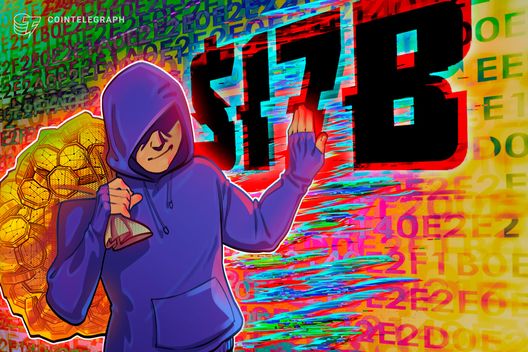
⛓️DefiLlama data reveals that cryptocurrency hackers have stolen approximately $17 billion over the past decade, with private key compromises emerging as the leading attack vector. This shift indicates that attackers are increasingly targeting user credentials and wallet security rather than exploiting smart contract vulnerabilities, signaling a troubling evolution in threat tactics.
CryptoBearishCoinTelegraph · Mar 57/10
⛓️Google threat researchers discovered fake cryptocurrency websites hosting a new exploit kit capable of compromising iPhones to steal crypto assets. The sophisticated attack targets iOS devices specifically to hunt for and extract cryptocurrency holdings from victims.
AIBullisharXiv – CS AI · Mar 56/10
🧠Researchers propose a hybrid AI agent and expert system architecture that uses semantic relations to automatically convert cyber threat intelligence reports into firewall rules. The system leverages hypernym-hyponym textual relations and generates CLIPS code for expert systems to create security controls that block malicious network traffic.
AIBullisharXiv – CS AI · Mar 37/104
🧠BinaryShield is the first privacy-preserving threat intelligence system that enables secure sharing of attack fingerprints across compliance boundaries for LLM services. The system addresses the critical security gap where organizations cannot share prompt injection attack intelligence between services due to privacy regulations, achieving an F1-score of 0.94 while providing 38x faster similarity search than dense embeddings.
AINeutralCrypto Briefing · Jun 96/10
🧠BT has joined Anthropic's Project Glasswing initiative to leverage AI for enhanced cybersecurity vulnerability scanning. The partnership underscores growing institutional adoption of AI-powered security tools, though experts flag concerns about data concentration risks inherent in centralizing security intelligence.
🏢 Anthropic
AINeutralarXiv – CS AI · Jun 86/10
🧠MalTree is a new framework that uses bioinformatics-inspired phylogenetic techniques to automatically trace malware evolution and family relationships at scale, achieving 87% temporal consistency with real-world timelines. By analyzing structural, behavioral, and image-based features, the research enables proactive defense strategies tailored to individual malware families' mutation rates rather than reactive, sample-by-sample detection approaches.
GeneralNeutralarXiv – CS AI · Jun 16/10
📰Researchers propose MAECO-Lite, a lightweight ontology for dynamic malware analysis that improves upon existing standards like MAEC and STIX by clearly separating enduring artifacts from runtime events. The modular framework demonstrates significantly better performance in machine learning-based threat intelligence processing while maintaining semantic precision.