AIBearishWired – AI · May 266/10
🧠A WIRED fact-checker examines AI's capability to perform fact-checking and finds that AI systems produce inaccurate results more frequently than commonly assumed. The article highlights a critical gap between AI's perceived reliability and its actual performance in verification tasks, raising concerns about deploying AI for critical information validation.
AINeutralarXiv – CS AI · May 126/10
🧠Researchers introduce Verifiable Process Rewards (VPR), a framework that enhances reinforcement learning for large language models by providing dense, intermediate-level feedback during reasoning tasks rather than relying solely on sparse outcome-level rewards. The approach leverages symbolic, algorithmic, and probabilistic verification methods to improve credit assignment in long-horizon agentic reasoning, with theoretical and empirical validation across multiple benchmarks.
AINeutralarXiv – CS AI · May 46/10
🧠Researchers propose a trust framework for AI agent skills—reusable code packages that extend language models—treating them as untrusted by default until verified. The approach introduces verification levels, capability gates, and correctness criteria to enable sustainable human-in-the-loop oversight without operational bottlenecks.
AIBullisharXiv – CS AI · Apr 66/10
🧠Researchers propose AIVV, a hybrid framework using Large Language Models to automate verification and validation of autonomous systems, replacing manual human oversight. The system uses LLM councils to distinguish between genuine faults and nuisance faults, demonstrated successfully on unmanned underwater vehicle simulations.
AIBullisharXiv – CS AI · Mar 266/10
🧠Researchers propose a new four-phase architecture to reduce AI hallucinations using domain-specific retrieval and verification systems. The framework achieved win rates up to 83.7% across multiple benchmarks, demonstrating significant improvements in factual accuracy for large language models.
AINeutralarXiv – CS AI · Mar 176/10
🧠Researchers propose AEX, a new attestation protocol for LLM APIs that provides cryptographic proof that API responses actually correspond to client requests. The system addresses trust issues with hosted AI models by adding signed attestation objects to existing JSON-based APIs without disrupting current functionality.
🏢 OpenAI
AIBullisharXiv – CS AI · Mar 176/10
🧠Researchers developed SimCert, a probabilistic certification framework that verifies behavioral similarity between compressed neural networks and their original versions. The framework addresses critical safety challenges in deploying compressed DNNs on resource-constrained systems by providing quantitative safety guarantees with adjustable confidence levels.
AIBullisharXiv – CS AI · Mar 116/10
🧠Researchers introduce RECODE, a new framework that improves visual reasoning in AI models by converting images into executable code for verification. The system generates multiple candidate programs to reproduce visuals, then selects and refines the most accurate reconstruction, significantly outperforming existing methods on visual reasoning benchmarks.
AIBullisharXiv – CS AI · Mar 96/10
🧠Researchers introduce PONTE, a human-in-the-loop framework that creates personalized, trustworthy AI explanations by combining user preference modeling with verification modules. The system addresses the challenge of one-size-fits-all AI explanations by adapting to individual user expertise and cognitive needs while maintaining faithfulness and reducing hallucinations.
AINeutralThe Verge – AI · Mar 36/104
🧠Following recent military strikes on Iran, floods of fake images and videos have appeared online, including AI-generated content and footage from video games like War Thunder. Reputable news organizations like The New York Times, Indicator, and Bellingcat use extensive verification procedures to combat the spread of synthetic and misleading content during major news events.
AIBullisharXiv – CS AI · Mar 37/108
🧠Researchers introduce LOGIGEN, a logic-driven framework that synthesizes verifiable training data for autonomous AI agents operating in complex environments. The system uses a triple-agent orchestration approach and achieved a 79.5% success rate on benchmarks, nearly doubling the base model's 40.7% performance.
AIBullisharXiv – CS AI · Mar 37/107
🧠Researchers propose MIST-RL, a reinforcement learning framework that improves AI code generation by creating more efficient test suites. The method achieves 28.5% higher fault detection while using 19.3% fewer test cases, demonstrating significant improvements in AI code verification efficiency.
AINeutralarXiv – CS AI · Mar 36/107
🧠Researchers introduced Pencil Puzzle Bench, a new framework for evaluating large language model reasoning capabilities using constraint-satisfaction problems. The benchmark tested 51 models across 300 puzzles, revealing significant performance improvements through increased reasoning effort and iterative verification processes.
AINeutralarXiv – CS AI · Mar 37/106
🧠Researchers present CLBC, a new protocol to prevent AI language model agents from hiding coordination in seemingly compliant messages. The system uses verifier-bound communication where messages must pass through a small verifier with proof-bound envelopes to be admitted to transcript state.
AIBullisharXiv – CS AI · Mar 36/106
🧠Researchers introduce One-Token Verification (OTV), a new method that estimates reasoning correctness in large language models during a single forward pass, reducing computational overhead. OTV reduces token usage by up to 90% through early termination while improving accuracy on mathematical reasoning tasks compared to existing verification methods.
AINeutralarXiv – CS AI · Mar 27/1019
🧠Researchers developed Once4All, an LLM-assisted fuzzing framework for testing SMT solvers that addresses syntax validity issues and computational overhead. The system found 43 confirmed bugs in leading solvers Z3 and cvc5, with 40 already fixed by developers.
AIBullisharXiv – CS AI · Feb 276/106
🧠Researchers have introduced ESAA (Event Sourcing for Autonomous Agents), a new architecture that improves LLM-based autonomous agents by separating cognitive intention from state mutation using structured JSON events and deterministic orchestration. The system addresses key limitations like context degradation and execution reliability, with successful validation through multi-agent case studies using various LLMs including Claude Sonnet and GPT-5.
AIBullisharXiv – CS AI · Feb 276/107
🧠Researchers propose AgentHub, a registry system for AI agents similar to software package repositories like npm or Hugging Face. The system aims to make AI agents discoverable, verifiable, and governable through structured manifests, evidence records, and lifecycle tracking.
CryptoNeutralCoinTelegraph – AI · Oct 226/10
⛓️Fake Cointelegraph social media accounts are increasingly targeting cryptocurrency users with scams and fraudulent schemes. The article explains how to identify these imposter accounts and provides guidance on verification methods to protect users from falling victim to these deceptive practices.
AIBullishHugging Face Blog · Jul 106/108
🧠Kimina-Prover represents a breakthrough in formal reasoning by applying test-time reinforcement learning search to large language models. This approach enhances mathematical proof generation and formal verification capabilities, potentially advancing AI's ability to handle complex logical reasoning tasks.
CryptoNeutralVitalik Buterin Blog · Oct 236/103
⛓️The article appears to discuss 'The Verge,' which is part of Ethereum's roadmap focusing on verification and proof systems. However, the article body was not provided, preventing detailed analysis of the specific technical improvements and timeline discussed.
$ETH
AIBullishOpenAI News · Jul 176/105
🧠Prover-verifier games represent a new approach to improving the legibility and transparency of language model outputs. This methodology aims to make AI-generated content more verifiable and trustworthy for both human users and automated systems.
CryptoNeutralEthereum Foundation Blog · Nov 155/101
⛓️Merkle trees are fundamental data structures that enable blockchain scalability by organizing transaction data efficiently. Without Merkle trees, blockchains would face significant scalability challenges as block headers would need to directly contain every transaction, creating trust and verification issues.
$ETH
GeneralNeutralCrypto Briefing · May 284/10
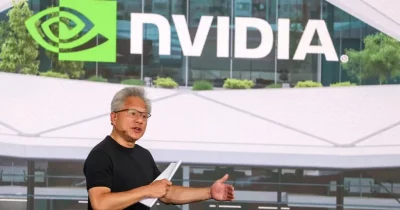
📰Reports claim Nvidia CEO Jensen Huang has joined the board of a prestigious Beijing university, though the claims remain unverified. The article emphasizes that unconfirmed leadership announcements can undermine stakeholder trust and influence strategic decisions in international academia.
🏢 Nvidia
AINeutralarXiv – CS AI · Apr 64/10
🧠Researchers propose SCRAT, a new AI framework that combines control, memory, and verification capabilities by studying squirrel behavior patterns. The study introduces a hierarchical model inspired by how squirrels navigate trees, store food, and adapt to observers, offering insights for developing more robust agentic AI systems.