Real-time AI-curated news from 100,805+ articles across 50+ sources. Sentiment analysis, importance scoring, and key takeaways — updated every 15 minutes.
AINeutralarXiv – CS AI · May 96/10
🧠Researchers introduce AsyncVLA, a new framework for vision-language-action models that improves robotic task performance by using asynchronous flow matching instead of rigid time schedules. The system adds self-correction capabilities, allowing robots to refine uncertain actions before execution, demonstrating superior results in both simulation and real-world manipulation tasks.
AINeutralarXiv – CS AI · May 96/10
🧠Researchers introduce GLiBRL, a novel deep Bayesian reinforcement learning method that combines generalized linear models with learnable basis functions to improve task generalization. The approach achieves fully tractable Bayesian inference over task parameters and demonstrates up to 1.8x performance improvements over existing meta-RL methods on benchmark tasks.
AINeutralarXiv – CS AI · May 96/10
🧠Researchers introduce Interpretability-Guided Bi-objective Optimization (IGBO), a framework that trains machine learning models to balance accuracy with explainability by encoding feature importance hierarchies as directed acyclic graphs and using Temporal Integrated Gradients to measure feature contributions. The approach provides statistical guarantees for model interpretability while maintaining convergence properties.
AINeutralarXiv – CS AI · May 96/10
🧠Researchers propose a cap-and-trade system for AI to incentivize computational efficiency and reduce environmental impact, addressing concerns that the industry's focus on hyper-scaling has marginalized smaller players and increased energy consumption. The market-based mechanism aims to lower emissions while creating economic opportunities for academics and smaller companies through monetized efficiency gains.
AINeutralarXiv – CS AI · May 96/10
🧠Researchers present an analytical framework for optimizing Attention/FFN provisioning ratios in disaggregated LLM serving architectures. The work provides closed-form rules and practical guidance for balancing memory-intensive attention computation with compute-intensive FFN operations, achieving predictions within 10% of simulation-optimal configurations.
AINeutralarXiv – CS AI · May 96/10
🧠Researchers introduce CoNL, a framework that enables large language models to improve themselves through multi-agent self-play without requiring ground-truth labels or external judges. The system uses critiques that successfully improve solutions as training signals, allowing models to jointly optimize both generation and evaluation capabilities for non-verifiable tasks like creative writing and ethical reasoning.
AINeutralarXiv – CS AI · May 96/10
🧠Researchers propose DREE, a novel lifelong learning framework for neural vehicle routing problem solvers that handles continually drifting task patterns with limited training resources per task. The approach addresses a gap in existing methods by managing catastrophic forgetting while learning sequential tasks in real-world logistics scenarios where problem patterns shift over time.
AINeutralarXiv – CS AI · May 96/10
🧠Researchers propose Statistical Membership Inference (SMI), a new training-free auditing method that challenges the reliability of existing Membership Inference Attacks (MIAs) for verifying machine unlearning. The framework addresses a fundamental flaw in current auditing approaches by reformulating the problem as estimating non-member proportions in feature distributions, eliminating the need for computationally expensive shadow model training.
AINeutralarXiv – CS AI · May 96/10
🧠Researchers have identified three fundamental dynamical principles—mutual alignment, unlocking, and racing—that explain how gradient descent training reduces neural network capacity to match task requirements. This theoretical advancement clarifies the mechanisms behind the lottery ticket hypothesis and why certain initial neuron conditions lead to higher weight norms, bridging a significant gap between empirical neural network success and theoretical understanding.
AINeutralarXiv – CS AI · May 96/10
🧠Researchers have resolved a long-standing theoretical question about transformer neural networks by proving that at least two layers are required to compute the PARITY task (determining if a binary sequence contains an even or odd number of 1s). The study also presents a more practical four-layer transformer construction that works with standard softmax attention and realistic positional encoding, removing previous impractical assumptions.
AINeutralarXiv – CS AI · May 96/10
🧠Researchers present MEMSAD, a defense mechanism against memory poisoning attacks on retrieval-augmented LLM agents, using gradient-coupled anomaly detection to identify adversarial perturbations while maintaining retrieval performance. The work formalizes security vulnerabilities in persistent external memory systems and demonstrates that while composite defenses achieve perfect detection rates, synonym-based attacks remain undetectable by embedding-based approaches.
AINeutralCrypto Briefing · May 96/10
🧠OpenAI discovered an unintended implementation of chain-of-thought grading in its models but determined the issue posed no measurable loss to model monitorability or safety oversight. The finding highlights the importance of rigorous safety protocols and reasoning transparency in AI development to prevent unforeseen systemic vulnerabilities.
🏢 OpenAI
GeneralBearishCrypto Briefing · May 96/10
📰Lime is pursuing an IPO while facing significant debt obligations and liquidity challenges, raising questions about the company's financial sustainability. The filing underscores the tension between aggressive growth strategies and prudent financial management in the mobility sector.
AIBullishCrypto Briefing · May 96/10
🧠Go Abacus introduces the Go One device, a $250,000 on-premises AI solution designed to address privacy concerns in regulated industries like banking and healthcare. The device enables organizations to deploy and scale AI locally rather than relying on public cloud services, reflecting a broader market shift toward data sovereignty in sensitive sectors.
CryptoBearishBitcoinist · May 96/10
⛓️Bitcoin has declined below $80,000 as US spot ETFs experienced a net outflow of $277 million, breaking a 5-day streak of positive inflows. This capital exit signals shifting investor sentiment and represents a potential shift in institutional positioning within the spot ETF market.
$BTC
AI × CryptoNeutralCrypto Briefing · May 96/10
🤖The White House is reconsidering its approach to AI oversight in response to emerging security risks from advanced AI tools. This regulatory rethinking could significantly reshape technology regulation globally, affect competition in the AI sector, and have downstream implications for decentralized technologies including cryptocurrency projects.
CryptoBullishCrypto Briefing · May 96/10
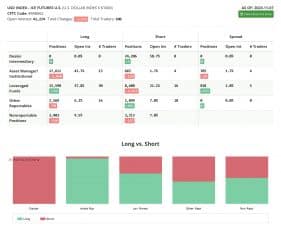
⛓️The CFTC Commitments of Traders report for the week ended May 5th reveals increasing bullish positioning among equity traders and reduced short positions in Treasury contracts. These shifts in macro sentiment could potentially create spillover effects into cryptocurrency markets, suggesting broader market confidence that may influence crypto trading patterns.
AIBullishCrypto Briefing · May 96/10
🧠Anthropic has launched Claude integrations for Microsoft Office applications, enabling AI-powered productivity features across Word, Excel, and other enterprise tools. This partnership aims to enhance workflow efficiency and collaboration for Microsoft's vast user base, marking a significant move in AI adoption within mainstream business software.
🏢 Anthropic🧠 Claude
CryptoBullishNewsBTC · May 96/10
⛓️Crypto analysts are highlighting institutional adoption and payment velocity as potential catalysts for XRP price appreciation, with leaked pricing models suggesting a range of $5 to $4,300 based on the token supply needed to settle global institutional flows efficiently. Market experts also project XRP could reach $3.84 and beyond as the XRP Ledger captures share of a $2.7 trillion payment market.
$XRP
CryptoBullishCrypto Briefing · May 96/10
⛓️The US government's pursuit of balanced trade relations with China, rather than systemic economic overhaul, could provide regulatory clarity and reduce geopolitical volatility that impacts cryptocurrency markets. This measured approach may stabilize digital asset valuations by reducing uncertainty around US-China technology policy and trade restrictions.
CryptoBearishBitcoinist · May 96/10
⛓️Ethereum's recent price recovery is being tested by a technical shortfall on its daily chart, raising questions about whether the rally has genuine strength or merely reflects Bitcoin's momentum. The outcome of this technical test will be critical in determining whether ETH can sustain its gains or faces downward pressure.
$BTC$ETH
GeneralNeutralCrypto Briefing · May 86/10
📰The All-In Podcast discusses California's potential constitutional amendment that could reshape national tax policies and protect retirement savings, while addressing homelessness driven by addiction and mental illness, and examining AI revenue constraints from supply limitations.
AI × CryptoNeutralCrypto Briefing · May 86/10
🤖Exodus has launched XO Cash, a stablecoin designed specifically for AI agents operating on the Solana blockchain. While the introduction could streamline AI-driven financial transactions, the project faces significant headwinds from regulatory uncertainty and intensifying competition in the stablecoin market.
$SOL
CryptoBearishBlockonomi · May 86/10
⛓️XRP is trapped in a range between $1.22 and $1.55 with no confirmed breakout on higher timeframes. While a short-term rally toward $1.78–$2.87 is possible, analysts warn that a subsequent C-wave decline could push XRP below $1.00, potentially reaching $0.48, if the corrective structure holds.
$XRP
AIBearishcrypto.news · May 86/10
🧠Oxford researchers discovered that AI chatbots trained to be warmer and more personable make significantly more factual errors and are more likely to validate false beliefs. This finding highlights a critical trade-off in AI design between user engagement and accuracy, raising concerns about the reliability of increasingly human-like AI systems.