Real-time AI-curated news from 94,711+ articles across 50+ sources. Sentiment analysis, importance scoring, and key takeaways — updated every 15 minutes.
DeFiBullishCrypto Briefing · Jun 97/10
💎Regulatory approval for US onshore perpetual futures markets represents a significant growth opportunity for the crypto derivatives sector. Lighter, a trading platform, is pioneering a zero-fee model that challenges traditional exchange economics, while attracting engineering talent comparable to top AI startups.
GeneralBearishBlockonomi · Jun 97/10
📰Bank of America strategists have raised concerns about market conditions, reporting that 70% of bear market indicators are currently active. The S&P 500 is identified as overvalued on 17 of 20 metrics, with technology stocks exhibiting valuation patterns reminiscent of the dot-com bubble, signaling potential downside risk for equity investors.
GeneralNeutralCrypto Briefing · Jun 97/10
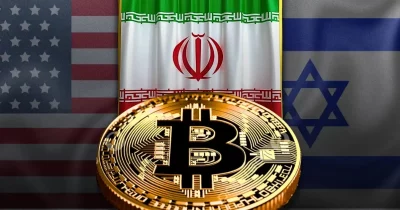
📰Iran launched missiles at Israel, prompting activation of missile defense systems, while cryptocurrency markets remained relatively stable despite geopolitical tensions. The escalation highlights ongoing ceasefire fragility and potential risks to global markets if the conflict intensifies further.
CryptoBearishBitcoinist · Jun 97/10
⛓️Humanity Protocol, a biometric blockchain identity project, lost $32 million in a security breach on June 9 that crashed its H token 90%, but on-chain investigator ZachXBT has publicly questioned whether the hack was staged, presenting evidence suggesting an inside job rather than an external attack.
GeneralBearishCrypto Briefing · Jun 9🔥 8/10
📰Israeli airstrikes in Lebanon have triggered significant mass displacement in Tyre, escalating regional tensions. The conflict reduces peace prospects and increases the likelihood of broader regional involvement, creating macroeconomic uncertainty that could impact global markets and cryptocurrency volatility.
CryptoBearishDecrypt · Jun 97/10
⛓️Humanity Protocol suffered a $36 million loss after attackers compromised an employee's laptop, gaining access to private keys and bridge systems that allowed them to mint tokens arbitrarily. The security breach resulted in a 73% token price collapse, exposing critical vulnerabilities in the protocol's key management infrastructure.
GeneralBearishCrypto Briefing · Jun 9🔥 8/10
📰Iran has fully closed the Bab al-Mandab Strait following Israeli military strikes, escalating Middle Eastern tensions and disrupting critical global shipping routes. This geopolitical crisis threatens oil supply stability and global markets, while simultaneously highlighting cryptocurrency's utility as a sanctions-circumvention tool amid international economic tensions.
CryptoBullishCrypto Briefing · Jun 97/10
⛓️Trump called for a ceasefire between Israel and Iran, prompting Bitcoin to surge 5% as markets responded positively to reduced geopolitical risk. The price movement reflects investor sentiment that de-escalation of Middle Eastern tensions reduces macroeconomic uncertainty and supports risk-on asset demand.
$BTC
AIBullishCrypto Briefing · Jun 97/10
🧠Nvidia and Hyundai have deepened their strategic alliance to accelerate AI integration in robotics and autonomous mobility solutions. This expanded partnership could significantly reshape industrial automation and transportation sectors by combining Nvidia's AI computing expertise with Hyundai's automotive and robotics capabilities.
🏢 Nvidia
DeFiBullishBlockonomi · Jun 97/10
💎RippleX is conducting formal verification testing on XRPL lending code before validators vote on mainnet activation. The XLS-66 proposal would introduce fixed-term loans funded by Single Asset Vault liquidity, with formal verification methods helping identify accounting and state errors that standard testing might miss.
$XRP
DeFiBearishcrypto.news · Jun 97/10
💎Humanity Protocol suffered a $36 million exploit after attackers compromised administrative keys and gained control of bridge infrastructure across Ethereum and BNB Smart Chain. The breach highlights critical vulnerabilities in bridge security and centralized key management practices within DeFi protocols.
$ETH$BNB
CryptoBullishThe Block · Jun 97/10
⛓️Zodia Custody has obtained a Luxembourg payment institution license from the Commission de Surveillance du Secteur Financier (CSSF), enabling it to offer regulated stablecoin custody and transfer services across the European Union. This regulatory milestone strengthens the institutional infrastructure for stablecoin operations in Europe and demonstrates growing acceptance of digital asset services within the EU's stringent regulatory framework.
CryptoBullishcrypto.news · Jun 97/10
⛓️SBI Shinsei Bank, a major Japanese financial institution, launched a three-month promotional campaign offering cryptocurrency exchange vouchers worth 20% of deposit interest earnings in Bitcoin, Ether, and XRP. This initiative represents a significant bridge between traditional banking and digital assets, signaling institutional adoption of cryptocurrencies in Japan's conservative financial sector.
$BTC$ETH$XRP
GeneralBearishCrypto Briefing · Jun 9🔥 8/10
📰Israeli military forces struck an Iranian petrochemical complex allegedly linked to missile production, escalating regional tensions. The attack raises geopolitical risks that could destabilize Middle Eastern security, disrupt global energy markets, and complicate international diplomatic initiatives.
$BTC
GeneralBearishCrypto Briefing · Jun 9🔥 8/10
📰Iran's military launched missile strikes against Israeli targets, coinciding with a Bitcoin price decline to $63,000. The escalation of Middle Eastern geopolitical tensions demonstrates how regional conflicts can trigger volatility in cryptocurrency markets through broader risk-off sentiment.
$BTC
AIBullishMIT Technology Review · Jun 97/10
🧠Enterprise AI agent adoption is projected to surge 300% within two years, prompting leadership teams to strategically plan for hybrid human-AI workforces. Unlike traditional automation requiring manual oversight, autonomous AI agents can coordinate complex tasks across multiple tools and environments, fundamentally reshaping organizational management structures.
DeFiBullishCoinDesk · Jun 97/10
💎Circle has launched cirBTC, a 1:1 bitcoin-backed token on Ethereum, enabling bitcoin holders to access DeFi protocols without selling their BTC. The move positions Circle as a competitor to Coinbase's wrapped bitcoin offerings in the growing market for tokenized bitcoin on Layer 1 blockchains.
$BTC$ETH
CryptoBearishThe Block · Jun 97/10
⛓️Bitcoin has declined below $63,000 as market analysts identify a distribution phase where rallies are being actively sold rather than organically accumulated. This selling pressure coincides with reported institutional outflows, suggesting weakening demand at higher price levels and potential headwinds for near-term price recovery.
$BTC
AI × CryptoBullishNewsBTC · Jun 97/10
🤖Ripple has completed formal verification testing of the XRP Ledger's upcoming lending protocol in partnership with security firm Common Prefix, using mathematical proof techniques typically reserved for nuclear and military systems. The process has already identified edge cases that traditional testing missed, representing a significant security advancement as native DeFi features move toward activation.
$XRP
GeneralBullishMIT Technology Review · Jun 97/10
📰Longevity scientist David Sinclair plans to launch human trials of an oral "reprogramming" drug designed to reverse aging, testing the treatment through a $101 million XPrize competition. This represents a significant shift from theoretical research to clinical validation of cellular rejuvenation technology.
CryptoBullishThe Block · Jun 97/10
⛓️Japan's SBI Shinsei Bank plans to launch a cryptocurrency rewards program in fall 2024, offering customers vouchers equal to 20% of their deposit interest payments that can be redeemed for digital assets. This initiative represents a significant step toward crypto integration by a major traditional financial institution in Japan.
CryptoBearishCrypto Briefing · Jun 9🔥 8/10
⛓️Iran's Islamic Revolutionary Guard Corps (IRGC) launched missile strikes against an Israeli petrochemical facility, triggering a broad risk-off sentiment that sent Bitcoin below $63,000. The escalation in Middle Eastern tensions threatens energy market stability and global supply chains, prompting investors to flee crypto and other risk assets.
$BTC
DeFiBullishBlockonomi · Jun 97/10
💎Bitrue Research Institute's June 2026 report documents a significant shift in institutional capital allocation away from token emission-based yield farming toward sustainable real yield strategies backed by real-world asset (RWA) yields and borrower interest spreads. This transition reflects growing institutional preference for economically sound models over inflationary mechanisms, signaling maturation in the crypto market's approach to yield generation.
DeFiBullishcrypto.news · Jun 97/10
💎Ripple is conducting formal verification testing of XRP Ledger's native lending protocol in collaboration with Common Prefix to identify potential Layer-1 vulnerabilities before mainnet activation. This proactive security approach reflects growing industry emphasis on rigorous code auditing before deploying new financial infrastructure.
$XRP
AIBullishBlockonomi · Jun 97/10
🧠Amazon completed a historic C$14 billion bond sale in Canada with double the expected demand, marking a record for Canadian corporate debt. The capital raise is part of the company's $70+ billion borrowing initiative in 2025 aimed at funding artificial intelligence infrastructure and data center expansion.