Real-time AI-curated news from 94,772+ articles across 50+ sources. Sentiment analysis, importance scoring, and key takeaways — updated every 15 minutes.
AI × CryptoBearishBlockonomi · Jun 97/10
🤖Arthur Hayes' Maelstrom fund has divested from altcoins including HYPE, NEAR, WLD, and ZEC while maintaining Bitcoin and Ether holdings, citing AI's absorption of capital liquidity as a headwind for crypto markets. Hayes attributes Bitcoin's 2025 trajectory to accelerating AI capital expenditures and debt issuance, with rising energy costs and upcoming AI IPOs reshaping his market outlook.
$BTC$ETH$WLD
CryptoBullishThe Block · Jun 97/10
⛓️Zcash has finalized its Ironwood upgrade plan with a target activation date in July. The upgrade introduces a new shielded pool and implements mechanisms to ensure the circulating ZEC supply remains bounded, addressing long-standing concerns about the protocol's economic sustainability.
CryptoBearishcrypto.news · Jun 97/10
⛓️The Bank of Japan is preparing to raise its benchmark interest rate from 0.75% to 1.0% at its June 15-16 policy meeting, marking a significant monetary policy shift. This development has renewed macro scrutiny on cryptocurrencies, raising questions about whether the rate hike could trigger another crypto market selloff similar to previous tightening cycles.
$BTC
CryptoBearishFortune Crypto · Jun 97/10
⛓️Michael Saylor's aggressive leverage strategy at MicroStrategy through preferred stock issuance creates vulnerability to a potential death spiral if asset valuations decline. The math underlying his bet on continued Bitcoin appreciation and stock price support is increasingly precarious, raising concerns about the sustainability of his capital structure.
CryptoBearishCrypto Briefing · Jun 97/10
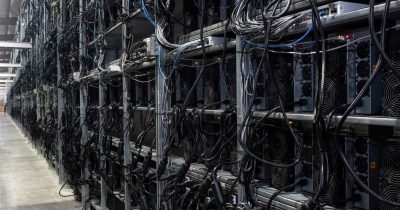
⛓️ERCOT has warned that Texas's power grid faces blackout risks as data centers and cryptocurrency mining operations trip offline during grid disturbances. The instability threatens economic growth and invites heightened regulatory scrutiny of energy-intensive crypto operations in the state.
CryptoBearishCrypto Briefing · Jun 9🔥 8/10
⛓️Iran launched a missile attack on Israel, triggering a sharp sell-off in cryptocurrency markets with Bitcoin experiencing notable declines. The escalation reflects heightened Middle East tensions that ripple through global financial markets, influencing investor risk appetite and asset allocation decisions across traditional and digital markets.
$BTC
CryptoBearishcrypto.news · Jun 97/10
⛓️Over 200 crypto companies and industry organizations are pushing the U.S. Senate to vote on the CLARITY Act as legislative momentum wanes. The advocacy effort signals growing concern that the bill may not advance before Congress's window of opportunity closes.
CryptoBearishCrypto Briefing · Jun 9🔥 8/10
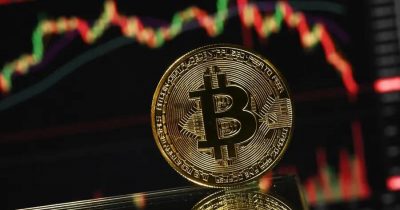
⛓️Bitcoin has experienced a significant 35% price decline amid escalating US-Iran geopolitical tensions, highlighting cryptocurrency's vulnerability to macroeconomic and geopolitical shocks. The downturn underscores how risk-averse sentiment during international crises can trigger rapid capital outflows from volatile asset classes like digital currencies.
$BTC
CryptoBearishCrypto Briefing · Jun 97/10
⛓️Galaxy Digital has reduced its probability assessment for the CLARITY Act's passage to 60% as legislative deadlines approach, signaling growing uncertainty about regulatory clarity for digital assets. The diminished odds underscore the challenges facing cryptocurrency legislation in Congress and could further delay much-needed regulatory frameworks for the industry.
GeneralBearishCrypto Briefing · Jun 97/10
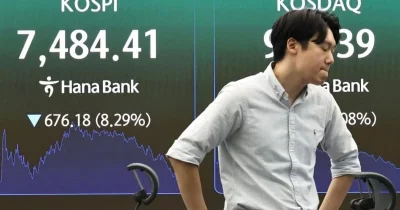
📰Foreign investors have offloaded $62 billion in South Korean stocks as the KOSPI index declined 8%, signaling a potential shift toward domestic ownership that could increase market volatility and test the country's economic resilience.
CryptoBearishCrypto Briefing · Jun 9🔥 8/10
⛓️Escalating military tensions between Israel and Iran have destabilized global markets, with cryptocurrency experiencing notable volatility as investors flee risk assets amid geopolitical uncertainty. The breakdown of ceasefire agreements demonstrates how regional conflicts can rapidly transmit shocks through interconnected financial systems, including digital asset markets.
CryptoBearishCrypto Briefing · Jun 97/10
⛓️Humanity Protocol's H token plummeted nearly 90% following a security breach where attackers stole private keys and drained $32 million from the project. The incident underscores persistent vulnerabilities in cryptocurrency security infrastructure and the severe consequences of compromised key management systems.
GeneralBearishCrypto Briefing · Jun 9🔥 8/10
📰Iran launched ballistic missiles toward Israel, triggering air raid sirens across major Israeli cities in a significant military escalation. The geopolitical conflict underscores macroeconomic uncertainty and reinforces cryptocurrency's appeal as a non-correlated asset during periods of international instability.
GeneralNeutralCrypto Briefing · Jun 97/10
📰Iran has announced a reopening of the Strait of Hormuz under new conditions, a geopolitical development with potential ripple effects on global oil markets. The shift in shipping conditions through this critical chokepoint could influence crude prices, inflation rates, and central bank monetary policies, which in turn affect cryptocurrency valuations and investor sentiment.
GeneralBearishCrypto Briefing · Jun 97/10
📰Former President Trump has made a bold prediction of US 'total victory' over Iran within two weeks, a statement likely to escalate geopolitical tensions. Such rhetoric can significantly influence cryptocurrency and broader financial market sentiment by increasing perceived macroeconomic risk and uncertainty.
CryptoBullishcrypto.news · Jun 97/10
⛓️Despite recent Bitcoin price volatility near $65,000, institutional investors remain committed to accumulating the asset, according to Coinbase strategist John D'Agostino. Strong ETF ownership and sustained corporate demand indicate that major market corrections are failing to deter institutional participation.
$BTC
CryptoBearishCrypto Briefing · Jun 9🔥 8/10
⛓️Escalating military tensions between Iran and Israel are driving increased market volatility, with Bitcoin declining toward $63,000 amid geopolitical uncertainty. Despite Donald Trump's calls for peace, the exchange of missile strikes is pressuring oil prices and cryptocurrency valuations as investors reassess risk exposure.
$BTC
CryptoBearishCrypto Briefing · Jun 9🔥 8/10
⛓️Israel conducted military strikes against Iranian targets as diplomatic ceasefire efforts collapsed, triggering a sharp Bitcoin price dip below $64,000 before recovering. The escalation underscores cryptocurrency's vulnerability to geopolitical shocks and their ripple effects through global energy markets.
$BTC
CryptoBearishCoinDesk · Jun 97/10
⛓️Humanity Protocol's H token crashed over 80% after attackers compromised a foundation member's private keys and began liquidating $32 million in stolen tokens for ether. The incident highlights critical security vulnerabilities in decentralized identity projects and raises concerns about private key management practices within blockchain foundations.
$ETH
CryptoBearishCrypto Briefing · Jun 9🔥 8/10
⛓️Iranian Revolutionary Guard Corps (IRGC) military strikes on Israeli air bases coincide with Bitcoin's decline toward $104K, underscoring how geopolitical escalation drives cryptocurrency market volatility. The tension highlights crypto's sensitivity to macroeconomic and geopolitical shocks, potentially triggering regulatory responses and altering patterns in Iranian crypto activity.
$BTC
CryptoBearishCrypto Briefing · Jun 9🔥 8/10
⛓️Bitcoin declined to $62,900 as oil prices surged 3% following escalating Iran-Israel tensions, exposing cryptocurrency's sensitivity to geopolitical shocks. The price movement challenges the narrative that Bitcoin serves as a reliable safe-haven asset during periods of macroeconomic instability.
$BTC
AIBullishCrypto Briefing · Jun 97/10
🧠PhysicsX has secured $300M in funding, reaching a $2.4B valuation as it advances AI-powered simulation technology for manufacturing. The company's rapid growth underscores growing investor confidence in AI applications that can replace traditional computational methods in industrial settings.
CryptoBearishcrypto.news · Jun 97/10
⛓️Humanity Protocol's H token crashed 83% following a private key breach that resulted in over $30M in stolen funds. The incident has raised serious security concerns about the protocol's bridge and liquidity pools, triggering widespread warnings across the ecosystem.
GeneralBearishCrypto Briefing · Jun 97/10
📰Economists warn that the European Central Bank risks repeating its 2011 policy error by raising interest rates amid fragile eurozone economic conditions. A rate hike could trigger recession and destabilize financial markets, given existing economic vulnerabilities in the region.
GeneralBearishCrypto Briefing · Jun 9🔥 8/10
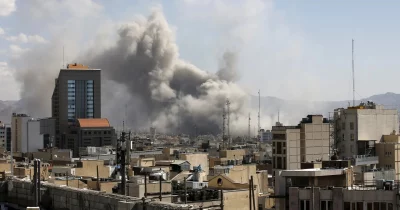
📰An Israeli projectile damaged Iran's Karun petrochemical plant in Mahshahr, escalating Middle Eastern tensions. The strike threatens global oil market stability and could disrupt specialty chemical supply chains, creating potential ripple effects across energy markets and cryptocurrency valuations tied to macro volatility.