
Bank of Russia cuts key interest rate to 14% as inflation slows from wartime peak
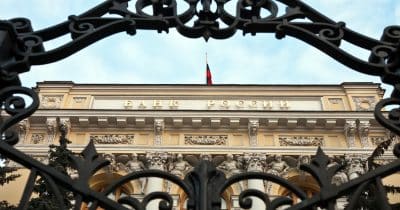
The Bank of Russia reduced its key interest rate from 16% to 14% as inflation moderates from pandemic-era highs, a move designed to stimulate economic activity. While the rate cut may encourage risk-taking in equities, persistent inflation volatility remains a structural challenge for Russian monetary policy and broader economic stability.
The Bank of Russia's decision to lower its benchmark rate reflects a shift in monetary policy stance as inflationary pressures ease from wartime peaks. This reduction signals confidence that price growth is moving toward more manageable levels, enabling policymakers to prioritize economic stimulus over inflation containment. The move is significant because Russia's monetary policy trajectory directly influences capital flows, asset valuations, and investor risk appetite across emerging markets.
Context matters here: Russia's economy faced severe inflationary shocks due to geopolitical tensions and sanctions, forcing the central bank to maintain elevated rates for extended periods. The gradual decline in inflation from those crisis levels suggests some normalization, though the underlying economic structure remains volatile and vulnerable to external shocks. This creates a delicate balancing act for policymakers.
For investors and market participants, lower rates typically boost equities by reducing borrowing costs and encouraging allocation toward riskier assets. Russian equity markets could experience renewed interest as the cost of capital declines. However, the analysis explicitly flags inflation volatility as an ongoing threat, suggesting the central bank remains cautious about premature easing. This tension—between stimulus benefits and inflation risks—creates uncertainty about the sustainability of this trajectory.
Going forward, investors should monitor whether inflation stabilizes at acceptable levels or reignites, which would force the central bank to reverse course. The pace of future rate cuts depends heavily on geopolitical developments and external economic conditions, making Russian assets inherently speculative for now.
- →Bank of Russia cut rates to 14% from 16% as inflation moderates from wartime peaks.
- →Lower rates should encourage investment in Russian equities through reduced borrowing costs.
- →Inflation volatility remains a structural economic risk despite recent improvements.
- →Rate cuts signal confidence in inflation stabilization but carry reversal risk.
- →Geopolitical factors continue to constrain the predictability of Russian monetary policy.