22,940 AI articles curated from 50+ sources with AI-powered sentiment analysis, importance scoring, and key takeaways.
AIBullishCrypto Briefing · Jun 246/10
🧠Federal Reserve Governor Lisa Cook discussed small business AI adoption at a Stanford symposium, emphasizing that AI implementation can enhance productivity without causing significant labor disruption. Her remarks suggest the Fed views measured AI integration as compatible with steady economic growth and current monetary policy objectives.
AIBullishCrypto Briefing · Jun 246/10
🧠Cantor Fitzgerald analyst CJ Muse projects sustained earnings growth for Micron through 2028, underscoring memory chip supply's importance in shaping semiconductor market dynamics and enabling AI infrastructure expansion. This forecast reflects confidence in continued demand for memory solutions across computing and artificial intelligence applications.
AINeutralTechCrunch – AI · Jun 246/10
🧠Facebook is launching an AI companion app for creators that integrates its recently-developed AI creator assistant. Currently in limited testing with select creators, the app represents Meta's push to embed AI tools directly into creator-focused products.
AIBullishCrypto Briefing · Jun 246/10
🧠Palo Alto Networks achieved 31% revenue growth, reaching $3 billion in Q3 2026, driven by strategic acquisitions and AI-powered cybersecurity solutions. The company's expansion reflects broader industry trends where artificial intelligence and M&A activity are becoming essential competitive advantages in enterprise security markets.
AINeutralGoogle Research Blog · Jun 246/10
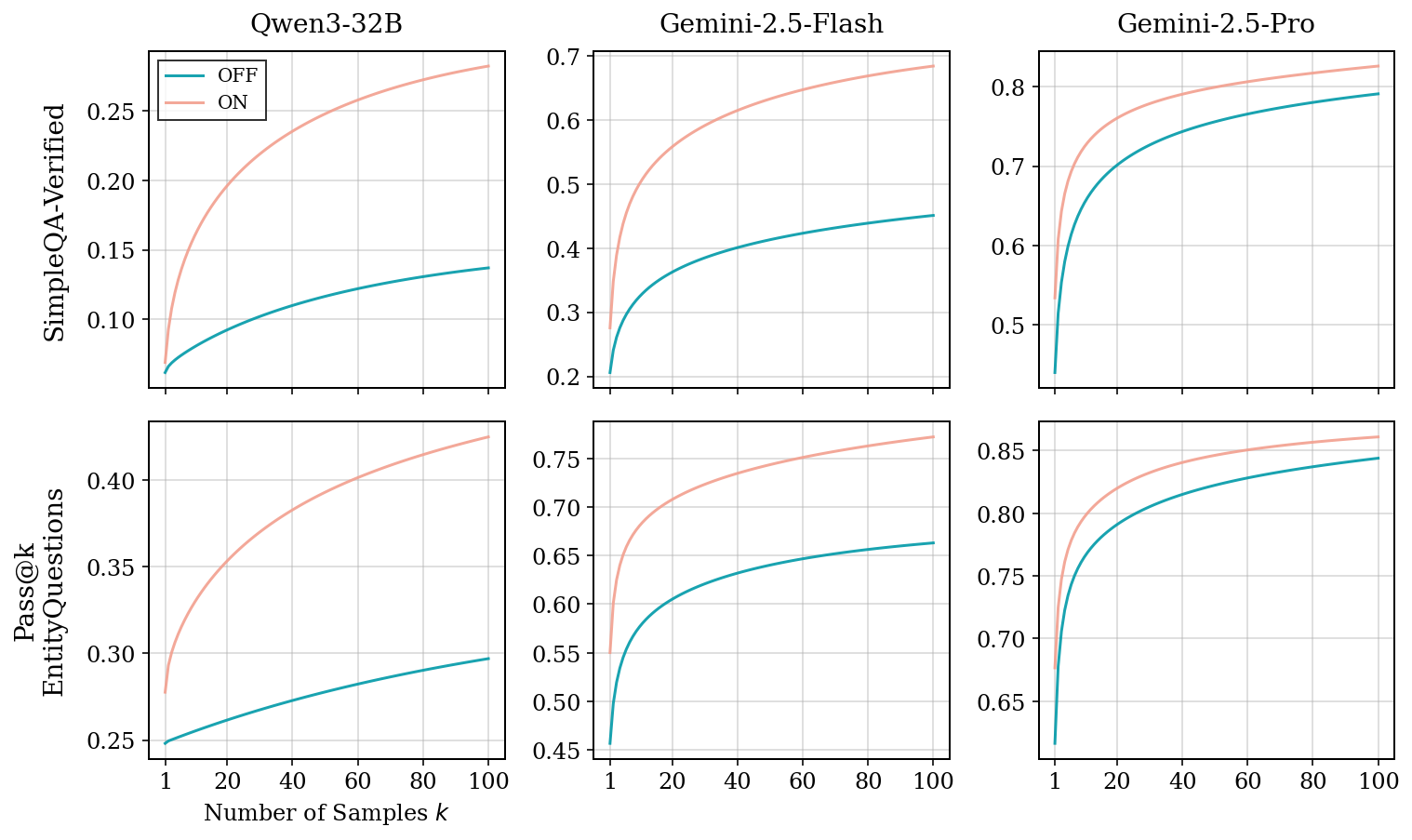
🧠Researchers demonstrate that reasoning processes enable large language models to effectively recall and utilize parametric knowledge stored in their weights, challenging previous assumptions about knowledge retrieval mechanisms. This finding has significant implications for understanding how LLMs access information and suggests that explicit reasoning may be essential for optimal knowledge extraction.
AIBullishCrypto Briefing · Jun 246/10
🧠Google's Gemini desktop application has introduced a new voice dictation feature called 'Speak to Window,' enabling users to interact with AI assistance through spoken commands integrated directly into their desktop workflow. This enhancement aims to streamline productivity by allowing seamless voice-to-text conversion and AI-assisted task completion without switching between applications.
🧠 Gemini
AIBearishCrypto Briefing · Jun 246/10
🧠The Washington Post conducted testing of major AI chatbots and found most exhibited left-leaning political bias in their responses. The findings highlight growing concerns about AI neutrality, which is becoming a competitive differentiator as regulatory scrutiny intensifies around algorithmic fairness and bias.
AIBearishFortune Crypto · Jun 246/10
🧠Robert Wright, founder of Nonzero, warns that artificial intelligence will trigger systemic disruptions across culture, politics, psychology, and family life—extending far beyond employment displacement. His new book 'The God Test' argues society lacks the 'enlightenment' needed to navigate these interconnected challenges.
AIBullishCrypto Briefing · Jun 246/10
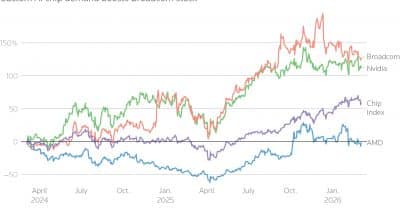
🧠Broadcom has set an ambitious target to generate over $100 billion in AI semiconductor revenue by 2028, a goal that could significantly reshape technology supply chains and influence broader market dynamics. This initiative positions the company to compete more aggressively in the high-demand AI infrastructure sector while potentially affecting cryptocurrency markets dependent on computing resources.
AINeutralCrypto Briefing · Jun 246/10
🧠China's 360 has launched AI-powered cybersecurity tools designed to compete with Anthropic's offerings, marking Beijing's strategic push into AI security applications. This development signals intensifying competition in the global AI market and raises questions about technological sovereignty and geopolitical implications for cybersecurity infrastructure.
🏢 Anthropic
AIBullishTechCrunch – AI · Jun 246/10
🧠Figma released a major update introducing code layers, motion and shader support, and AI-powered custom plugin creation capabilities. These features enhance the design platform's technical depth and automation potential, positioning Figma as a more comprehensive tool for developers and designers working with interactive and dynamic content.
AIBullishThe Verge – AI · Jun 246/10
🧠Figma announced new AI-powered design tools at Config 2026, including AI-generated motion graphics, shader tools, and coding layers that enable developers to modify project code directly within the design canvas. The updates position Figma as a full-stack development platform that integrates design, code, and AI agents in a unified workspace.
AINeutralCrypto Briefing · Jun 246/10
🧠Anthropic has shifted its White House AI policy representation from CEO Dario Amodei to cofounder Tom Brown, signaling a strategic recalibration in how the company engages with U.S. regulatory discussions. This leadership change in high-stakes government talks may influence the direction of emerging AI regulatory frameworks and compliance standards that could have global implications.
🏢 Anthropic
AIBullishBlockonomi · Jun 246/10
🧠ARK Invest, led by Cathie Wood, made significant portfolio adjustments by selling $44M in Roku while accumulating positions in Palantir, Amazon, Tesla, Alphabet, CoreWeave, and Cerebras. These trades reflect ARK's strategic pivot toward AI infrastructure and enterprise software companies, signaling confidence in tech giants and specialized AI hardware providers.
AINeutralCrypto Briefing · Jun 246/10
🧠Anthropic engineers have demonstrated that agent loops—iterative AI processes where models refine their own outputs—significantly improve AI capabilities and performance. However, this advancement comes with a substantial trade-off: substantially increased computational costs and operational expenses, forcing organizations to carefully balance enhanced capabilities against budget constraints.
🏢 Anthropic
AIBullishCrypto Briefing · Jun 246/10
🧠According to analyst Tony Zhang, Nvidia currently trades at a valuation discount compared to the broader semiconductor sector, suggesting potential investment value if AI-driven semiconductor growth materializes as projected. This valuation perspective highlights an opportunity for investors seeking exposure to AI infrastructure plays at potentially favorable multiples.
🏢 Nvidia
AIBearishWired – AI · Jun 246/10
🧠Anthropic's CEO Dario Amodei has been sidelined from White House meetings, with cofounder Tom Brown taking his place in high-stakes discussions. A Trump administration official reportedly called Amodei a "weirdo," signaling potential friction between the AI company leadership and the current administration.
🏢 Anthropic
AIBullishFortune Crypto · Jun 246/10
🧠Amazon Web Services CEO Matt Garman counters widespread concerns about AI displacing white-collar workers by announcing the company is hiring 11,000 graduates and interns while maintaining more developers than two years ago. His statement signals confidence that AI will augment rather than eliminate entry-level positions, challenging the narrative of imminent job market disruption.
AIBearishBlockonomi · Jun 246/10
🧠Bloom Energy stock dropped 13% as two major energy initiatives redirect investment away from its fuel cell technology: a Chevron-Microsoft partnership developing gas turbines for AI data centers and a $17.5 billion U.S. federal nuclear financing program. These competing solutions underscore intensifying competition in the race to power energy-hungry artificial intelligence infrastructure.
AINeutralTechCrunch – AI · Jun 246/10
🧠OpenAI has unveiled Jalapeño, its first custom-designed processor built by Broadcom, engineered specifically for the company's inference systems. This move reflects the AI industry's broader shift toward vertical integration and specialized hardware to optimize performance and reduce costs for large-scale model deployment.
🏢 OpenAI
AINeutralCrypto Briefing · Jun 246/10
🧠DeepMind CEO Demis Hassabis cautions that artificial intelligence faces a hype cycle in the short term while its long-term transformative potential in medicine and science remains underestimated. Despite current market volatility, Hassabis believes AI will drive significant economic shifts through breakthroughs in healthcare and scientific research.
🏢 Google
AIBullishBlockonomi · Jun 246/10
🧠Nokia stock rose 1.88% following simultaneous partnership announcements with Databricks for autonomous network development and an expanded collaboration with AWS. These dual strategic partnerships signal Nokia's commitment to leveraging cloud and AI technologies to modernize its networking infrastructure business.
AINeutralCrypto Briefing · Jun 246/10
🧠Citizens equity research flags AI talent retention as a material risk for Alphabet despite maintaining an outperform rating, suggesting the company's competitive advantages in artificial intelligence may be vulnerable to brain drain. While Alphabet maintains strong infrastructure and financial resources, losing key AI researchers and engineers could erode its technological leadership in a field where human capital is increasingly critical to innovation and market positioning.
AIBullishBlockonomi · Jun 246/10
🧠Nvidia maintains a stock price above $200 while analysts maintain a $305 price target despite the current valuation. With 48 Buy ratings and a forward P/E ratio of 19.34x—below the S&P 500 average—the stock appears undervalued relative to its 85% revenue growth trajectory, suggesting significant upside potential for investors.
🏢 Nvidia
AIBullishFortune Crypto · Jun 246/10
🧠Nasdaq's CFO Sarah Youngwood is leading a strategic initiative to embed AI literacy across the finance function, requiring leaders themselves to develop hands-on AI expertise rather than delegating learning solely to their teams. This approach reflects a broader organizational shift recognizing that executive-level understanding of AI is essential for effective implementation and decision-making in financial operations.