22,940 AI articles curated from 50+ sources with AI-powered sentiment analysis, importance scoring, and key takeaways.
AIBearishCrypto Briefing · Jun 267/10
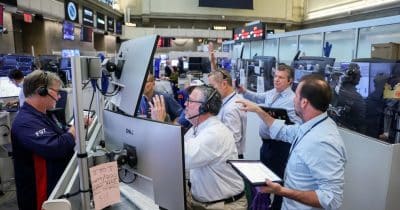
🧠A significant market correction in AI-related stocks has exposed the speculative nature of a $270 billion investment wave on Wall Street, raising questions about the sustainability of valuations in the AI infrastructure sector. The volatility demonstrates structural fragility in how tech equities are priced and whether current investment levels reflect genuine technological progress or financial speculation.
AINeutralCrypto Briefing · Jun 267/10
🧠OpenAI is reportedly considering delaying its initial public offering until 2027 to achieve a $1 trillion valuation, according to The New York Times. This strategic decision could significantly reshape tech market dynamics by establishing new benchmarks for startup valuations and influencing how investors approach late-stage funding for high-growth AI companies.
🏢 OpenAI
AIBearishCrypto Briefing · Jun 267/10
🧠The New York Times has filed an amended copyright complaint against Microsoft and OpenAI, now including allegations about supercomputer infrastructure used in AI model training. The lawsuit could establish significant legal precedents for how tech partnerships operate and reshape liability frameworks in AI development, potentially affecting investor confidence in major tech companies.
🏢 OpenAI
AIBearishArs Technica – AI · Jun 267/10
🧠The New York Times has shifted its copyright infringement allegations against OpenAI and Microsoft, now claiming Microsoft built a supercomputer specifically to facilitate copyright violations. This legal repositioning follows a Supreme Court ruling against Sony that potentially weakened fair-use defenses in AI training contexts.
🏢 OpenAI
AIBearishFortune Crypto · Jun 267/10
🧠OpenAI has agreed to stagger the rollout of its most advanced model, restricting initial access to customers approved by the Trump administration due to concerns about cybersecurity capabilities. This marks the second instance in a month where a leading AI lab has delayed general availability of its most powerful model over fears of malicious use.
🏢 OpenAI
AIBullishCrypto Briefing · Jun 267/10
🧠Paul Meade, the chief of Apple's Vision Pro project, has joined OpenAI's hardware division. This move signals OpenAI's strategic pivot toward developing consumer hardware products that integrate advanced AI capabilities, marking a significant competitive shift in the tech industry.
🏢 OpenAI
AIBullishDecrypt – AI · Jun 267/10
🧠The Linux Foundation and 19 major organizations, including leading AI labs and financial institutions, have launched Akrites, a coordinated security initiative to protect open-source software from AI-powered attacks and supply chain threats. This collaborative defense effort addresses growing vulnerabilities in critical infrastructure as malicious actors increasingly leverage AI for sophisticated code injection and exploitation.
AIBearishDecrypt · Jun 267/10
🧠OpenAI has launched GPT-5.6 models on Friday, but deployment is restricted to a limited user base due to U.S. government intervention. This represents a significant shift in AI model availability, with regulatory oversight now directly constraining commercial AI rollouts.
🏢 OpenAI🧠 GPT-5
AIBullishCrypto Briefing · Jun 267/10
🧠OpenAI has appointed Prabhjeet Singh, former chief of Uber India, as managing director for India. This leadership move signals OpenAI's strategic commitment to expanding its presence in the Indian market and accelerating AI adoption across the region.
🏢 OpenAI
AIBearishCrypto Briefing · Jun 267/10
🧠US technology companies are accusing Chinese competitors of using AI distillation techniques to reverse-engineer and replicate advanced chatbot models, escalating intellectual property disputes in the AI sector. The allegations have prompted unprecedented collaboration between major US tech firms and government agencies to address the threat.
AIBearishCrypto Briefing · Jun 267/10
🧠The US government is implementing a vetting process for companies seeking access to OpenAI's latest AI models, potentially creating delays in market entry and unequal competitive conditions. This regulatory approach reflects growing government scrutiny of advanced AI technology deployment and may impact innovation velocity across the sector.
🏢 OpenAI
AIBearishCrypto Briefing · Jun 267/10
🧠OpenAI has restricted access to its GPT-5.6 model following discussions with the Trump administration, signaling potential government intervention in AI model releases. This regulatory involvement may establish precedent for future government oversight, potentially slowing innovation timelines across the AI industry.
🏢 OpenAI🧠 GPT-5
AIBullishCrypto Briefing · Jun 267/10
🧠Retail investors have invested a record $22.5 billion into US-listed semiconductor ETFs, driven by accelerating AI demand. The surge highlights both the market's confidence in semiconductor growth and emerging volatility risks as capital concentrates in AI-adjacent sectors.
AIBearishCrypto Briefing · Jun 257/10
🧠The Trump administration has requested that OpenAI delay the release of a new AI model pending government review. This regulatory intervention could reshape competitive dynamics in the AI sector, potentially disadvantaging OpenAI while benefiting competitors and prompting broader considerations about AI governance policy.
🏢 OpenAI
AIBearishFortune Crypto · Jun 257/10
🧠A lawsuit alleges that AI-powered pricing software enabled Marathon, BP, and Circle K to collude on gas prices across approximately 1,700 California gas stations. The case highlights how algorithmic pricing tools can facilitate anti-competitive behavior, raising questions about AI's role in price-fixing schemes and regulatory oversight of automated pricing mechanisms.
AIBearishFortune Crypto · Jun 257/10
🧠Democratic politician Gina Raimondo is co-founding a group to address potential mass unemployment caused by AI advancement, warning that job displacement could destabilize the country and democracy. The initiative reflects growing political concern about AI's economic disruption as the technology accelerates.
AIBearishThe Verge – AI · Jun 257/10
🧠The Trump administration has requested that OpenAI delay and stagger the release of GPT-5.6, citing security concerns. OpenAI will initially release the model in limited preview form to select enterprise customers, with the federal government approving access on a case-by-case basis during the evaluation period.
🏢 OpenAI🏢 Anthropic🧠 GPT-5
AIBearishCrypto Briefing · Jun 257/10
🧠Anthropic has called on Congress to strengthen AI export controls to prevent unauthorized knowledge transfer from US-developed models, while accusing Chinese tech giant Alibaba of conducting a massive model distillation attack. The company argues that enhanced export restrictions could mitigate national security risks associated with advanced AI capabilities.
🏢 Anthropic
AIBearishCrypto Briefing · Jun 257/10
🧠Alphabet is experiencing significant talent attrition as AI researchers depart for competitors OpenAI and Anthropic, signaling potential weaknesses in its AI strategy and organizational culture. This exodus raises questions about the company's ability to maintain leadership in the rapidly evolving AI sector and may influence investor confidence in its long-term competitive positioning.
🏢 OpenAI🏢 Anthropic
AIBearishCrypto Briefing · Jun 257/10
🧠A NEA partner underscores the critical shortage of AI chips, forcing companies to prioritize chip availability over performance quality. This supply crisis is reshaping innovation timelines, increasing costs, and altering competitive positioning in the AI sector.
AIBearishCrypto Briefing · Jun 257/10
🧠The New York Times has amended its lawsuit against OpenAI and Microsoft, with the case potentially reshaping copyright standards in AI development. The litigation's resolution could establish new precedents for how AI companies use published content and fundamentally alter media industry revenue models.
🏢 OpenAI
AINeutralCrypto Briefing · Jun 25🔥 8/10
🧠The Pentagon has revised its military doctrine to expand artificial intelligence's role in targeting decisions, marking a significant shift in defense strategy. The move raises substantial ethical concerns and invites legislative scrutiny regarding autonomous weapons systems and AI decision-making in combat operations.
AIBearishDecrypt – AI · Jun 257/10
🧠Anthropic has called on Congress to regulate AI model distillation after alleging that Alibaba-affiliated operators used nearly 25,000 fraudulent accounts to generate 28.8 million Claude API exchanges, potentially extracting proprietary model knowledge. The incident highlights vulnerabilities in API-based AI systems and raises questions about intellectual property protection in the competitive AI development landscape.
🏢 Anthropic🧠 Claude
AIBullishCrypto Briefing · Jun 257/10
🧠Onsemi is acquiring Synaptics in a $7 billion all-stock deal, marking a significant consolidation in the Edge AI semiconductor space. The merger aims to combine their technologies to accelerate innovation in artificial intelligence processing at the edge, potentially reshaping the competitive landscape for both chipmakers and their customers.
AIBearishCrypto Briefing · Jun 257/10
🧠Google is taking a hardline approach in negotiations to license content from publishers for AI training, signaling that the company may offer below-market rates. These negotiations could establish industry-wide precedents for how AI developers compensate creators, directly affecting publisher revenue models and content economics.