GeneralBearishCrypto Briefing · Apr 157/10
Crypto Signal News
Markets, DeFi, chain. 23,201 articles with AI-powered sentiment analysis and key takeaways.
23201 articles

GeneralBearishCrypto Briefing · Apr 157/10
AI × CryptoBullishCrypto Briefing · Apr 157/10
🤖
Jensen Huang: Nvidia’s role in transforming electrons to tokens, the exponential growth of AI agents, and overcoming semiconductor supply chain bottlenecks | Dwarkesh
Jensen Huang discusses Nvidia's pivotal role in AI infrastructure, highlighting how the company is converting computational power into tokenized value while managing semiconductor supply chain constraints. The conversation explores the exponential growth trajectory of AI agents and the strategic importance of overcoming chip supply bottlenecks to enable widespread AI deployment.

🏢 Nvidia
CryptoBullishCoinTelegraph · Apr 157/10

CryptoBearishThe Block · Apr 157/10
⛓️
CryptoQuant says bitcoin rally faces rising profit-taking risk as exchange inflows jump
CryptoQuant reports that Bitcoin's recent rally is increasingly vulnerable to profit-taking as exchange inflows spike, signaling growing selling pressure from investors looking to realize gains. Multiple technical indicators suggest market participants are positioning to distribute holdings at higher price levels.
$BTC
CryptoBullishThe Block · Apr 157/10
⛓️
Former Lutnick-run Cantor Fitzgerald donates $10 million to crypto PAC led by Tether exec
Cantor Fitzgerald has donated $10 million to a cryptocurrency-focused super PAC led by a Tether executive, signaling institutional support for pro-crypto political candidates ahead of election season. This contribution represents a major corporate commitment to crypto-friendly political advocacy.
CryptoBullishNewsBTC · Apr 157/10
⛓️
Bitcoin Miners Are Choosing To Hold At $74K: Changing The Supply Picture
Bitcoin miners are holding rather than selling at the $74,000 level, with the Miners' Position Index at -0.83 indicating reduced exchange transfers and diminished selling pressure. This structural shift removes a historically reliable trigger for price corrections, potentially supporting consolidation around current levels as the asset tests resistance at $74,000-$75,000.

$BTC$ETH$XRP🧠 ChatGPT
CryptoBullishcrypto.news · Apr 157/10
⛓️
Circle CEO Jeremy Allaire’s TIME 100 nod cements USDC’s mainstream clout
Circle CEO Jeremy Allaire has been named to TIME100's 2026 list of most influential people, reflecting USDC stablecoin's growing mainstream adoption among banks, fintechs, and regulators globally. The recognition underscores the stablecoin's emergence as a compliant infrastructure layer in traditional finance.

CryptoBearishcrypto.news · Apr 157/10
⛓️
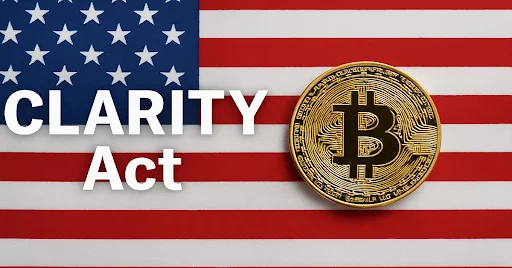
CLARITY Act Gridlock Grows as Republicans Fight Over FISA and Budget
House Republicans are deadlocked over FISA surveillance reauthorization and budget reconciliation, consuming legislative time needed to advance the CLARITY Act—crypto's flagship regulatory bill. This gridlock risks derailing the legislation before midterm election politics dominate the congressional calendar.
CryptoBearishCoinDesk · Apr 157/10
⛓️
Crypto's new $11 million PAC booked millions in ads with firm started by Tether US CEO
A newly formed $11 million cryptocurrency PAC booked significant advertising through a firm founded by Tether US CEO Paolo Ardoino, raising questions about potential conflicts of interest. While Tether maintains close associations with the emerging political action committee, initial funding came from Cantor Fitzgerald and Anchorage Digital rather than Tether itself.

GeneralBearishFortune Crypto · Apr 15🔥 8/10
📰
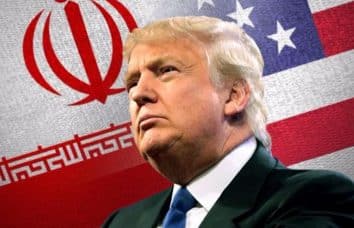
‘I am certain’: Harvard policy expert warns the true cost of the Iran war to U.S. taxpayers will exceed $1 trillion
Harvard policy expert Linda Bilmes warns that a potential Iran war could cost U.S. taxpayers over $1 trillion, drawing parallels to her previous research with economist Joseph Stiglitz showing the 2003 Iraq war's actual cost exceeded initial projections by four times.

CryptoBullishCrypto Briefing · Apr 157/10
⛓️
Michael Saylor: Bitcoin’s price is set to rise amid decreasing supply, Goldman Sachs’ ETF entry signals a shift, and Ethereum’s performance reflects market risk appetite | The Wolf Of All Streets
Michael Saylor highlights Bitcoin's potential price appreciation driven by decreasing supply, while Goldman Sachs' entry into Bitcoin ETF offerings signals growing institutional acceptance of cryptocurrency investments. Ethereum's performance is cited as a barometer for market risk appetite, reflecting broader sentiment shifts in the digital asset space.

$BTC$ETH
AI × CryptoBullishCoinTelegraph · Apr 157/10
🤖
CoreWeave signs $6B deal with Jane Street to provide AI compute power
CoreWeave has secured a $6 billion deal with Jane Street to provide GPU-based computing infrastructure for the trading firm's AI-driven operations. The agreement underscores the critical infrastructure gap in AI compute as enterprises compete to leverage artificial intelligence across trading and research functions.

DeFiBearishThe Defiant · Apr 157/10
💎
Justin Sun Blasts WLFI Token Unlock Proposal as 'World Tyranny'
TRON founder Justin Sun has publicly criticized a token unlock proposal for WLFI, a DeFi project with Trump administration connections, characterizing the governance action as coercive and alleging his voting rights have been frozen. The escalating dispute highlights tensions within the crypto community regarding token governance, political alignment, and decentralized decision-making processes.

GeneralNeutralcrypto.news · Apr 157/10
📰
US Iran Talks Bitcoin and Oil Hang in the Balance
US and Iranian officials are engaging in face-to-face diplomatic talks amid volatile cryptocurrency and energy markets, with Bitcoin trading at $74,000 and WTI crude oil at $92 per barrel. The geopolitical developments carry significant implications for both traditional energy markets and digital assets, as sanctions and trade tensions historically correlate with crypto volatility and oil price swings.
$BTC
AI × CryptoNeutralFortune Crypto · Apr 157/10
🤖
The Bezos-Musk space rivalry is shooting for the moon and the winner will not just dominate the cosmos—but the future of AI infrastructure
SpaceX and Blue Origin are competing to establish lunar infrastructure while simultaneously filing plans to deploy AI-powered satellites in orbit. This convergence of space exploration and artificial intelligence infrastructure represents a strategic shift where control over orbital networks could determine dominance in next-generation AI compute and data processing capabilities.

CryptoNeutralcrypto.news · Apr 157/10
⛓️
Kevin Warsh Crypto Bets Span 20+ Blockchain Firms
Kevin Warsh, Donald Trump's nominee for Federal Reserve chair, has disclosed holdings in over 20 blockchain companies through a 69-page financial disclosure filed with the U.S. Office of Government Ethics ahead of his Senate confirmation hearing on April 21. This revelation highlights potential regulatory implications for crypto policy under a Warsh-led Fed.

CryptoBullishThe Block · Apr 157/10
⛓️
HIP-3 open interest tops $2 billion as demand for 24/7 tokenized equity exposure surges
Hyperliquid's HIP-3 tokenized equity and commodity futures markets have surpassed $2 billion in open interest, with non-crypto assets now dominating the platform's top trading pairs. This shift reflects growing institutional demand for 24/7 on-chain exposure to traditional assets, challenging conventional market structure boundaries.

AI × CryptoBullishThe Defiant · Apr 157/10
🤖
Aave Labs Launches Checkpoint, AI-Powered Governance Security System: Aave Labs
Aave Labs has introduced Checkpoint, an AI-powered governance security system that combines automated analysis with mandatory human verification to review all DAO proposals before onchain execution. The system represents a significant step toward securing decentralized governance processes against malicious or poorly-designed proposals.

$AAVE
CryptoBullishCoinTelegraph · Apr 157/10
⛓️
L&G brings £50B liquidity funds onchain via Calastone tokenized network
Legal & General Asset Management, a major London-based asset manager, is bringing £50 billion in liquidity funds onto blockchain networks through the Calastone tokenized network. This move reflects growing institutional adoption of blockchain infrastructure for traditional asset distribution and demonstrates how established financial institutions are integrating cryptocurrency and tokenization technologies into their operations.

GeneralNeutralCrypto Briefing · Apr 157/10
📰
Lebanon, Israel confirm direct talks amid Hezbollah opposition
Lebanon and Israel have confirmed direct diplomatic talks, marking a significant shift in regional relations despite opposition from Hezbollah. This development could reshape Middle Eastern geopolitics and has potential implications for regional stability and broader market sentiment.

CryptoBullishCrypto Briefing · Apr 157/10
⛓️
Strategy buys 17,585 BTC for $1.3B amid geopolitical tensions
A major institutional strategy (likely MicroStrategy under Michael Saylor) purchased 17,585 BTC for approximately $1.3 billion, signaling Bitcoin's growing adoption as a geopolitical hedge amid rising global tensions. This large-scale accumulation reinforces institutional confidence in Bitcoin's store-of-value narrative and could influence broader market sentiment toward cryptocurrency as a safe-haven asset.

$BTC
CryptoBullishCrypto Briefing · Apr 157/10
⛓️
PreStocks tokenized platform on Solana hits $17M market cap, $95M weekly volume
PreStocks, a tokenized platform built on Solana, has achieved a $17M market capitalization with $95M in weekly trading volume, demonstrating growing institutional interest in bridging traditional finance assets with blockchain infrastructure. The milestone reflects Solana's expanding role as a settlement layer for tokenized securities and real-world assets.

$SOL
CryptoBearishU.Today · Apr 157/10
⛓️
Cardano Founder Questions Bitcoins Post Quantum Defense Plan
Cardano founder Charles Hoskinson has publicly questioned Bitcoin's post-quantum cryptography defense strategy, reigniting debate about whether the leading cryptocurrency is adequately preparing for threats posed by quantum computing advancement. This clash between two major crypto figures highlights fundamental disagreements about timeline urgency and technical implementation approaches.
$BTC$ADA
GeneralBearishCrypto Briefing · Apr 157/10
📰
USS Gerald R. Ford completes record deployment amid Iran tensions
The USS Gerald R. Ford completed an extended deployment amid escalating U.S.-Iran tensions, raising concerns about regional stability and potential disruptions to critical Middle Eastern trade routes. The naval operation underscores geopolitical volatility that could influence energy markets and cryptocurrency price movements sensitive to macro risk factors.