#ai-tools News & Analysis
Recent coverage of #ai-tools reflects growing optimism in the space, with bullish sentiment reaching 66.7% over the past month—up 14.4 percentage points from the prior quarter. Discussion has centered on major platforms like ChatGPT and Claude, alongside developments from OpenAI, tracked across research papers, industry news outlets, and official announcements. Nine articles in the last 30 days suggest steady momentum in how these tools are being deployed and discussed.
The coverage spans technical research, product developments, and broader applications within machine learning and large language models. Scan the articles below for the latest reporting on this topic.
sentiment · last 30d (9 articles) · +14.4pp bullish vs prior 90dTop sources:arXiv – CS AI · 8TechCrunch – AI · 5OpenAI News · 5Crypto Briefing · 4The Verge – AI · 3
Most-discussed entities:ChatGPT · 4OpenAI · 3Claude · 2Gemini · 2Google · 1
AIBullishOpenAI News · Jul 207/106
🧠OpenAI is launching DALL·E in beta, inviting 1 million waitlist users over the coming weeks. Users receive free monthly credits to create images, with additional credits available for purchase at $15 per 115 generations.
AINeutralBlockonomi · Jun 256/10
🧠Adobe announced its acquisition of Topaz Labs to strengthen AI-powered video upscaling and image enhancement capabilities across its creative suite. The stock declined 0.30% to $195.96 following the announcement, suggesting investor caution about the acquisition's valuation or strategic direction.
AINeutralTechCrunch – AI · Jun 256/10
🧠Adobe has acquired Topaz Labs, a developer of AI-powered image and video enhancement tools, with plans to integrate the technology across its creative software suite. The acquisition strengthens Adobe's position in AI-driven content creation and reflects intensifying competition among major software platforms to embed advanced editing capabilities.
$MKR
AIBullishCrypto Briefing · Jun 256/10
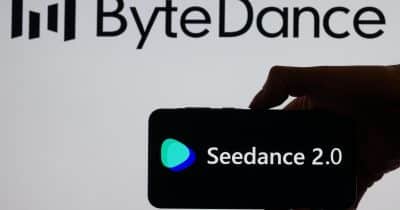
🧠ByteDance has launched Seedance 2.0 Mini on the Venice platform, a development that reduces AI video generation costs by approximately 50%. This advancement could significantly lower barriers to entry for content creators and potentially disrupt the AI video creation market.
AIBullishCrypto Briefing · Jun 236/10
🧠Mistral has launched OCR 4, an optical character recognition model supporting 170 languages with advanced features including bounding boxes, block classification, and confidence scores. The technology targets enterprise document processing with improved accuracy and efficiency, positioning AI-driven solutions as increasingly viable for businesses managing multilingual workflows.
AINeutralCrypto Briefing · Jun 216/10
🧠A tutorial demonstrates how Gemini 3.1 and Seedance 2.0 AI tools enable rapid creation of high-quality websites traditionally costing $10,000, potentially disrupting the web design market by lowering barriers to entry and reducing freelancer demand.
🧠 Gemini
AINeutralarXiv – CS AI · Jun 196/10
🧠Researchers across disciplines are independently developing AI tools to manage the explosion of scholarly publications, but limited cross-community collaboration is slowing progress. The article advocates for fostering dialogue between research communities to identify shared challenges, exchange best practices, and create more integrated solutions for knowledge organization and extraction.
AIBullishCrypto Briefing · Jun 186/10
🧠OpenAI has introduced a Record & Replay plugin for Codex that enables users to automate workflows by recording and replaying actions. The tool aims to convert manual, individual processes into scalable automations that can be shared across enterprises, potentially improving operational efficiency.
🏢 OpenAI
AIBullisharXiv – CS AI · Jun 116/10
🧠Researchers have introduced SDQM (Synthetic Dataset Quality Metric), a novel evaluation framework for assessing the quality of synthetically generated data used in object detection tasks without requiring full model training. The metric demonstrates strong correlation with YOLO11 performance metrics and provides actionable insights for dataset improvement, addressing a critical bottleneck in resource-constrained machine learning development.
AI × CryptoBullishDecrypt · Jun 66/10
🤖Advanced AI models are increasingly being deployed as bug-finding tools to identify security vulnerabilities in technology systems, with recent applications extending to cryptocurrency projects like Zcash. This development demonstrates AI's practical utility in enhancing security across digital infrastructure, though it raises questions about the implications for bug bounties and vulnerability disclosure processes.
AIBullisharXiv – CS AI · Jun 46/10
🧠Researchers conducted mixed-methods studies on how mathematicians use AI tools to formalize proofs, finding that users prefer AI assistance while maintaining high-level control over proof discovery. A controlled user study showed participants achieved higher formalization accuracy with AI access than without, despite current tool limitations.
AIBullishMIT Technology Review · Jun 26/10
🧠MIT Technology Review examines how small businesses can leverage large language models and AI tools to handle diverse operational tasks traditionally requiring specialized hired expertise. The article highlights AI's potential to democratize access to skills in accounting, design, market research, and product development for resource-constrained organizations.
AIBullishOpenAI News · Jun 26/10
🧠OpenAI has released new Codex plugins, sites, and annotations designed to extend AI capabilities across multiple professional workflows including analysis, marketing, design, and investment. These tools aim to democratize AI-powered productivity by enabling specialized use cases for diverse teams beyond traditional software development.
AINeutralarXiv – CS AI · Jun 26/10
🧠Researchers developed AI-Paper-Review, a tool that generates structured peer review feedback for academic papers using multiple AI reviewers, and conducted a case study on 20 computer architecture submissions to measure how well AI review aligns with human review. The study finds that AI review can identify significant portions of human-raised issues while also surfacing problems missed by human reviewers, raising important questions about AI's role in academic peer review without endorsing its use for formal publication decisions.
AIBearishTechCrunch – AI · May 306/10
🧠GitHub Copilot has shifted from a free or low-cost model to token-based billing, prompting significant backlash from developers who view the change as the end of the platform's early appeal. The pricing model transition signals Microsoft's move toward monetization of its AI coding assistant, raising concerns about accessibility and value proposition for the developer community.
🏢 Microsoft🧠 Copilot
AI × CryptoBullishcrypto.news · May 296/10
🤖Gemini has integrated Xai's Grok AI into a new Command Center feature designed to enhance prediction market trading. The platform uses AI to personalize market feeds based on user positions and watchlists, reflecting the broader industry trend of crypto exchanges adopting advanced AI tools to improve user experience and competitive positioning.
🧠 Gemini🧠 Grok
AINeutralarXiv – CS AI · May 296/10
🧠An ethnographic study examines how AI and automated tools reshape music production workflows among professional engineers, mixers, and producers. The research identifies key tensions between automation benefits (speed and efficiency) and creative concerns (controllability and artistic agency), offering insights into how tool design can better balance these competing demands.
AINeutralarXiv – CS AI · May 286/10
🧠CubePart introduces a generative framework that creates 3D meshes with user-defined semantic parts controllable through text prompts, enabling game developers and simulation creators to produce production-ready assets without manual post-processing. The system combines a scalable data pipeline for part-labeled 3D datasets with a two-stage architecture that separates global shape synthesis from part-level generation.
AINeutralarXiv – CS AI · May 276/10
🧠A mixed-methods study of 76 sound designers and 20 industry professionals reveals a significant gap between AI tools currently available and what creative audio practitioners actually need. Current AI excels in fast-consumption media but lacks the narrative sophistication for high-end film and immersive audio work, with professionals favoring task-specific assistive tools over generative systems.
AIBullishOpenAI News · May 206/10
🧠Ramp engineers leverage Codex with GPT-5.5 to accelerate code review processes, reducing feedback cycles from hours to minutes. This AI-assisted workflow demonstrates how large language models integrate into developer productivity pipelines, enabling faster iteration and shipping cycles in fintech engineering teams.
🧠 GPT-5
AIBullishGoogle DeepMind Blog · May 176/10
🧠Google has launched Gemini for Science, a collection of AI-powered tools and experiments designed to accelerate scientific discovery and research across multiple disciplines. The initiative aims to enhance the scale and precision of scientific exploration by leveraging advanced AI capabilities.
🧠 Gemini
AIBullishGoogle DeepMind Blog · May 166/10
🧠Calico Life Sciences has implemented Co-Scientist, an AI tool designed to aggregate dispersed research findings and identify new research directions in aging studies. This application demonstrates how AI systems can accelerate scientific discovery by synthesizing complex datasets across multiple studies.
AIBullishOpenAI News · May 156/10
🧠Codex enables data science teams to automate the generation of business intelligence documents including root-cause analyses, impact reports, KPI summaries, and dashboard specifications directly from raw work data. This capability streamlines the documentation and reporting workflow for data professionals, reducing manual effort in translating analytical findings into structured business outputs.
AIBullishOpenAI News · May 146/10
🧠OpenAI has extended Codex functionality to its ChatGPT mobile app, enabling developers to monitor, manage, and approve coding tasks remotely across multiple devices. This expansion democratizes access to AI-assisted coding tools beyond desktop environments, supporting distributed development workflows.
🧠 ChatGPT
AI × CryptoBullishCrypto Briefing · May 116/10
🤖Grok has unveiled a new 'Skills' feature designed to enable custom AI news updates and personalized interactions. The feature aims to enhance automation and information processing efficiency, potentially reshaping how users consume AI-generated content and financial news.
🧠 Grok