#automation News & Analysis
Coverage of #automation has generated 36 articles in the past month, with roughly half expressing bullish sentiment toward the topic. However, optimism has softened compared to the previous quarter, declining 8.5 percentage points. Discussion centers on advances from major AI developers including Anthropic, ChatGPT, and Gemini, with significant overlap in coverage of machine learning, AI agents, and large language models.
The aggregator's sources on this tag are dominated by arXiv's computer science and AI sections, along with crypto-focused outlets. Scan the articles below to explore how automation is being discussed across these communities.
sentiment · last 30d (36 articles) · -8.5pp bullish vs prior 90dTop sources:arXiv – CS AI · 135Fortune Crypto · 42Crypto Briefing · 15The Register – AI · 10TechCrunch – AI · 10
Most-discussed entities:Anthropic · 7ChatGPT · 6Gemini · 5Claude · 5OpenAI · 5
AINeutralarXiv – CS AI · Jun 256/10
🧠Researchers propose Structured Agentic Software Engineering (SASE), a framework reimagining software development where AI agents autonomously pursue complex goals rather than simply generating code. The approach introduces two complementary environments—one for human oversight and one for agent execution—establishing a human-AI partnership model that demands fundamental changes to traditional software engineering processes, tools, and artifacts.
AINeutralarXiv – CS AI · Jun 256/10
🧠Researchers have developed domain-adapted large language model agents to support the Cherenkov Telescope Array's operations and gamma-ray data analysis. These agents combine specialized knowledge with automated validation and error correction to improve reliability and reduce manual workload in astronomical research workflows.
AINeutralarXiv – CS AI · Jun 256/10
🧠Researchers propose an Explainable Control Framework (XCF) that uses fuzzy logic and large language models to make complex automated controllers transparent and understandable to humans. The system generates natural language explanations of controller decisions across multiple levels of abstraction, demonstrated through robotic control applications like inverted pendulums and obstacle avoidance.
AIBullishCrypto Briefing · Jun 256/10
🧠Hang Ten Systems has secured $32M in funding to deploy AI-driven solutions in enterprise IT services, targeting significant cost reduction and efficiency improvements. This development reflects growing enterprise adoption of AI to automate and optimize IT operations, potentially reshaping how organizations manage infrastructure and support systems.
GeneralNeutralTechCrunch – AI · Jun 246/10
📰Vishal Sikka, former Infosys chief, has launched a new startup backed by Mayfield and Aramco Ventures that aims to disrupt the traditional IT services industry. The venture assembles experienced talent from SAP, Infosys, and VianAI, positioning itself as a challenger to established IT services incumbents.
AIBullishTechCrunch – AI · Jun 246/10
🧠Figma released a major update introducing code layers, motion and shader support, and AI-powered custom plugin creation capabilities. These features enhance the design platform's technical depth and automation potential, positioning Figma as a more comprehensive tool for developers and designers working with interactive and dynamic content.
AI × CryptoNeutralCrypto Briefing · Jun 236/10
🤖Base has expanded its Model Context Protocol (MCP) capabilities by integrating 13 new onchain applications, enhancing AI-driven DeFi interactions. While this development promises improved automation and user experience, it simultaneously raises security and operational risk concerns that market participants should carefully evaluate.
AINeutralarXiv – CS AI · Jun 236/10
🧠MacAgentBench introduces a comprehensive macOS agent benchmark with 676 tasks across 25 applications, enabling more rigorous evaluation of computer use agents (CUAs) like those deployed on Mac Mini. The study reveals that Claude Opus 4.6 on OpenClaw achieves 73.7% Pass@1, with skill libraries driving performance more than framework design, while fine-grained scoring exposes significant differences in sub-goal completion among models with similar overall scores.
🧠 Claude🧠 Opus
GeneralBearishArs Technica – AI · Jun 226/10
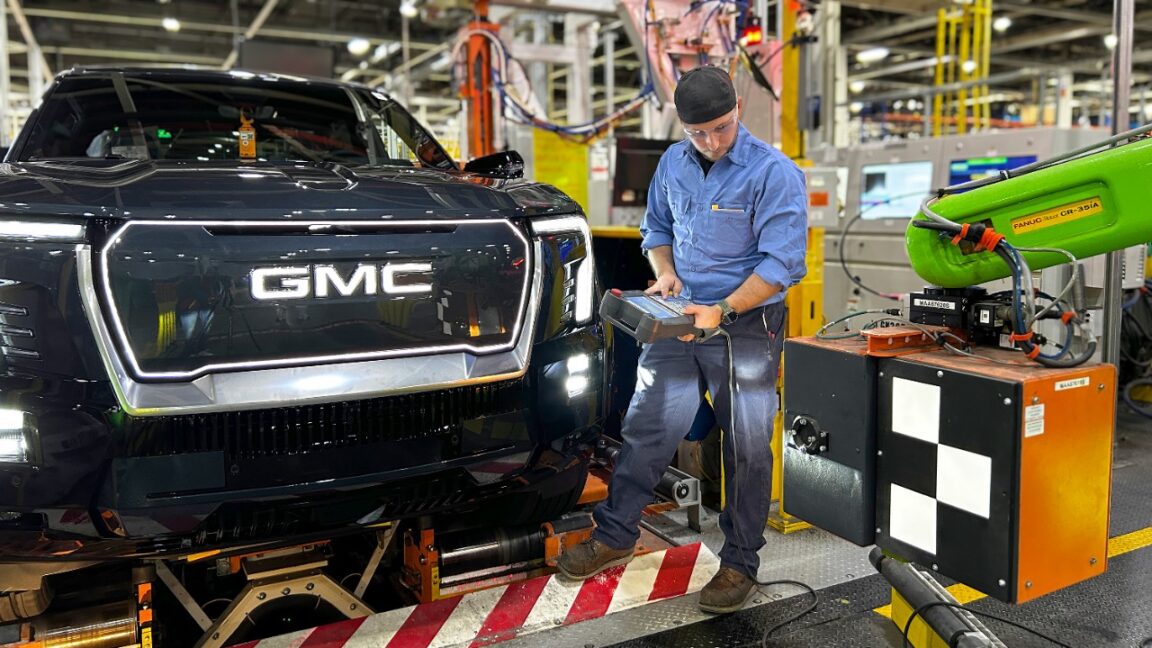
📰General Motors is installing robots at its flagship EV factory following the layoff of 1,300 workers, prompting warnings from the US autoworkers union about accelerating automation in manufacturing. The move reflects the broader industry shift toward robotics-driven production as automakers navigate EV transition costs and competitive pressures.
AIBullishCrypto Briefing · Jun 226/10
🧠A16z has led a $30M Series A funding round for Prosper AI, a healthcare automation startup focused on reducing administrative burden through AI-driven phone call automation. The investment signals growing venture capital interest in AI solutions that address operational inefficiencies in healthcare, potentially freeing resources for patient-focused care.
AIBearishCrypto Briefing · Jun 226/10
🧠The European Central Bank has released analysis examining how AI adoption affects U.S. employment patterns, finding that while AI boosts productivity and creates jobs in research and development sectors, it simultaneously threatens early-career positions and may constrain entry pathways for new workers.
AI × CryptoBullishcrypto.news · Jun 226/10
🤖Charles Hoskinson defended Cardano's integration of AI agents into its ecosystem, specifically citing their role in managing marketing, trading, and user growth operations within Midnight City. The move reflects broader industry adoption of AI technologies to enhance blockchain platform functionality and operational efficiency.
$ADA
AINeutralCrypto Briefing · Jun 216/10
🧠A tutorial demonstrates how Gemini 3.1 and Seedance 2.0 AI tools enable rapid creation of high-quality websites traditionally costing $10,000, potentially disrupting the web design market by lowering barriers to entry and reducing freelancer demand.
🧠 Gemini
AINeutralarXiv – CS AI · Jun 196/10
🧠DataMagic is an AI system that automatically converts raw tabular data and natural language queries into narrative data-insight videos with dynamic charts, voice narration, and animations. The system introduces DVSpec, a declarative specification ensuring data fidelity, and uses a multi-agent architecture to generate and orchestrate video scenes while supporting interactive exploration modes.
AIBullisharXiv – CS AI · Jun 196/10
🧠Researchers have developed an automated approach to segmentation of scanning tunneling microscopy (STM) images using few-shot and unsupervised learning, eliminating the need for large manually annotated datasets. The technique successfully identifies atomic features across multiple surfaces with strong generalization capabilities, requiring only one additional labeled data point to adapt to new materials.
AINeutralarXiv – CS AI · Jun 196/10
🧠Researchers introduce Agentra, a multi-agent AI framework for automating enterprise intrusion response by converting security alerts into structured incident plans validated through human oversight. Testing against static cyber-playbooks shows the system improves response accuracy while maintaining analyst control and audit trails.
AIBullishCrypto Briefing · Jun 186/10
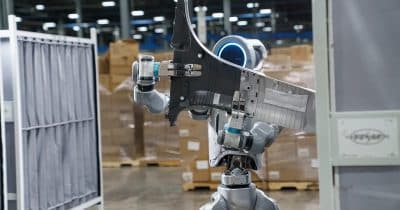
🧠Boston Dynamics' Atlas robot has demonstrated the ability to autonomously lift and carry a full refrigerator, showcasing advanced capabilities in handling heavy objects. This development highlights significant progress in autonomous robotics for industrial automation, with implications for workplace safety and operational efficiency.
AINeutralCrypto Briefing · Jun 186/10
🧠Google has launched Ask Ad Manager, an AI agent powered by Gemini, designed to streamline advertising management tasks. While the tool promises efficiency gains for advertisers, the article cautions that excessive reliance on automated decision-making could introduce errors with serious financial consequences.
🧠 Gemini
AIBullishCrypto Briefing · Jun 126/10
🧠EngineAI has filed confidentially for an initial public offering in Hong Kong, signaling accelerating capital formation activity in the AI robotics sector. The move reflects intensifying competition and investor appetite for AI-driven automation technologies in Asian markets.
AIBullishCrypto Briefing · Jun 116/10
🧠Anthropic has enhanced Claude Managed Agents with scheduled deployments and environment variables, enabling more autonomous AI operations with reduced manual oversight. These features represent a significant step toward fully automated AI systems while improving security and operational efficiency for developers.
🏢 Anthropic🧠 Claude
AIBearishDecrypt · Jun 116/10
🧠Microsoft President Brad Smith published a lengthy essay encouraging graduates to embrace AI rather than fear it, advocating for adaptation and empathy. However, the message rings hollow as Microsoft's CFO simultaneously confirmed the company will continue reducing headcount, exposing a disconnect between Microsoft's public AI optimism and its workforce contraction strategy.
AINeutralFortune Crypto · Jun 116/10
🧠Tech leaders from C.H. Robinson and Agility Robotics challenge the narrative that advanced automation will cause mass layoffs, arguing instead that AI and robotics are designed to augment human workers rather than replace them entirely. This perspective signals a potential shift in how industry executives frame automation's role in the workforce.
AIBullishCrypto Briefing · Jun 116/10
🧠BlackRock reports that 68% of financial advisors now integrate AI into their wealth management practices, reflecting a significant shift toward automation and technology-enabled client services. This widespread adoption underscores how AI is becoming infrastructure in traditional finance, driving operational efficiency and improving service delivery across the advisory industry.
AINeutralCrypto Briefing · Jun 116/10
🧠Jeff Bezos has launched a new venture valued at $38B while publicly dismissing concerns about AI-driven job displacement. Bezos argues that AI's productivity gains may paradoxically create labor shortages and deflationary pressures, fundamentally reshaping economic structures and investment patterns across sectors.
AINeutralarXiv – CS AI · Jun 116/10
🧠Researchers introduce ATLAS, an active learning framework that automates scientific discovery by iteratively generating mechanistic hypotheses and designing optimal experiments to distinguish between them. Tested on reinforcement learning agents, ATLAS achieves 5-10x improvement in sample efficiency compared to random experimentation, demonstrating significant potential for accelerating human-interpretable insights in cognitive science and other mechanistic modeling domains.