CryptoBullishcrypto.news · May 287/10
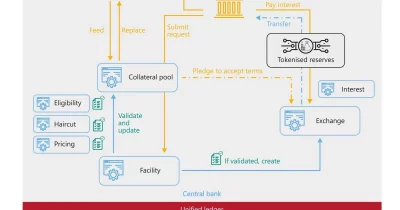
⛓️The Bank for International Settlements (BIS) has advanced its tokenization initiative beyond the prototype phase, moving toward live cross-border payment trials using real value. This progression signals institutional commitment to blockchain-based settlement infrastructure and represents a critical step toward practical implementation of central bank digital currency (CBDC) interoperability.
AI × CryptoBullishCrypto Briefing · May 287/10
🤖China's artificial intelligence investment surge is driving strong export growth and supporting yuan appreciation for the sixth consecutive quarter. This economic momentum could enhance Beijing's global influence, attract international capital, and accelerate digital yuan adoption among trading partners and institutions.
CryptoBullishCrypto Briefing · May 277/10
⛓️The Bank for International Settlements (BIS) has confirmed that tokenizing central bank reserves can significantly accelerate cross-border payments by reducing friction, lowering transaction costs, and improving operational efficiency in global financial infrastructure.
CryptoBullishcrypto.news · May 277/10
⛓️Project Agorá, a Bank for International Settlements-led trial, has successfully demonstrated that tokenized central bank money and bank deposits can execute cross-border payments atomically across multiple currencies in a single transaction step. This breakthrough suggests central banks are progressing toward real-world implementation of tokenization technology beyond experimental phases.
CryptoBullishCoinDesk · May 277/10
⛓️Project Agorá, a BIS-backed initiative involving major central banks, is advancing to real-value testing phase to settle tokenized central bank digital currencies (CBDCs) and bank deposits on blockchain infrastructure. This milestone represents a significant step toward making cross-border payments faster and more secure through distributed ledger technology.
CryptoBullishCrypto Briefing · May 117/10
⛓️The House Freedom Caucus is intensifying efforts to ban Central Bank Digital Currencies (CBDCs), framing the push around privacy concerns as a FISA deadline approaches. This political escalation could accelerate demand for decentralized and private digital currency alternatives among users seeking to avoid government surveillance.
CryptoNeutralECB Press Releases · May 107/10
⛓️The European Central Bank and Reserve Bank of India have signed a Memorandum of Understanding to strengthen cooperation on central bank digital currencies, payments infrastructure, and financial stability. This bilateral agreement reflects growing global coordination among major central banks to develop CBDC frameworks and enhance cross-border payment systems.
CryptoBearishcrypto.news · May 87/10
⛓️ECB President Christine Lagarde has escalated warnings against euro-denominated stablecoins, arguing that financial stability and monetary control risks outweigh potential benefits to the euro's international standing. Her comments reflect growing regulatory skepticism toward private digital currencies that could undermine central bank authority.
CryptoBearishThe Block · May 87/10
⛓️ECB President Christine Lagarde has expressed concerns that euro-denominated stablecoins pose risks to financial stability and monetary policy effectiveness, advocating for a central bank digital currency (CBDC) instead. This position contrasts with the Bundesbank's more moderate stance on stablecoins, revealing internal disagreement within eurozone monetary authorities on digital currency regulation.
CryptoBearishU.Today · May 87/10
⛓️ECB President Christine Lagarde has criticized US stablecoin strategies and announced the European Central Bank's commitment to developing 'Fortress Europe'—a defensive regulatory and technological framework designed to establish the euro-based Appia system by 2028, effectively countering dominance of US-denominated stablecoins in digital payments.
CryptoBullishECB Press Releases · May 47/10
⛓️Piero Cipollone, ECB official, discusses how digital assets and blockchain technology can improve payment efficiency and influence monetary policy implementation. His remarks highlight central bank interest in understanding cryptocurrency's role in the financial system while addressing both opportunities and regulatory concerns.
CryptoBearishThe Block · Apr 217/10
⛓️South Korea's new Bank of Korea Governor Shin Hyun-song has pledged to advance the central bank's CBDC and deposit token initiatives while notably excluding stablecoins from the agenda. Given Shin's previous opposition to stablecoins during his tenure at the Bank for International Settlements, this signals Seoul's preference for centralized digital currency solutions over decentralized alternatives.
CryptoBearishThe Block · Apr 207/10
⛓️The Bank for International Settlements (BIS) has characterized stablecoins as more similar to exchange-traded funds than traditional money, and has issued a warning that the $300 billion stablecoin market requires coordinated global regulatory frameworks to prevent fragmentation and systemic risks.
CryptoBearishCrypto Briefing · Apr 207/10
⛓️An IMF official has warned that the proliferation of US-backed stablecoins in emerging markets poses a threat to monetary sovereignty and local financial stability. The concern centers on how widespread adoption of dollar-pegged digital currencies could circumvent central bank authority and prompt governments to implement stricter regulatory frameworks.
CryptoNeutralBlockonomi · Mar 267/10
⛓️The U.S. Senate passed the 21st Century ROAD to Housing Act with an 89-10 vote, which includes a temporary ban on Central Bank Digital Currency (CBDC) issuance by the Federal Reserve through 2031. The legislation combines housing policy with cryptocurrency regulation, preventing the Fed from launching a digital dollar during this period.
CryptoBearishcrypto.news · Mar 267/10
⛓️Heritage Foundation economist Peter St. Onge warns that an 89-10 Senate housing bill quietly includes provisions for a temporary CBDC ban and affects the CLARITY Act's trajectory. The warning highlights that approximately 80% of voters oppose central bank digital currencies.
CryptoNeutralBlockonomi · Mar 257/10
⛓️The European Central Bank will publish Digital Euro technical standards by summer and begin a 12-month pilot program in late 2027, with potential full launch around 2029. Private banks will provide wallets while the ECB maintains core infrastructure, representing a significant step toward European CBDC implementation.
CryptoBullishcrypto.news · Mar 257/10
⛓️Australia's Reserve Bank (RBA) estimates that tokenization could generate AU$24 billion in annual economic gains for the country. The RBA is advancing tokenization initiatives by preparing a regulatory sandbox and expanding deposit token work across Australia.
CryptoBullishBlockonomi · Mar 257/10
⛓️The European Central Bank has established a 2026 deadline for completing the digital euro framework, with pilot testing scheduled for 2027 and a potential full launch by 2029. This timeline represents a significant step toward modernizing Europe's payment infrastructure through central bank digital currency implementation.
CryptoBullishDL News · Mar 257/10
⛓️South Korea's central bank is accelerating the hiring of cryptocurrency experts to support its renewed central bank digital currency (CBDC) development plans. This signals the country's renewed commitment to advancing its digital currency infrastructure.
CryptoBearishCryptoSlate · Mar 157/10
⛓️The U.S. Senate voted 84-6 on March 2 to invoke cloture on a motion to proceed with a digital dollar (CBDC) ban. Six senators opposed the measure: Johnson, Lee, Murphy, Scott, Tuberville, and Van Hollen, marking a significant legislative step toward restricting U.S. CBDC development.
CryptoBullishU.Today · Mar 117/10
⛓️Ripple has partnered with Mastercard to facilitate the seamless integration and usage of Central Bank Digital Currencies (CBDCs) as a form of payment. This collaboration aims to bridge traditional payment infrastructure with emerging digital currency frameworks.
$XRP
CryptoNeutralcrypto.news · Mar 107/10
⛓️The U.S. Senate's GENIUS Act is positioning stablecoins as extensions of the dollar system rather than independent crypto assets. This regulatory approach aims to bring digital dollars under formal regulatory oversight and integrate them into traditional financial infrastructure.
CryptoNeutralThe Block · Mar 107/10
⛓️TD Cowen believes Congress is moving closer to permanently banning a Federal Reserve Central Bank Digital Currency (CBDC). This potential ban would benefit stablecoin issuers but could complicate the passage of the Clarity Act.
CryptoBearishCryptoSlate · Mar 97/10
⛓️The article argues that US stablecoins are becoming functionally similar to CBDCs despite Washington rejecting a retail Federal Reserve digital dollar. The emerging stablecoin regulatory framework enables government-like control through freeze, block, and hold functions across private dollar tokens.