AINeutralarXiv – CS AI · May 286/10
🧠Researchers introduce PEAM, a parametric memory framework for AI agents in Minecraft that consolidates learned skills directly into model parameters rather than relying on retrieval-based memory. The system uses a mixture-of-experts architecture with contrastive learning to internalize both successful and failed experiences, achieving better long-horizon task performance while avoiding catastrophic forgetting.
AINeutralarXiv – CS AI · May 286/10
🧠Researchers introduce SegWorld, a segmentation model that uses visual chain-of-thought reasoning to understand scenes and segment object parts based on high-level intent rather than explicit target descriptions. The model proactively observes scenes, infers affordances, and maps user instructions to specific physical interaction points, outperforming baselines on intent-level tasks while matching them on traditional target-referential instructions.
AINeutralarXiv – CS AI · May 276/10
🧠Researchers introduce MM-CreativityBench, a benchmark testing whether large multimodal models can solve creative physical problems by identifying non-obvious tool uses in constrained environments. Current LMMs struggle not from lack of generation capability but from poor visual grounding, hallucinating attributes and overlooking relevant entities; the team proposes affordance-grounded alignment using preference learning to improve performance.
AIBullisharXiv – CS AI · May 276/10
🧠Researchers introduce E³C, a video diffusion framework enabling controllable egocentric video generation with 3D environmental memory and separate human pose controls for both camera wearers and observed subjects. The system addresses unique challenges in first-person video synthesis by maintaining scene consistency while handling rapid viewpoint changes and partial occlusions.
AIBullishArs Technica – AI · May 266/10
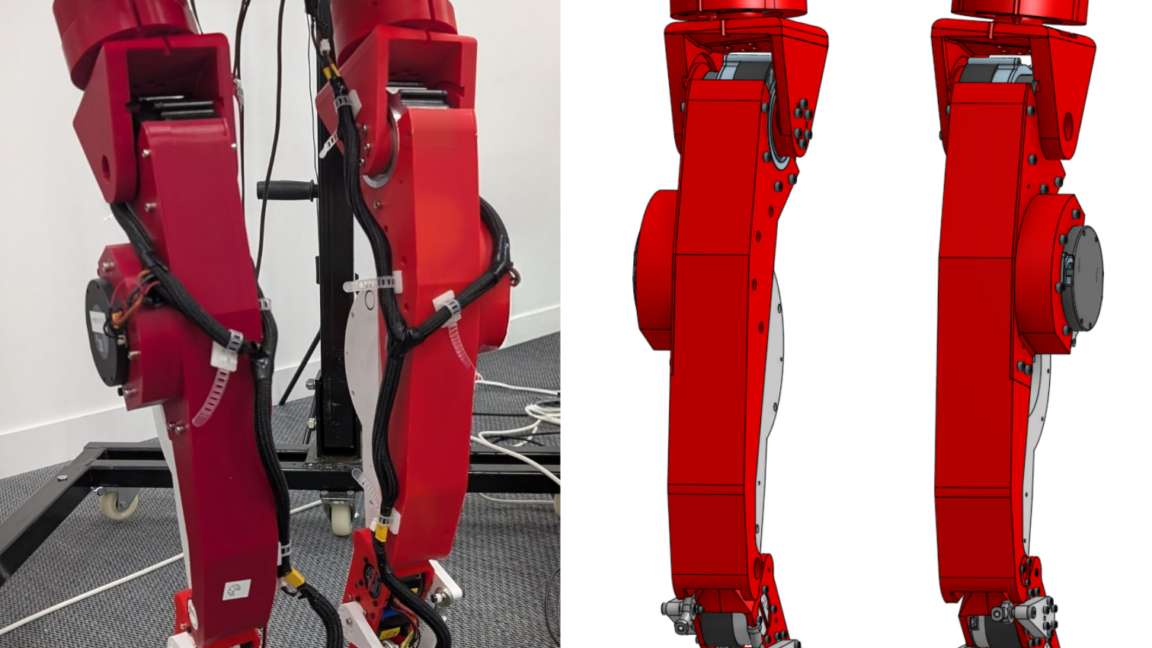
🧠Hugging Face has launched a $2,500 bipedal robot project featuring 3D-printable humanoid legs designed for builders and researchers. The initiative democratizes robotics experimentation by making advanced hardware accessible to a broader community of developers and academics.
🏢 Hugging Face
AIBullishTechCrunch – AI · May 266/10
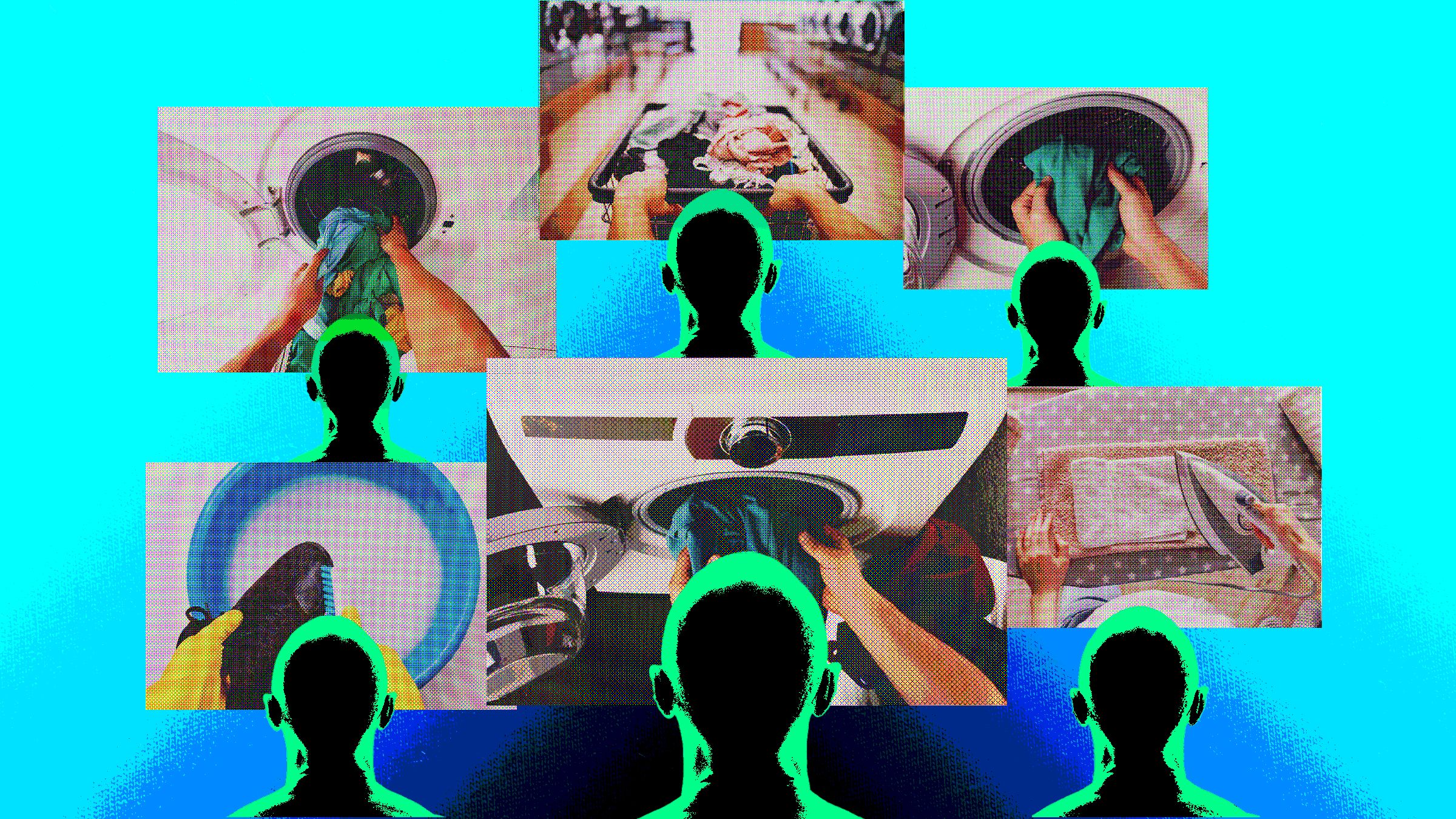
🧠Human Archive, a startup founded by UC Berkeley and Stanford researchers, is leveraging India's gig economy to collect real-world physical training data for AI and robotics development. Gig workers wear camera-equipped caps and sensor devices to generate datasets that labs worldwide are competing to obtain.
AINeutralAI News · May 266/10
🧠Autonomous AI systems are expanding from software into physical environments like warehouses and delivery networks, exposing gaps in current governance frameworks. Existing AI regulations have primarily addressed online harms and model outputs, leaving physical deployment risks largely unregulated.
AINeutralWired – AI · May 266/10
🧠An individual monetized household chores by recording themselves performing everyday tasks to generate training data for humanoid robot development. The experiment highlights the emerging market for human labor data and raises questions about privacy, consent, and the economic implications of automating domestic work.
AINeutralarXiv – CS AI · May 126/10
🧠Researchers introduce VIGIL, an evaluation framework that separately measures whether embodied AI agents correctly complete tasks and properly report success, rather than conflating execution failures with commitment failures. Testing across 20 models reveals significant performance gaps in terminal commitment despite similar task execution, highlighting a critical blind spot in current AI agent benchmarking.
AINeutralarXiv – CS AI · May 126/10
🧠Researchers introduced a benchmark testing whether vision-language model (VLM) agents can recognize themselves in mirrors, a cognitive capability that emerges only in some animal species. Results show self-identification through reflection occurs mainly in stronger VLMs, while weaker models fail to extract self-relevant information despite viewing their reflections, revealing that language-based self-reference alone does not guarantee grounded self-understanding.
AIBullisharXiv – CS AI · May 126/10
🧠EmbodiSkill introduces a training-free framework enabling embodied AI agents to autonomously improve their skills through reflection on task execution trajectories. By distinguishing between skill deficiencies and execution lapses, the system allows frozen language models to achieve significantly higher task success rates, with a Qwen 3.5-27B model reaching 93.28% success on ALFWorld benchmarks.
🧠 GPT-5
AINeutralarXiv – CS AI · May 126/10
🧠Researchers introduce HOME-KGQA, a new benchmark dataset for evaluating knowledge graph question answering systems on household activities using multimodal data. The dataset reveals significant performance gaps in current LLM-based KGQA methods, highlighting critical challenges for real-world deployment of AI systems that combine language models with structured knowledge.
AINeutralarXiv – CS AI · May 126/10
🧠Researchers introduce EgoMemReason, a comprehensive benchmark for evaluating AI systems on week-long egocentric video understanding through memory-driven reasoning. The benchmark reveals that even state-of-the-art multimodal models achieve only 39.6% accuracy, indicating that long-horizon memory and temporal reasoning remain unsolved challenges for next-generation visual assistants.
AINeutralarXiv – CS AI · May 116/10
🧠Researchers introduce Residual Latent Action (RLA), a new latent action representation learned from DINO visual features, enabling more efficient and accurate world models that predict future visual features rather than raw pixels. RLA-WM outperforms existing feature-based and video-diffusion approaches while being orders of magnitude faster, with applications in robot learning from offline video demonstrations.
AINeutralarXiv – CS AI · May 116/10
🧠Researchers present RC-aux, a lightweight auxiliary objective that improves latent world models for planning by addressing the spatiotemporal mismatch between short-horizon prediction training and long-horizon planning deployment. The method adds multi-horizon prediction and budget-conditioned reachability supervision to align learned representations with planning requirements, demonstrating improvements on goal-conditioned control tasks.
AINeutralarXiv – CS AI · May 116/10
🧠Researchers introduce BioProVLA-Agent, an affordable robotic system that automates biological laboratory tasks using Vision-Language-Action models and protocol-driven workflows. The system combines protocol parsing, visual verification, and embodied execution to handle complex wet-lab procedures, with a new augmentation strategy called AugSmolVLA that improves performance in challenging visual conditions like transparent labware and reflections.
AINeutralarXiv – CS AI · May 116/10
🧠Researchers identify a critical flaw in robotic manipulation training: collecting diverse single-shot demonstrations paradoxically degrades performance due to estimation noise. Their proposed Anchor-Centric Adaptation (ACA) framework prioritizes repeated demonstrations at core tasks before expanding coverage, significantly improving robot reliability under strict data budgets.
AINeutralarXiv – CS AI · May 116/10
🧠Researchers introduced TAVIS, a comprehensive benchmark for evaluating active vision in imitation learning systems where robotic policies control their own gaze during manipulation tasks. The benchmark includes evaluation protocols, a novel metric (GALT) measuring anticipatory gaze, and baseline experiments showing that active vision benefits are task-dependent rather than universally beneficial.
🏢 Hugging Face
AIBullisharXiv – CS AI · May 96/10
🧠PRISM is a new AI framework that improves embodied agents by coupling Vision-Language Models with Large Language Models through dynamic question-answer interactions, addressing the perception-reasoning gap in multimodal AI systems. The framework demonstrates significant performance improvements on benchmark tasks like ALFWorld and R2R, showing that interactive, goal-oriented perception yields superior understanding compared to standalone visual analysis.
AINeutralarXiv – CS AI · May 76/10
🧠Researchers propose SPINE, a unified privacy-aware framework that treats privacy as a systemic architectural constraint throughout the entire Embodied AI lifecycle rather than isolated stage-level features. The position paper argues that current EAI systems optimizing individual components independently create cumulative privacy vulnerabilities in real-world deployments where data leakage is often irreversible.
AINeutralarXiv – CS AI · May 76/10
🧠Researchers challenge the narrative that large language models drive recent advances in instruction-guided navigation systems, demonstrating that carefully engineered geometric algorithms achieve comparable or superior performance with no API calls. The findings suggest frontier-based geometry, not language understanding, accounts for most reported progress in ObjectNav systems.
AINeutralarXiv – CS AI · May 46/10
🧠Researchers propose Hamiltonian World Models, a physics-grounded approach to generative world modeling that encodes observations into structured latent phase spaces and evolves them through Hamiltonian-inspired dynamics. The framework aims to address limitations in current world models by prioritizing physical accuracy and action-controllability alongside visual realism, with applications to robotics, autonomous driving, and reinforcement learning.
AINeutralarXiv – CS AI · May 16/10
🧠Researchers introduce CLAMP, a novel 3D pre-training framework for robotic manipulation that combines point cloud processing with contrastive learning to capture spatial information missing from traditional 2D image-based approaches. The method demonstrates superior performance across simulated and real-world tasks by leveraging multi-view depth data and action-conditioned learning to improve policy efficiency.
AINeutralarXiv – CS AI · Apr 206/10
🧠GIST is a multimodal AI system that converts mobile point cloud data into semantically-annotated navigation maps for complex indoor environments. The technology combines vision-language models with spatial reasoning to enable embodied AI systems to navigate cluttered spaces like retail stores and hospitals, with applications in semantic search, localization, and natural language instruction generation.
AINeutralarXiv – CS AI · Apr 206/10
🧠Researchers introduce SocialGrid, a benchmark environment for evaluating Large Language Models as autonomous agents in multi-agent social scenarios. The study reveals that even the most capable open-source LLMs achieve below 60% task completion and struggle significantly with social reasoning tasks like detecting deception, exposing critical limitations in current AI agent capabilities.