AI × CryptoBullishCrypto Briefing · Jun 257/10
🤖Bitcoin miners are increasingly recognized as beneficial to electrical grid stability while simultaneously supporting AI infrastructure growth. This development enables miners to diversify revenue streams beyond Bitcoin price fluctuations by providing grid services and computational resources for AI applications.
$BTC
AI × CryptoBullishCrypto Briefing · Jun 257/10
🤖Unconventional AI has unveiled the Un0 model, a breakthrough designed to reduce AI power consumption by up to 1,000x. This development could significantly lower the environmental footprint of artificial intelligence systems and potentially benefit cryptocurrency mining and blockchain operations that rely on energy-intensive computations.
AIBullishCrypto Briefing · Jun 257/10
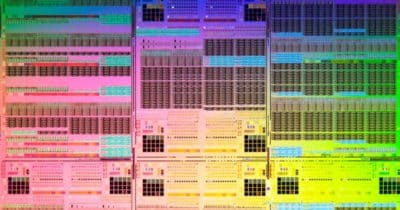
🧠IBM has announced a breakthrough 0.7nm chip technology capable of housing 100 billion transistors, representing a significant advancement in semiconductor manufacturing. The innovation promises substantial improvements in energy efficiency and computational performance, with potential implications for AI systems and the broader semiconductor industry.
GeneralBullishMIT Technology Review · Jun 257/10
📰IBM has unveiled a prototype chip with 100 billion transistors at twice the density of its 2021 state-of-the-art technology, potentially extending Moore's Law by another decade. The advancement promises faster, more energy-efficient computing across multiple industries and addresses the slowing pace of semiconductor miniaturization.
AIBullishCrypto Briefing · Jun 237/10
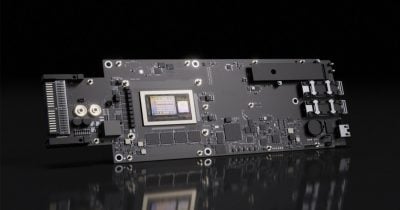
🧠Nvidia has developed advanced liquid cooling technology for its Rubin AI servers that reduces water consumption to near zero, significantly improving data center efficiency. This innovation addresses a critical environmental concern in the AI infrastructure space while potentially offering competitive advantages for operators managing large-scale compute clusters.
🏢 Nvidia
AIBullishCrypto Briefing · Jun 237/10
🧠Nvidia controls 81% of the TOP500 supercomputers list, demonstrating its technological dominance in high-performance computing infrastructure. This market concentration reflects Nvidia's competitive advantages in GPU acceleration and energy efficiency, positioning the company as critical infrastructure for AI development and computational workloads globally.
🏢 Nvidia
AIBearisharXiv – CS AI · Jun 237/10
🧠A comprehensive study reveals that multilingual LLM inference consumes vastly different amounts of energy across languages, with Pashto requiring 179 times more energy than English for identical requests. The disparity stems from complex script processing and token generation inefficiency in low-resource languages, compounded by a double penalty where high-energy languages also deliver lower accuracy.
AIBullishCrypto Briefing · Jun 227/10
🧠Nvidia has introduced new cooling technology designed to address water consumption challenges in AI data centers, potentially reshaping sustainability practices across the industry. The development carries implications for data center expansion, regional climate considerations, and the integration of AI infrastructure with cryptocurrency operations.
🏢 Nvidia
AIBullisharXiv – CS AI · Jun 197/10
🧠Researchers present SDQN-RMFS, a framework that converts reinforcement learning policies into energy-efficient spiking neural networks for robotic warehouse systems. The approach achieves 11,281× energy savings and 2× latency reduction compared to GPU-based solutions while maintaining decision quality, demonstrating practical neuromorphic computing for real-world logistics applications.
AIBullisharXiv – CS AI · Jun 197/10
🧠Researchers present an LLM-based autonomous framework for 6G network resource negotiation that addresses anchoring bias—a cognitive limitation causing agents to over-provision resources. Using a Weibull distribution-based randomization strategy combined with Digital Twins and CVaR constraints, the system achieves up to 25% energy savings while maintaining SLA compliance, with a 1B-parameter model delivering sub-second inference latencies suitable for O-RAN deployment.
AIBullishMIT News – AI · Jun 107/10
🧠MIT researchers have founded Ferveret, a startup developing a nuclear-inspired cooling system that significantly reduces energy and water consumption in data center chip cooling. This innovation addresses a critical sustainability challenge as AI infrastructure demands exponentially more computational power and cooling resources.
AIBullisharXiv – CS AI · Jun 107/10
🧠Researchers introduce UH-NAS, an LLM-guided neural architecture search framework that optimizes neural networks for unconventional hardware platforms by co-designing for accuracy and hardware-specific constraints like energy efficiency and physical imperfections. The approach demonstrates superior performance on optical computing hardware compared to existing methods, advancing the practical deployment of AI on emerging computing substrates.
🏢 Meta
AIBullisharXiv – CS AI · Jun 97/10
🧠Researchers present a Mathematics of Arrays framework that optimizes transformer attention mechanisms to achieve near-theoretical minimum memory requirements, reducing data movement from O(n²) to O(n) complexity. The approach delivers formal mathematical proofs of memory optimality and projects 2-100x speedup improvements, addressing a critical computational bottleneck in AI systems.
AIBullisharXiv – CS AI · Jun 57/10
🧠Researchers have developed ITP-STDP, an optimized learning algorithm and hardware architecture for training spiking neural networks (SNNs) that dramatically reduces energy consumption and hardware resource requirements compared to existing approaches. The design achieves 4.5x to 219.8x improvements in energy efficiency on FPGA platforms and 4.8x to 22.01x speedups on ASIC implementations while using only 1.2% to 3.3% of the area required by prior solutions.
AIBullisharXiv – CS AI · Jun 17/10
🧠TRINE is a new FPGA accelerator and compiler that enables efficient end-to-end inference for multimodal AI models (combining vision transformers, CNNs, and language models) without requiring reconfiguration. The system achieves up to 22.57x latency reduction compared to RTX 4090 GPUs while consuming only 20-21W, demonstrating significant energy efficiency gains for embedded AI deployment.
AIBullishCrypto Briefing · Jun 17/10
🧠Nvidia has unveiled the BlueField-4 STX, a specialized processor designed to handle AI storage operations autonomously with integrated security features. The technology aims to improve data center efficiency, scalability, and energy consumption for AI workloads by processing data at the storage layer rather than routing everything through central processors.
🏢 Nvidia
AIBullishBlockonomi · May 297/10
🧠Nvidia has committed $6.5 billion to photonics technology since March to address the energy consumption challenges of AI infrastructure. CEO Jensen Huang will present updates on the Rubin GPU and Vera CPU at Computex, with analyst price targets reaching $250 per share.
🏢 Nvidia
AIBullisharXiv – CS AI · May 297/10
🧠Researchers present a multi-agent LLM pipeline architecture that reduces hallucinations by 31-36% through nested learning, semantic caching, and progressive review stages. The system simultaneously improves factual reliability, cuts energy consumption by 47%, and enhances auditability without requiring model retraining.
AIBullisharXiv – CS AI · May 287/10
🧠Researchers propose a novel direct training algorithm for Spiking Neural Networks that addresses performance gaps with traditional ANNs through circulate-firing neurons, learnable surrogate gradients, and balanced loss functions. The method demonstrates competitive results across datasets and extends effectively to Transformer architectures, potentially advancing energy-efficient neural network applications.
AIBullisharXiv – CS AI · May 287/10
🧠Researchers have developed CLANE, a neuromorphic hardware system deployed on Intel Loihi 2 that enables continuous learning of human actions from event cameras without forgetting previously learned classes. The system achieves 70.4% accuracy on a 50-class action recognition dataset while consuming 100x less energy and delivering 16x lower latency than conventional GPU-based approaches, advancing on-device AI for AR/VR and robotics applications.
AIBullisharXiv – CS AI · May 127/10
🧠Researchers introduce SAFformer, a novel Spiking Transformer architecture that improves energy efficiency and accuracy by adopting an active predictive filtering paradigm inspired by brain mechanisms. The model achieves state-of-the-art performance on image recognition benchmarks while consuming significantly less power than conventional approaches.
AI × CryptoBullishcrypto.news · May 117/10
🤖IREN, a former Bitcoin miner transitioning into AI infrastructure, has secured a $3.4 billion deal with Nvidia to deploy up to 5 gigawatts of AI computing capacity over five years. This agreement underscores the strategic shift of cryptocurrency miners toward AI infrastructure provision as demand for compute resources accelerates.
$BTC🏢 Nvidia
AIBullisharXiv – CS AI · May 117/10
🧠Researchers propose a novel parameter reconstruction algorithm for training Spiking Neural Networks (SNNs) that addresses the long-standing problem of non-differentiable spike functions. The method extends convexification theory to recurrent networks and demonstrates consistent improvements over traditional surrogate gradient approaches, with potential applications in large-scale energy-efficient neural network training.
AIBullisharXiv – CS AI · May 117/10
🧠XiYOLO is a new energy-efficient object detection framework that uses neural architecture search and scaling techniques to optimize AI models for edge devices with strict power constraints. The system achieves 20-53% energy reductions compared to YOLOv12 baselines across GPU and NPU deployments while maintaining competitive accuracy metrics.
AINeutralarXiv – CS AI · May 47/10
🧠TokenArena introduces a continuous benchmark framework that evaluates AI inference endpoints across energy efficiency, latency, cost, and output quality rather than just model-level comparisons. Testing 78 endpoints across 12 model families reveals dramatic performance variance—the same model differs by up to 12.5 accuracy points and 6.2x in energy efficiency depending on deployment configuration, with workload type fundamentally reordering cost-effectiveness rankings.