AIBullishCrypto Briefing · Mar 37/102
🧠OpenAI has released GPT-5.3 Instant for ChatGPT, featuring reduced refusals, enhanced web-based answers, and fewer hallucinations across major performance benchmarks. This update represents a significant improvement in AI model reliability and user experience.
AIBullisharXiv – CS AI · Mar 37/104
🧠Researchers introduce SwiReasoning, a training-free framework that improves large language model reasoning by dynamically switching between explicit chain-of-thought and latent reasoning modes. The method achieves 1.8%-3.1% accuracy improvements and 57%-79% better token efficiency across mathematics, STEM, coding, and general benchmarks.
AIBullisharXiv – CS AI · Mar 37/104
🧠Researchers introduce Uni-X, a novel architecture for unified multimodal AI models that addresses gradient conflicts between vision and text processing. The X-shaped design uses modality-specific processing at input/output layers while sharing middle layers, achieving superior efficiency and matching 7B parameter models with only 3B parameters.
$UNI
AIBullishOpenAI News · Sep 47/105
🧠Researchers have successfully applied reinforcement learning from human feedback (RLHF) to improve language model summarization capabilities. This approach uses human preferences to guide the training process, resulting in models that produce higher quality summaries aligned with human expectations.
AINeutralarXiv – CS AI · Jun 256/10
🧠Researchers have developed a framework for evaluating fuzzy quantification queries over OWL ontologies and knowledge graphs, enabling retrieval of individuals matching Type I or Type II fuzzy quantified expressions. The system is agnostic to quantifier types and data sources, with Q2S2 released as an open implementation for future research.
AINeutralarXiv – CS AI · Jun 236/10
🧠Researchers propose HRLLI, a hierarchical reinforcement learning framework that dynamically selects relevant natural-language instruction segments to guide agent decision-making at different stages of task execution. The approach outperforms existing instruction-conditioned RL baselines by treating language as adaptive, stage-specific guidance rather than static input, improving sample efficiency in complex environments.
AINeutralarXiv – CS AI · Jun 236/10
🧠Researchers have developed POTracker, a fine-tuned large language model optimized for generating machine-readable power outage reports that comply with U.S. energy sector regulatory standards. The model achieves 86.47% structural accuracy and 51% improvement over existing fine-tuning methods by using a novel loss function that balances textual and structural similarity.
AINeutralarXiv – CS AI · Jun 236/10
🧠SQLConductor is a new AI framework that improves Text-to-SQL systems—tools that convert natural language queries into database commands—by using adaptive, step-wise orchestration rather than fixed pipelines. The system achieves 73.2% execution accuracy on complex database queries while using smaller, frozen models, suggesting significant efficiency gains for database accessibility applications.
AINeutralarXiv – CS AI · Jun 235/10
🧠Researchers introduce Sarc7, a benchmark dataset for classifying seven types of sarcasm using large language models, with a novel emotion-based prompting technique that outperforms traditional zero-shot and few-shot approaches. The study demonstrates that Gemini 2.5 achieved the highest performance with an F1 score of 0.3664, while emotion-informed generation methods showed 38.46% improvement in human evaluation over baseline approaches.
🧠 Gemini
AIBullisharXiv – CS AI · Jun 236/10
🧠Researchers successfully fine-tuned automatic speech recognition (ASR) models to create text corpora for low-resource African languages Fongbe and Hausa, achieving significant improvements in transcription accuracy. The work demonstrates ASR's potential for rapidly expanding language resources in underrepresented languages, though quality varies by linguistic complexity, with Hausa transcriptions approaching production-ready standards while Fongbe requires further refinement.
AIBullisharXiv – CS AI · Jun 196/10
🧠Researchers developed a dual-agent AI framework that translates natural-language biological protocols into executable commands for robotic laboratory platforms, bridging the semantic gap between human-written experiments and automated systems. The system uses a Parser Agent to structure protocols and a Validation Agent to verify accuracy, with successful demonstration on real microplate-based experiments.
AINeutralarXiv – CS AI · Jun 116/10
🧠Researchers introduce MLaGA, a multimodal AI model that extends large language models to process both text and images within graph-structured data. The innovation addresses a gap in existing LLM-graph methods by enabling reasoning over complex networks where nodes contain diverse data types, with experiments demonstrating superior performance across multiple learning tasks.
AIBullisharXiv – CS AI · Jun 96/10
🧠CLASP is a modular robotic system that combines task-parameterized learning with vision-language models to enable robots to understand natural language commands while maintaining data efficiency. The approach achieves 73-100% success rates on manipulation tasks by learning skills from minimal demonstrations and composing them dynamically without fine-tuning the underlying models.
AIBullisharXiv – CS AI · Jun 96/10
🧠Researchers introduce Stage-Aware Dynamic Weighting (SAW), a novel mechanism for multi-objective reinforcement learning in large language models that addresses the asynchronous nature of reward learning across different objectives. By using coefficient of variation as a real-time informativeness proxy, SAW dynamically reweights objective contributions to improve training efficiency and final performance with minimal computational overhead.
AINeutralarXiv – CS AI · Jun 96/10
🧠Researchers propose Graph2Idea, an AI framework that uses knowledge graphs to improve scientific idea generation by converting retrieved papers into structured knowledge relationships rather than flat text. The method demonstrates significant improvements in novelty, quality, and feasibility of generated research ideas compared to existing LLM-based approaches.
AINeutralarXiv – CS AI · Jun 96/10
🧠Researchers developed an LLM-orchestrated framework that automates conformance checking in healthcare by extracting patient care pathways and clinical guidelines from unstructured text, eliminating the need for formal Computer-Interpretable Guidelines. Testing at Alessandria Hospital's neurological ward showed 86% of stroke care traces adhered to clinical guidelines, demonstrating practical feasibility of AI-driven healthcare compliance assessment.
AINeutralarXiv – CS AI · Jun 86/10
🧠Researchers introduce Progress-SQL, a reinforcement learning framework that improves large language models' ability to convert natural language queries into SQL code through multi-turn refinement with progressive reward signals. The method uses an Oracle-guided Diagnostic Tree to provide clause-level feedback and demonstrates consistent performance improvements across multiple benchmark datasets.
AINeutralarXiv – CS AI · Jun 86/10
🧠Didact is a prototype system that integrates Australian defence reports, policy documents, and research publications into a unified knowledge graph to help policymakers discover defence capabilities faster. The system uses retrieval-augmented generation (RAG) and natural language conversations to surface fragmented information across heterogeneous sources, with an interactive Evidence Rail for visualizing source relationships.
AINeutralarXiv – CS AI · Jun 86/10
🧠Researchers developed a framework separating language proficiency from cultural knowledge access in large language models across 13 locales and 80 models. The study reveals that while English outperforms local languages on culture-agnostic questions, local languages consistently show advantages for accessing culture-specific knowledge once proficiency gaps are controlled for. This finding challenges the assumption that weaker local-language LLM performance indicates weaker cultural knowledge.
AINeutralarXiv – CS AI · Jun 55/10
🧠Researchers propose an improved question answering system using fine-tuned large language models on the SQuAD dataset, achieving strong performance metrics (ROUGE-L: 86.84%, BERTScore: 95.38%). The work addresses limitations in current LLM-based QA systems' ability to extract accurate answers from given contexts, demonstrating that targeted fine-tuning substantially enhances reliability and precision.
AIBullishCrypto Briefing · Jun 46/10
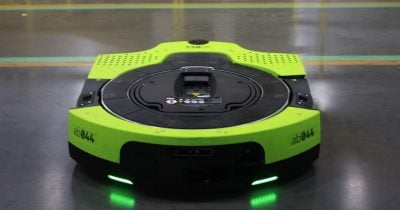
🧠Amazon has unveiled an upgraded version of its Proteus robot that can now accept natural language commands in plain English, representing a significant advancement in human-machine interaction within warehouse automation. This development demonstrates the growing integration of AI capabilities into physical robotics, potentially reshaping operational workflows across logistics and manufacturing sectors.
AIBullishThe Verge – AI · Jun 46/10
🧠Amazon has unveiled an upgraded version of its Proteus autonomous warehouse robot that can now accept voice commands and natural language instructions instead of requiring specialized software coding. This advancement represents a significant step in Amazon's broader automation strategy to replace human warehouse workers with robotic systems capable of heavy lifting and cart movement.
AINeutralarXiv – CS AI · Jun 46/10
🧠LCSHBench introduces the first large-scale public benchmark for Library of Congress Subject Heading assignment, comprising 22,346 multilingual books with consensus-validated labels from three major university libraries. The dataset reveals that while libraries agree on conceptual topics 93% of the time, they differ in exact heading assignments 39.4% of the time, enabling more nuanced evaluation of automated cataloging systems.
AINeutralarXiv – CS AI · Jun 26/10
🧠Researchers introduce ODTQA-FoRe, a new dataset and TimeFore framework enabling large language models to perform future-oriented numerical predictions on tabular data using time-series forecasting. The innovation addresses a critical gap where existing LLM systems excel at historical analysis but struggle with predictive reasoning, demonstrated through real estate data scenarios.
AINeutralarXiv – CS AI · Jun 26/10
🧠SchemaForge, a new AI framework, improves text-to-SPARQL query generation over heterogeneous knowledge graphs by using schema-grounded validation. The system achieves 11.5 percentage points higher accuracy than existing baselines across four benchmarks, demonstrating practical advances in natural language to database query translation.