AI × CryptoBearisharXiv – CS AI · Apr 10🔥 8/10
🤖A research paper argues that the foundation model era (2020-2025) has ended as open-source models reach frontier performance and inference costs decline, fundamentally undermining the competitive moat of large-scale pre-training. The shift is driven by simultaneous restructuring across economic, technical, commercial, and political dimensions, with open-weight models emerging as tools for government sovereignty over AI capabilities.
🏢 Anthropic
AI × CryptoBullishCrypto Briefing · Jun 267/10
🤖Hermes Agent's Mixture of Agents (MoA) presets have demonstrated superior performance compared to proprietary models Claude Opus 4.8 and GPT-5.5 in recent benchmarks, signaling a competitive shift toward open-source collaborative AI frameworks that challenge the dominance of closed proprietary systems.
🧠 GPT-5🧠 Claude🧠 Opus
AIBullishCrypto Briefing · Jun 257/10
🧠Domyn announces plans to launch an open-source frontier AI model within the next year, positioning itself as a contributor to European technological sovereignty. The initiative aims to attract investment and talent while potentially reshaping the competitive AI landscape dominated by closed-source models.
AIBullisharXiv – CS AI · Jun 237/10
🧠Researchers propose the Social World Model, a framework for continuous learning in language agents through structured social interaction decomposition across five dimensions. The approach demonstrates that smaller open-source models like Qwen2.5-7B can achieve competitive social intelligence capabilities comparable to closed-source alternatives while maintaining performance across difficulty levels.
🧠 Gemini
AIBullishCrypto Briefing · Jun 187/10
🧠Baseten has raised $1.5B in a new funding round, pushing its valuation to $13B. The milestone reflects surging investor appetite for AI infrastructure solutions and underscores a market-wide pivot toward open-source model optimization.
AI × CryptoBullishCrypto Briefing · Jun 187/10
🤖Goldman Sachs' 1-Delta Desk has identified a chart pattern that serves as a leading indicator for the competitive dynamics between open-source and proprietary AI models. The analysis suggests that open-source AI adoption could fundamentally disrupt traditional pricing models that have favored closed, proprietary systems.
AIBullishCrypto Briefing · Jun 97/10
🧠Cohere has released North Mini Code, a 30-billion parameter open-source coding model designed for enterprise developers. The model aims to democratize AI-powered coding tools by reducing computational costs and hardware requirements, potentially transforming how enterprises approach AI development and deployment.
🏢 Cohere
AIBullisharXiv – CS AI · Jun 87/10
🧠Researchers have developed dots.tts, a 2-billion parameter text-to-speech model that achieves state-of-the-art performance through innovations in continuous speech modeling, full-history conditioning, and self-corrective training. The model demonstrates exceptional multilingual capabilities and enables low-latency speech generation, with code and weights released open-source under Apache 2.0 license.
AIBullisharXiv – CS AI · Jun 57/10
🧠Researchers have released Toto 2.0, a family of five open-source time series forecasting models that demonstrate reliable improvements across a scaling range of 4M to 2.5B parameters. The models achieve state-of-the-art performance on three major benchmarks and represent a significant advance in applying foundation model scaling principles to forecasting tasks.
AIBullisharXiv – CS AI · Jun 47/10
🧠Researchers have identified critical performance gaps in open-source Relational Foundation Models (RFMs) compared to commercial alternatives by analyzing the Relational Transformer architecture. Their findings—that sparse label coverage and insufficient real-world training data limit current models—led to OpenRFM, which achieves 30% performance improvements and outperforms the commercial KumoRFMv1 baseline.
AIBullishArs Technica – AI · Jun 37/10
🧠Google has released Gemma 4 12B, a lightweight open-source AI model designed to run efficiently on consumer laptops using a new encoding scheme and token prediction capabilities. The model represents a significant step toward democratizing access to advanced AI technology by reducing computational barriers for developers and individual users.
🏢 OpenAI
AIBearisharXiv – CS AI · Jun 37/10
🧠Researchers introduced MedCUA-Bench, a new benchmark for evaluating AI agents performing clinical computer tasks across 18 medical scenarios. The benchmark reveals significant performance gaps, with top closed-source models achieving only 54.2% success and open-source agents averaging just 2.5%, highlighting the unpreparedness of current AI systems for reliable medical software automation.
AI × CryptoBullishCrypto Briefing · Jun 27/10
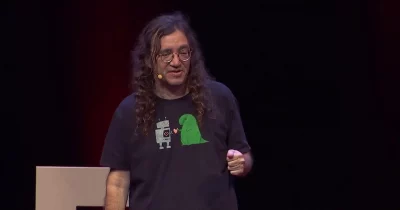
🤖Ben Goertzel advocates for decentralized development of artificial general intelligence (AGI) as an alternative to government-controlled AI systems. He argues that distributing AGI development across multiple stakeholders reduces concentration of power, mitigates existential risks, and accelerates collaborative innovation in the AI sector.
AIBullisharXiv – CS AI · Jun 27/10
🧠Zyphra released Zamba2-VL, a suite of vision-language models combining Mamba2 state-space layers with transformer blocks, achieving competitive performance with leading VLMs while delivering 10x faster time-to-first-token speeds. The three released models (1.2B, 2.7B, 7B parameters) represent a significant efficiency breakthrough for edge and on-device deployment.
🏢 Hugging Face
AIBullisharXiv – CS AI · Jun 27/10
🧠Researchers introduced a novel reinforcement learning technique called delayed per-step reward attribution that enables language model agents to train effectively in multi-agent strategic environments where traditional per-step rewards fail. An 8-billion-parameter open-source model trained with this method won first place at NeurIPS 2025's MindGames Arena benchmark, outperforming substantially larger proprietary systems including GPT-5.
🧠 GPT-5
AIBullisharXiv – CS AI · Jun 27/10
🧠Researchers introduce LatentMAS, a framework enabling LLM agents to collaborate directly in latent space rather than through text, achieving up to 14.6% higher accuracy while reducing token usage by 70.8%-83.7% and improving inference speed 4× faster than text-based multi-agent systems.
AIBullishCrypto Briefing · Jun 17/10
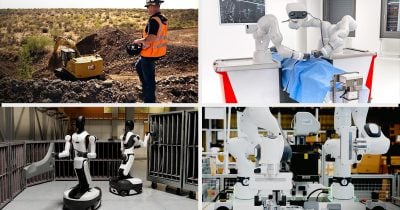
🧠Nvidia has unveiled Cosmos 3, an open-source world model designed to improve robot navigation and autonomous systems. The open model approach aims to democratize robotics innovation by enabling smaller companies and researchers to develop advanced AI capabilities without requiring extensive computational resources or proprietary infrastructure.
🏢 Nvidia
AIBullisharXiv – CS AI · Jun 17/10
🧠Researchers introduce Fully Open Meditron, the first completely transparent pipeline for building clinical AI systems that exposes training data, curation procedures, and generation methods. The framework achieves state-of-the-art performance on medical benchmarks while maintaining full auditability and reproducibility, addressing a critical gap in transparent healthcare AI.
AIBullisharXiv – CS AI · May 297/10
🧠Stanford researchers have released GPIC, a massive image dataset containing 28 trillion pixels across 100M training examples with permissive licensing for both research and commercial use. The dataset addresses a critical bottleneck in visual generative modeling by providing a large, safety-filtered, deduplicated corpus hosted on Hugging Face with accompanying benchmarks and baseline models.
🏢 Hugging Face
AIBullisharXiv – CS AI · May 277/10
🧠GUI-Libra presents a specialized training methodology for native GUI agents that addresses critical gaps between open-source and closed-source systems through action-aware supervised fine-tuning and improved reinforcement learning with partial verifiability. The work introduces an 81K curated GUI reasoning dataset and demonstrates consistent improvements across web and mobile benchmarks without requiring expensive online data collection.
AIBearisharXiv – CS AI · May 277/10
🧠Researchers introduced CAIT, a benchmark testing multimodal large language models' ability to understand counter-intuitive visual scenes that contradict common sense. The study reveals that open-source MLLMs fail dramatically at these tasks due to language bias, automatically overriding visual evidence with statistically common text patterns, while proprietary models like Claude and Gemini demonstrate robust performance.
🧠 Claude🧠 Gemini
AIBullisharXiv – CS AI · May 127/10
🧠Shepherd is a new runtime substrate that enables meta-agents to supervise and optimize other agents through formalized execution traces, achieving 5x faster forking than Docker and demonstrating measurable improvements in coding assistance, optimization, and reinforcement learning tasks. The open-source system mechanizes core operations in Lean and enables replay, branching, and counterfactual exploration of agent behaviors.
AIBullisharXiv – CS AI · May 97/10
🧠Researchers introduce StraTA, a novel reinforcement learning framework that improves LLM agent performance on long-horizon tasks by incorporating explicit trajectory-level strategies alongside action execution. The approach achieves state-of-the-art results on benchmark environments, reaching 93.1% on ALFWorld and 84.2% on WebShop, outperforming existing methods and some closed-source models.
AIBullishTechCrunch – AI · May 77/10
🧠Chinese AI startup Moonshot AI secured $2 billion in funding at a $20 billion valuation, capitalizing on surging demand for open-source AI solutions. The company's annualized recurring revenue reached $200 million in April, driven by strong growth in paid subscriptions and API usage, signaling robust commercial traction in the competitive AI market.
AIBearishDecrypt – AI · May 47/10
🧠A developer has created OpenMythos, an open-source project attempting to reverse-engineer Anthropic's unreleased Claude Mythos model, which the company has withheld due to concerning cyber-capabilities. The effort represents a broader trend of researchers probing safety boundaries in advanced AI systems through architectural reconstruction and public code releases.
🏢 Anthropic🧠 Claude