AIBearishWired – AI · Jun 24🔥 8/10
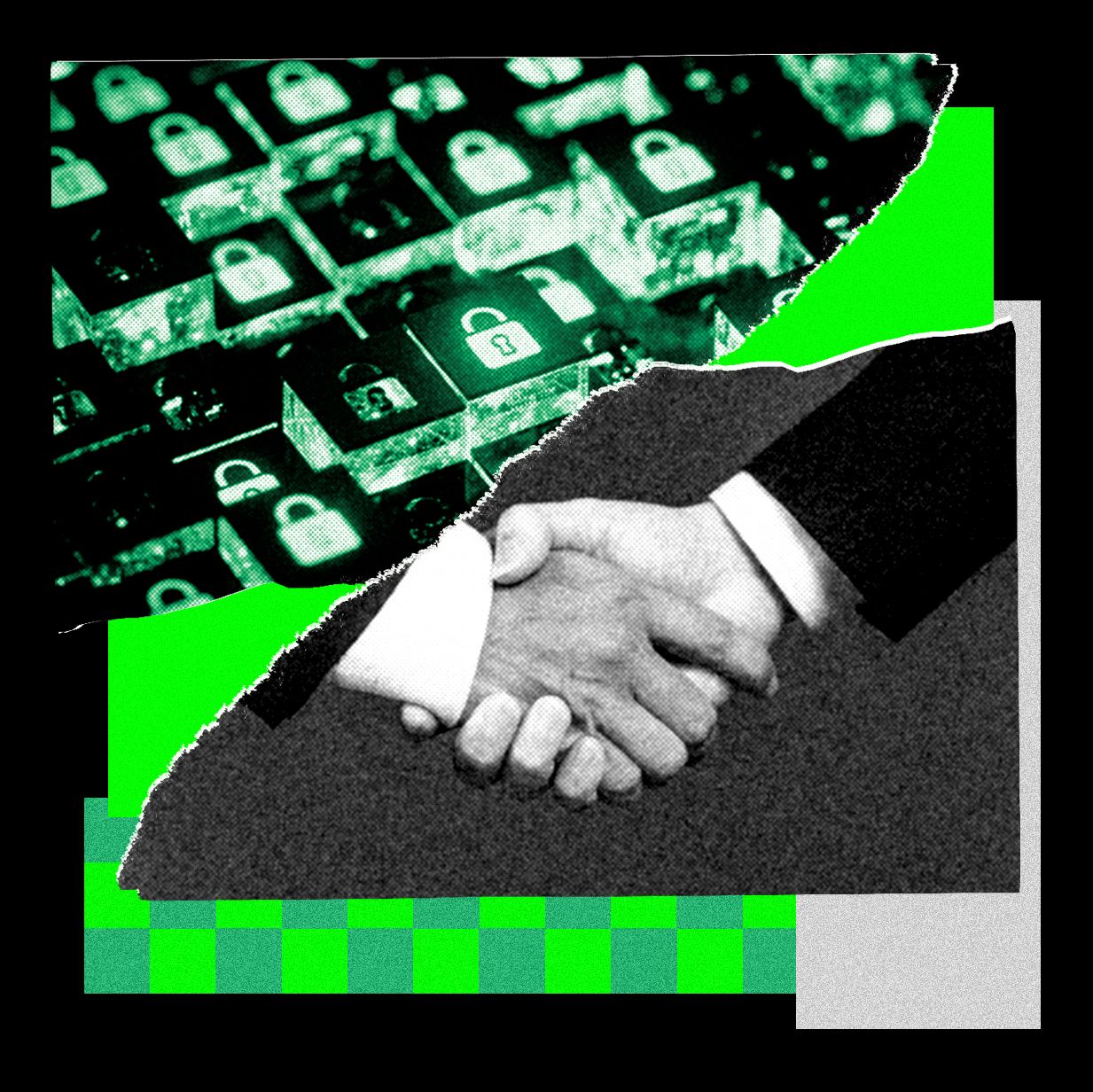
🧠Researchers from China and the United States express mutual concern about an AI safety crisis, comparing the risks of unchecked AI development to nuclear disasters like Chernobyl. The AI arms race between the two superpowers is driving rapid advancement with insufficient safety protocols, creating anxiety among leading experts on both sides about catastrophic outcomes.
GeneralBearishFortune Crypto · May 2🔥 8/10
📰The U.S. is expanding strategic control over critical global shipping routes including the Panama Canal, Strait of Malacca, and Gibraltar amid ongoing tensions in the Strait of Hormuz, effectively constraining China's maritime access and trade routes. This geopolitical repositioning has significant implications for global commerce, energy flows, and international power dynamics.
AIBearishDecrypt – AI · Jun 257/10
🧠Anthropic has called on Congress to regulate AI model distillation after alleging that Alibaba-affiliated operators used nearly 25,000 fraudulent accounts to generate 28.8 million Claude API exchanges, potentially extracting proprietary model knowledge. The incident highlights vulnerabilities in API-based AI systems and raises questions about intellectual property protection in the competitive AI development landscape.
🏢 Anthropic🧠 Claude
AINeutralCrypto Briefing · Jun 247/10
🧠China's LineShine supercomputer has reclaimed the world's fastest supercomputer title, surpassing the U.S. El Capitan and ending a nine-year absence from the top spot. This development signals accelerating Chinese capabilities in high-performance computing and AI infrastructure, with potential implications for global technology competition and security frameworks.
AIBearishCrypto Briefing · Jun 107/10
🧠Senator Tom Cotton has called on the Department of Justice to investigate potential Chinese influence over US AI infrastructure, raising concerns about national security and foreign interference in critical technology sectors. This development signals intensifying geopolitical competition in AI and could trigger significant shifts in US technology policy and regulatory frameworks.
AIBullishCrypto Briefing · May 27/10
🧠Major technology companies Google, Meta, and Microsoft are significantly increasing their artificial intelligence spending as part of an intensifying competition with China for technological leadership. This capital allocation reflects the strategic importance of AI dominance in the global tech race and signals sustained investment in AI infrastructure and development.
AIBearishCrypto Briefing · May 27/10
🧠Meta's Reality Labs division reported a $4 billion loss in Q1 as the company shifts strategic focus toward artificial intelligence rather than metaverse development. The mounting losses and strategic pivot reflect broader investor skepticism about Meta's VR ambitions and intensifying competition in AI capabilities amid US-China technological rivalry.
AIBullishCrypto Briefing · Apr 307/10
🧠Amazon, Microsoft, Google, and Meta collectively plan to invest $710 billion in AI infrastructure by 2026, signaling an accelerating race for AI dominance among U.S. tech giants. This massive capital commitment is expected to reshape global technology leadership, intensify U.S.-China competition, and significantly influence market dynamics across multiple sectors.
AINeutralcrypto.news · Apr 177/10
🧠Stanford's 2026 AI Index reveals that the performance gap between US and Chinese AI models has narrowed dramatically to 2.7%, down from double-digit margins in 2023, signaling rapid convergence in AI capabilities. While Anthropic's Claude Opus 4.6 maintains a narrow lead over ByteDance's models, the trend underscores China's accelerating progress in AI development and challenges the US technological dominance narrative.
🏢 Anthropic🧠 Claude🧠 Opus
AIBearishFortune Crypto · Apr 157/10
🧠A retired general warns that America's dependence on third-party AI systems like Anthropic creates critical national security vulnerabilities, as the Pentagon cannot fully control or guarantee the security of rented AI infrastructure. The U.S. military's reliance on external AI providers exposes strategic weaknesses in the AI arms race against adversaries like China and Russia.
🏢 Anthropic
AIBearishAI News · Apr 157/10
🧠Stanford's 2026 AI Index Report challenges the assumption that the US maintains a durable lead in AI model performance, revealing that the performance gap between US and Chinese AI systems has significantly narrowed. However, the report highlights a concerning disparity in responsible AI practices, with the US and other developed nations lagging in safety benchmarks and ethical AI governance.
AINeutralcrypto.news · Apr 137/10
🧠Stanford HAI's 2026 AI Index reveals the US performance advantage over China in artificial intelligence has substantially narrowed, with Anthropic's leading model maintaining only a marginal edge over top Chinese competitors. This convergence signals a critical shift in global AI dominance dynamics.
🏢 Anthropic
AINeutralFortune Crypto · Jun 226/10
🧠Former Senator Saxby Chambliss highlights that America's competitive advantage in AI depends less on software innovation than on workforce infrastructure, with a $115 million data center worker training program signaling that labor availability—not technical capability—represents the critical bottleneck in competition with China.
AINeutralDecrypt · Jun 16/10
🧠Nvidia released Nemotron 3 Ultra, its most powerful open-weight AI model that surpasses all other American open-source systems significantly. However, the model still underperforms compared to China's frontier AI systems, highlighting the ongoing technological gap between U.S. and Chinese AI capabilities.
🏢 OpenAI🏢 Nvidia
AIBullishcrypto.news · May 77/10
🧠Kevin O'Leary's Stratos project, a 9GW AI computing campus, received unanimous approval from Box Elder County commissioners in Utah on May 4, despite significant public opposition from hundreds of local residents. The facility represents a major infrastructure investment positioned as a competitive response to Chinese AI dominance.
AINeutralDecrypt · May 46/10
🧠The US National Institute of Standards and Technology (NIST) evaluated DeepSeek V4 Pro and concluded that Chinese AI models lag behind US counterparts, but the methodology has drawn significant criticism. Experts question the use of private benchmarks and a cost-comparison filter that conveniently excluded all US models except GPT-5.4 mini, suggesting the evaluation may be politically motivated rather than scientifically rigorous.
🧠 GPT-5
AINeutralCrypto Briefing · May 16/10
🧠US officials are considering accelerated AI security deadlines to strengthen national cyber defenses in response to emerging threats. This policy shift has implications for global AI development timelines and intensifies competitive dynamics between the US and China in the technology sector.
AINeutralarXiv – CS AI · Apr 146/10
🧠Researchers developed an advanced AI classifier achieving 97% precision in identifying AI patents, revealing that both the U.S. and China are rapidly expanding AI innovation but through fundamentally different institutional structures. While China recently surpassed the U.S. in annual patent volume, American AI patenting remains concentrated among large private firms, whereas Chinese innovation is more geographically dispersed across universities and state-owned enterprises.