22,940 AI articles curated from 50+ sources with AI-powered sentiment analysis, importance scoring, and key takeaways.
AINeutralOpenAI News · Jan 217/105
🧠A new report highlights significant disparities in advanced AI adoption between different countries. The report also introduces new initiatives designed to help nations better leverage AI technologies to achieve productivity improvements.
AIBullishOpenAI News · Jan 217/105
🧠OpenAI has launched 'Edu for Countries', a new initiative designed to help governments leverage AI technology to modernize their education systems and prepare workforces for the future. This represents OpenAI's expansion into the public sector and government partnerships.
AIBullishOpenAI News · Jan 207/106
🧠OpenAI and the Gates Foundation have launched Horizon 1000, a $50 million pilot program to advance AI capabilities for healthcare in Africa. The initiative aims to reach 1,000 clinics by 2028, focusing on improving primary healthcare access through artificial intelligence.
AIBullishOpenAI News · Jan 207/103
🧠Cisco and OpenAI have partnered to launch Codex, an AI software agent that integrates into enterprise workflows to accelerate development builds, automate defect resolution, and enable AI-native development practices. This collaboration aims to redefine how enterprises approach software engineering through embedded AI capabilities.
AIBullishHugging Face Blog · Jan 207/105
🧠Overworld has launched Waypoint-1, a real-time interactive video diffusion model that enables users to generate and interact with video content in real-time. This represents a significant advancement in AI video generation technology, moving beyond static video creation to interactive, dynamic content generation.
AIBullishGoogle DeepMind Blog · Jan 167/105
🧠D4RT is a new AI technology that enables unified 4D reconstruction and tracking, achieving speeds up to 300 times faster than existing methods. This breakthrough allows AI systems to perceive and process the world in four dimensions with unprecedented efficiency.
AINeutralOpenAI News · Jan 167/104
🧠OpenAI plans to test advertising in ChatGPT's free and Go tiers within the U.S. market as a strategy to expand affordable access to AI technology globally. The company emphasizes maintaining user privacy, trust, and response quality while implementing this monetization approach.
AIBullishOpenAI News · Jan 167/104
🧠ChatGPT Go has launched globally, providing worldwide access to GPT-5.2 Instant with enhanced features including higher usage limits and extended memory capabilities. The service aims to make advanced AI technology more affordable and accessible to users internationally.
AIBullishLast Week in AI · Jan 157/10
🧠Google's Gemini AI will power Apple's AI features including Siri in a major partnership deal. OpenAI has signed a significant $10 billion compute deal with Cerebras Systems, marking substantial infrastructure investments in the AI industry.
🏢 OpenAI🧠 Claude🧠 Gemini
AIBullishOpenAI News · Jan 157/109
🧠OpenAI is investing in Merge Labs, a company developing brain-computer interfaces that aim to bridge biological and artificial intelligence. The investment focuses on enhancing human capabilities, agency, and experience through advanced neural interface technology.
AIBullishOpenAI News · Jan 157/106
🧠OpenAI has launched a new Request for Proposal (RFP) initiative aimed at strengthening the U.S. AI supply chain through domestic manufacturing. The program focuses on accelerating local production capabilities, creating employment opportunities, and scaling AI infrastructure to reduce dependence on foreign supply chains.
AIBullishOpenAI News · Jan 147/105
🧠OpenAI has partnered with Cerebras to add 750MW of high-speed AI compute capacity, aimed at reducing inference latency and improving ChatGPT's performance for real-time AI applications. This partnership represents a significant infrastructure expansion to enhance AI service delivery speed and efficiency.
AIBullishVentureBeat – AI · Jan 137/106
🧠Salesforce launched a completely rebuilt Slackbot AI agent powered by Anthropic's Claude, transforming it from a basic notification tool into a comprehensive workplace AI assistant that can search enterprise data, draft documents, and take actions. The new Slackbot is now available to Business+ and Enterprise+ customers and achieved 96% internal satisfaction rates at Salesforce with two-thirds of 80,000 employees adopting it.
$XRP$RNDR
AIBullishVentureBeat – AI · Jan 127/102
🧠Anthropic launched Cowork, a Claude Desktop agent that allows non-technical users to work with files on their computer without coding, available as a research preview for Claude Max subscribers ($100-200/month). The tool was reportedly built in approximately 1.5 weeks largely using Claude Code itself, demonstrating how AI tools are being used to develop better AI tools.
$LINK$COMP
AIBullishOpenAI News · Jan 97/105
🧠OpenAI and SoftBank Group have partnered with SB Energy to develop multi-gigawatt AI data center campuses, including a major 1.2 GW facility in Texas. The initiative is part of the broader Stargate project, representing significant infrastructure investment to support AI computing demands.
AIBullishLast Week in AI · Jan 77/10
🧠Major AI industry consolidation is underway with Nvidia acquiring AI chip startup Groq for approximately $20 billion, while Meta purchases AI startup Manus. Additionally, Z.AI has launched their new GLM-4.7 model, indicating continued competitive development in the AI space.
🏢 Nvidia
AIBullishOpenAI News · Jan 77/105
🧠OpenAI has launched ChatGPT Health, a specialized version of its AI assistant designed to securely integrate with health data and applications. The platform emphasizes privacy protections and incorporates physician-informed design principles for healthcare applications.
AINeutralLast Week in AI · Jan 67/10
🧠Nvidia announced new AI chips and autonomous vehicle projects while Grok AI faces controversy over inappropriate image generation capabilities. New York passed the RAISE Act introducing AI regulation measures.
🏢 Nvidia🧠 Grok
AIBullishNVIDIA AI Blog · Jan 57/101
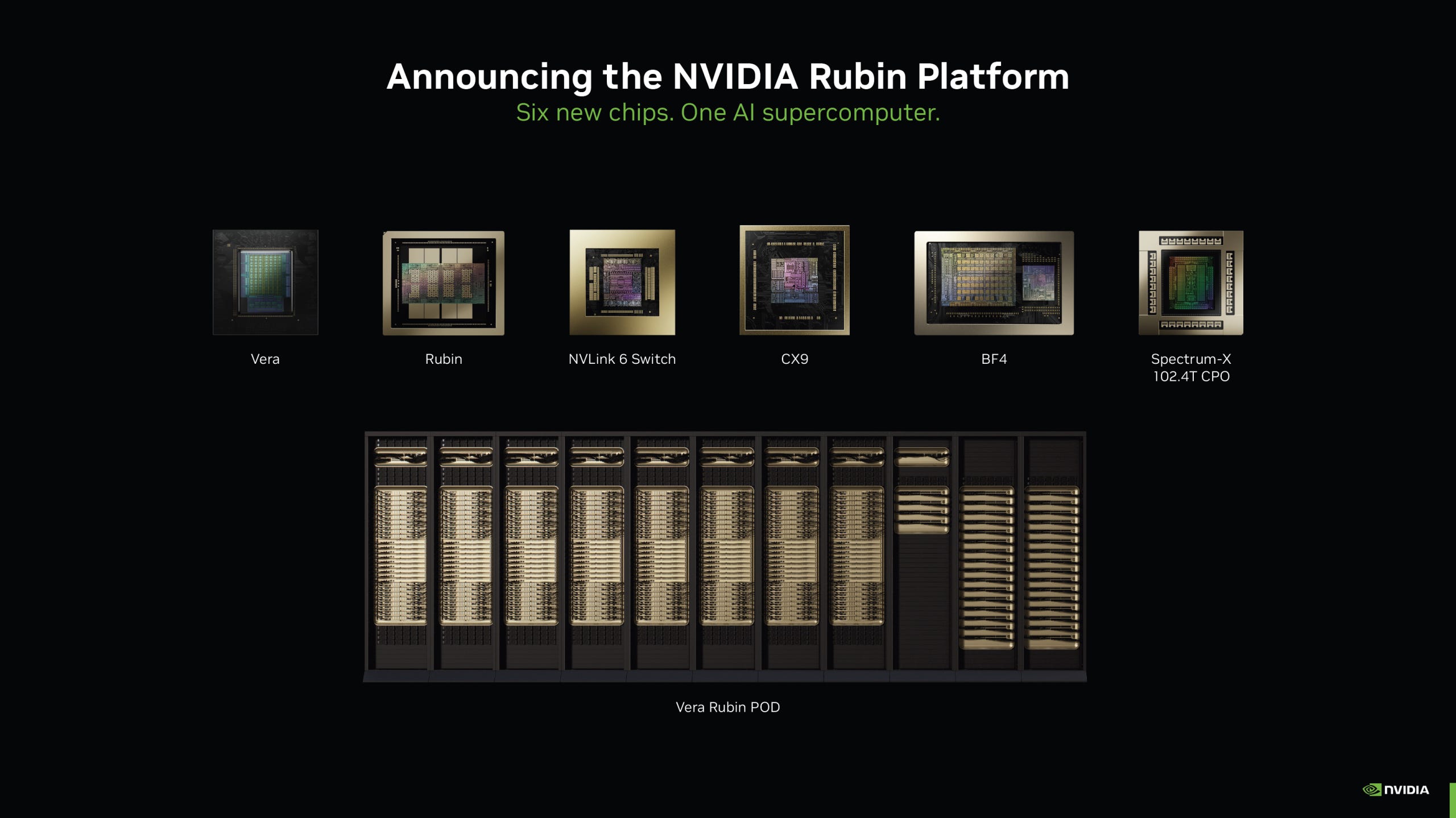
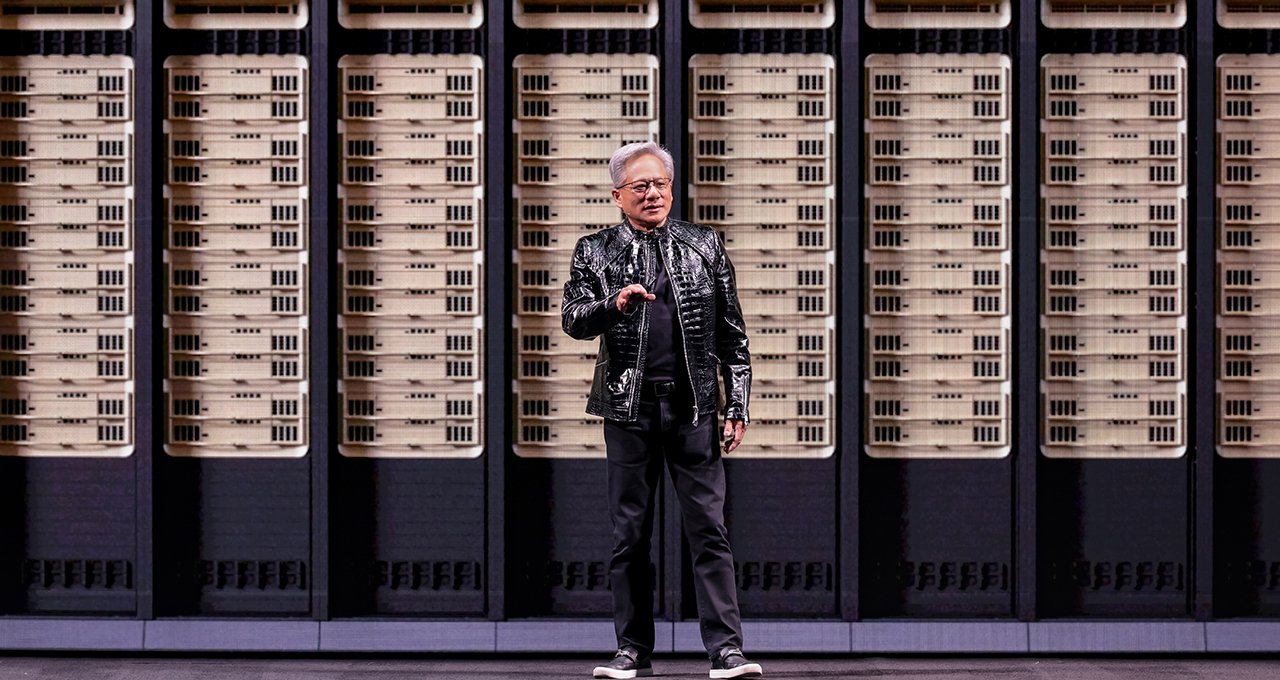
🧠NVIDIA CEO Jensen Huang opened CES 2026 with a presentation on the company's future blueprint, highlighting the Rubin Platform and AI's expansion across all computing domains. Huang emphasized that accelerated computing and AI have fundamentally reshaped the computing landscape, referencing a $10 trillion market impact.
AIBullishHugging Face Blog · Jan 57/107
🧠NVIDIA has announced Cosmos Reason 2, an advanced AI model that brings sophisticated reasoning capabilities to physical AI systems. This development represents a significant step forward in NVIDIA's AI ecosystem, potentially enhancing the capabilities of robotics and autonomous systems that require real-world understanding and decision-making.
$ATOM
AINeutralIEEE Spectrum – AI · Jan 57/106
🧠More than half of all upcoming global data centers will be developed in the United States, with U.S. facilities being much larger on average than those in other countries. The rapid growth raises concerns about whether the U.S. power grid can meet the rising energy demands after two decades of flat electricity consumption.
$NEAR
AIBullishVentureBeat – AI · Jan 57/104
🧠Boris Cherny, creator of Claude Code at Anthropic, revealed his development workflow that uses 5 parallel AI agents and exclusively runs the slowest but smartest model, Opus 4.5. His approach transforms coding from linear programming to fleet management, achieving the output capacity of a small engineering team while maintaining a shared knowledge file that makes AI mistakes permanent lessons.
AINeutralIEEE Spectrum – AI · Dec 277/104
🧠AI data centers are hitting physical limits with copper cables as GPU-to-GPU data rates approach terabit-per-second speeds, requiring thicker, shorter cables that complicate dense connections. Startups Point2 Technology and AttoTude are developing radio-based cable solutions that promise longer reach, lower power consumption, and narrower cables than copper alternatives.
$LINK$MKR
AIBullishLast Week in AI · Dec 257/10
🧠Google launches Gemini 3 Flash, ChatGPT introduces an app store, and GPT-5.2-Codex is unveiled, marking significant developments in AI technology platforms. These releases represent major updates to leading AI systems, expanding their capabilities and accessibility.
🧠 GPT-5🧠 ChatGPT🧠 Gemini
AIBullishOpenAI News · Dec 227/106
🧠OpenAI announces reaching over one million business customers worldwide who are using their AI services to transform workplace operations. Major companies including PayPal, Virgin Atlantic, BBVA, Cisco, Moderna, and Canva are highlighted as examples of organizations leveraging OpenAI's technology for business transformation.