22,940 AI articles curated from 50+ sources with AI-powered sentiment analysis, importance scoring, and key takeaways.
AIBullishOpenAI News · Dec 187/104
🧠OpenAI has released a new framework for evaluating chain-of-thought monitorability, testing across 13 evaluations in 24 environments. The research demonstrates that monitoring AI models' internal reasoning processes is significantly more effective than monitoring outputs alone, potentially enabling better control of increasingly capable AI systems.
AIBullishOpenAI News · Dec 187/106
🧠OpenAI and the U.S. Department of Energy signed a memorandum of understanding to enhance collaboration on AI and advanced computing for scientific discovery. The agreement establishes a framework for applying AI to high-impact research across DOE national laboratories.
AIBullishMIT News – AI · Dec 187/106
🧠MIT-IBM Watson AI Lab researchers have developed a new architecture that enhances large language models' ability to track state and perform sequential reasoning across long texts. This advancement addresses key limitations in current LLMs when processing extended content.
AIBullishOpenAI News · Dec 187/105
🧠OpenAI has released GPT-5.2-Codex, their most advanced coding model to date. The model features enhanced capabilities including long-horizon reasoning, large-scale code transformations, and improved cybersecurity features for developers.
AIBullishLast Week in AI · Dec 177/10
🧠OpenAI has released GPT-5.2 as part of the competitive landscape in agentic AI development. The podcast episode discusses advances in scaling agent systems and explores unusual generalization behaviors in AI models.
🏢 OpenAI🧠 GPT-5
AIBullishGoogle DeepMind Blog · Dec 177/105
🧠Google announces Gemini 3 Flash, a new AI model that delivers frontier-level intelligence optimized for speed and cost efficiency. The model represents an advancement in making high-performance AI more accessible through improved performance-to-cost ratios.
AIBullishOpenAI News · Dec 177/105
🧠OpenAI has launched an app submission and review process for ChatGPT, allowing developers to publish approved apps in a new in-product directory. The company has provided updated development tools, guidelines, and an Apps SDK to help developers create chat-native experiences that integrate real-world actions into ChatGPT.
AIBullishLast Week in AI · Dec 167/10
🧠OpenAI releases GPT-5.2 as part of the competitive agentic AI landscape, while Google partners with the US military on a new AI platform called GenAI.mil. Additionally, Trump is taking action to prevent states from regulating AI development.
🏢 OpenAI🧠 GPT-5🧠 Sora
AIBullishOpenAI News · Dec 167/107
🧠OpenAI has launched an upgraded ChatGPT Images feature powered by their new flagship image generation model. The update delivers more precise edits, consistent details, and generates images up to 4× faster, rolling out to all ChatGPT users and available via API as GPT-Image-1.5.
AIBullishMIT News – AI · Dec 127/107
🧠The DisCIPL system represents a breakthrough in AI coordination, enabling small language models to collaborate on complex reasoning tasks like itinerary planning and budgeting. This 'self-steering' approach allows multiple smaller models to work together with constraints, potentially offering more efficient alternatives to large monolithic AI systems.
AIBullishOpenAI News · Dec 127/104
🧠BNY is implementing OpenAI technology enterprise-wide through its Eliza platform, enabling over 20,000 employees to build AI agents. The initiative aims to enhance operational efficiency and improve client outcomes across the financial services company.
AIBullishOpenAI News · Dec 127/107
🧠BBVA is partnering with OpenAI in a multi-year AI transformation program, deploying ChatGPT Enterprise to all 120,000 employees. The collaboration aims to develop AI solutions for enhanced customer interactions, streamlined operations, and creating an AI-native banking experience.
AIBullishNVIDIA AI Blog · Dec 117/103
🧠OpenAI launched GPT-5.2 in December as its most capable professional knowledge work model, trained on NVIDIA Hopper and GB200 NVL72 infrastructure. The company followed with GPT-5.3 Codex in February, marking the first OpenAI agentic coding model designed to help build itself.
AIBullishOpenAI News · Dec 117/108
🧠OpenAI has released GPT-5.2, their most advanced model for mathematics and science applications, achieving state-of-the-art performance on benchmarks like GPQA Diamond and FrontierMath. The model demonstrates significant research capabilities, including solving open theoretical problems and generating reliable mathematical proofs.
AIBullishMIT News – AI · Dec 117/105
🧠Researchers have developed a new approach to improve microelectronics energy efficiency by stacking multiple active components made from new materials on the back end of computer chips. This innovation aims to reduce energy waste during computational processes.
AINeutralGoogle DeepMind Blog · Dec 117/104
🧠Google DeepMind and the UK AI Security Institute (AISI) are strengthening their collaboration on critical AI safety and security research. This partnership aims to advance research in AI safety measures and security protocols.
AIBullishOpenAI News · Dec 117/106
🧠Disney and OpenAI have reached a landmark agreement to bring over 200 characters from Disney, Marvel, Pixar, and Star Wars to OpenAI's Sora video generation platform for fan-created content. The deal also includes Disney's enterprise-wide adoption of ChatGPT Enterprise and OpenAI API, emphasizing responsible AI use in entertainment.
AIBullishOpenAI News · Dec 117/104
🧠OpenAI publishes a ten-year retrospective highlighting their journey from early research to deploying widely-used AI systems that have transformed capabilities across industries. The company reflects on key lessons learned while maintaining their commitment to developing artificial general intelligence (AGI) that serves humanity's benefit.
AIBullishOpenAI News · Dec 117/104
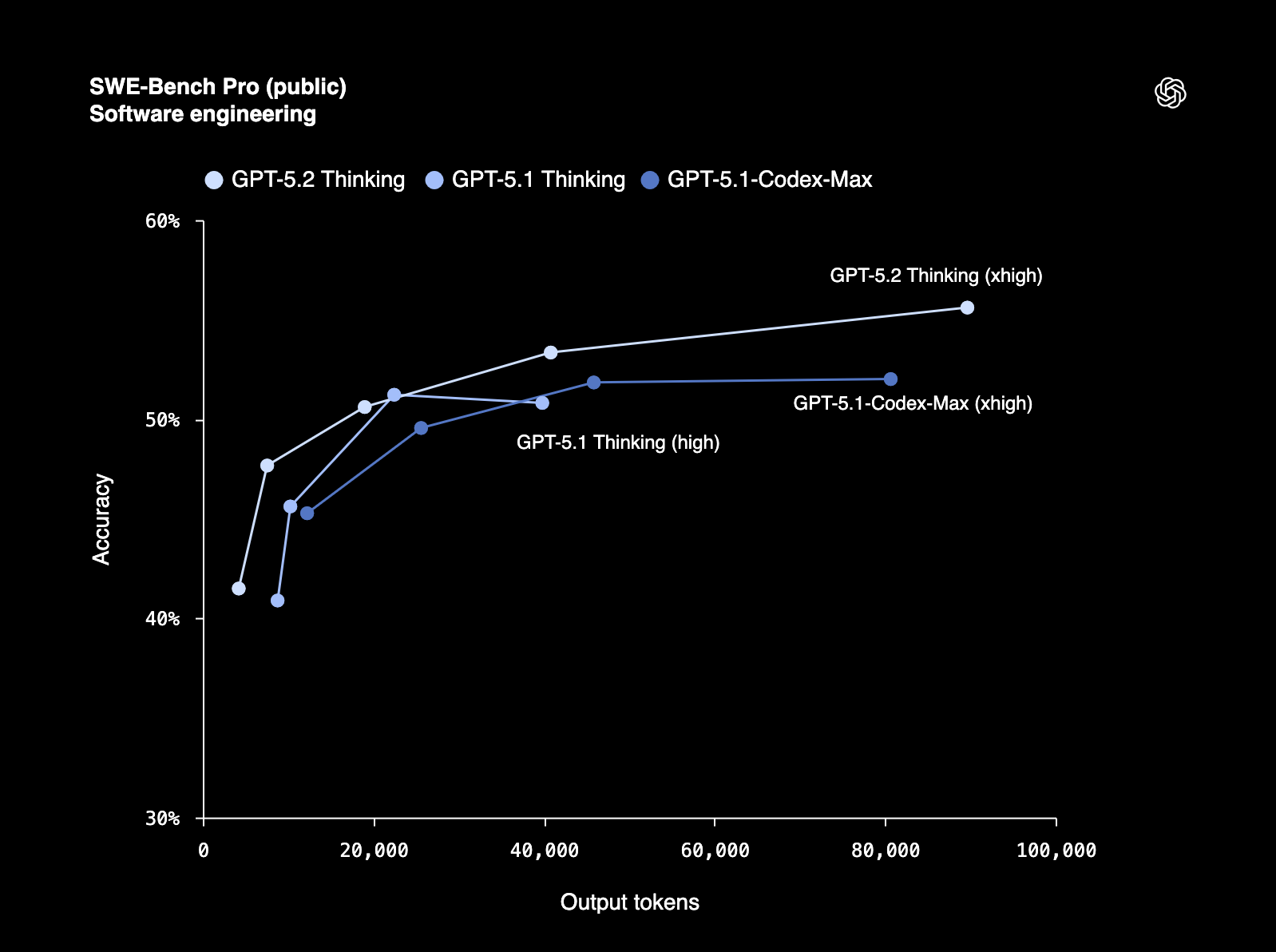
🧠OpenAI has announced GPT-5.2, their most advanced frontier AI model designed for professional applications. The model features enhanced reasoning capabilities, long-context understanding, coding abilities, and vision functionality, available through ChatGPT and OpenAI API for improved agentic workflows.
AIBullishOpenAI News · Dec 97/106
🧠OpenAI co-founded the Agentic AI Foundation under the Linux Foundation and donated AGENTS.md to promote open, interoperable standards for safe agentic AI development. This initiative aims to establish industry-wide standards for AI agent safety and interoperability.
AIBullishOpenAI News · Dec 97/105
🧠OpenAI has partnered with Deutsche Telekom to deliver multilingual AI experiences to millions across Europe. The collaboration will also see ChatGPT Enterprise implemented internally at Deutsche Telekom to enhance employee workflows and drive innovation.
AIBullishOpenAI News · Dec 97/104
🧠OpenAI has appointed Denise Dresser as Chief Revenue Officer to oversee global revenue strategy across enterprise and customer success. She will focus on helping businesses integrate AI into their daily operations as OpenAI continues scaling its commercial efforts.
AIBullishOpenAI News · Dec 87/106
🧠OpenAI and Instacart are expanding their partnership to integrate a fully functional grocery shopping and Instant Checkout payment system directly into ChatGPT. This represents the first complete e-commerce transaction capability within ChatGPT's interface.
AIBullishOpenAI News · Dec 87/105
🧠OpenAI's enterprise data reveals accelerating AI adoption across industries in 2025, with companies achieving deeper integration and measurable productivity gains. The findings indicate enterprise AI is moving from experimental to operational phases with demonstrable business impact.
AIBullishMIT News – AI · Dec 57/106
🧠MIT researchers have developed a speech-to-reality system that combines 3D generative AI with robotic assembly to create physical objects on demand from voice commands. The technology represents a significant advancement in AI-driven manufacturing and automation capabilities.