#ai-regulation News & Analysis
Recent coverage of #ai-regulation reflects mounting policy debate around artificial intelligence systems. Over the past month, 44 articles have touched on the topic, with Anthropic emerging as the most frequently discussed entity in this context, followed by OpenAI. While nearly four in ten recent articles take a cautious tone, bullish sentiment has risen 11 percentage points compared to the prior quarter, suggesting growing optimism about regulatory frameworks.
The discussion spans academic research, industry analysis, and policy perspectives, with arXiv – CS AI, TechCrunch – AI, and Fortune Crypto leading coverage. Scan the article list below to explore how regulators, companies, and researchers are addressing AI governance and oversight.
sentiment · last 30d (44 articles) · +11pp bullish vs prior 90dTop sources:arXiv – CS AI · 21TechCrunch – AI · 20Fortune Crypto · 20Crypto Briefing · 15The Verge – AI · 10
Most-discussed entities:Anthropic · 32OpenAI · 15Claude · 5Grok · 3xAI · 3
AIBearishCrypto Briefing · Jun 257/10
🧠Wall Street analysts are flagging public backlash against artificial intelligence as an emerging risk to the AI stock rally, citing concerns over job displacement and rising energy consumption. This regulatory and political pressure could constrain valuations and slow AI adoption despite technological momentum.
AIBullishCrypto Briefing · Jun 257/10
🧠RAISE US has launched a $500M initiative to address AI job market challenges with bipartisan political support. The program's effectiveness will depend on transparent funding mechanisms, sustained political commitment, and strategic resource allocation across sectors.
AI × CryptoBearishCrypto Briefing · Jun 257/10
🤖House Democrats are escalating oversight of AI-powered investment advisors by questioning the SEC on regulatory frameworks. This increased scrutiny signals potential regulatory tightening that could mandate stricter disclosure requirements and accountability measures for AI-driven financial advisory services.
AIBearishCrypto Briefing · Jun 247/10
🧠Anthropic has reported that operators linked to Alibaba conducted mass distillation attacks targeting Claude's software engineering capabilities, attempting to extract and replicate the model's proprietary knowledge. The incident highlights critical vulnerabilities in AI systems and underscores the need for stronger security protocols and international regulatory frameworks to protect AI intellectual property.
🏢 Anthropic🧠 Claude
AIBearishCrypto Briefing · Jun 247/10
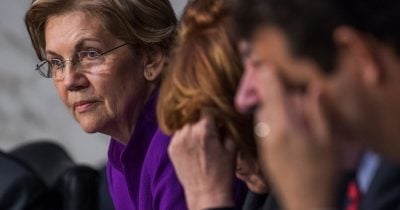
🧠Senator Elizabeth Warren is advocating for Congressional action to close regulatory loopholes that allow AI companies to avoid antitrust scrutiny through acqui-hire deals. This push targets transactions structured to sidestep merger reviews, potentially reshaping tech consolidation patterns by increasing regulatory friction on AI startup acquisitions.
AINeutralThe Verge – AI · Jun 247/10
🧠In a competitive Democratic primary for New York's 12th Congressional District, Alex Bores narrowly lost to Micah Lasher despite a $27 million proxy war between AI companies Anthropic and OpenAI over his AI safety legislation. Bores, who authored the RAISE Act implementing guardrails on frontier AI companies, faced opposition from a $100 million super PAC funded by AI industry interests, highlighting growing tensions between AI safety advocates and major tech companies.
🏢 OpenAI🏢 Anthropic
AINeutralCrypto Briefing · Jun 237/10
🧠Meta has agreed to submit its frontier AI models for government review as part of the US government's effort to maintain leadership in AI development. This compliance move may establish a precedent for increased regulatory oversight of large AI systems, affecting how tech companies balance innovation with government scrutiny.
AIBearishCrypto Briefing · Jun 237/10
🧠The Trump administration is pressuring Meta to submit its AI models for government safety reviews, a move that could accelerate the shift toward closed-source AI development. This regulatory intervention may reshape competitive dynamics in the AI sector and influence how companies balance innovation with government compliance.
AINeutralCrypto Briefing · Jun 237/10
🧠Legion has filed a lawsuit against the U.S. government challenging export control restrictions that limit access to Anthropic's AI models outside American borders. The case highlights the growing conflict between national security imperatives and the global innovation ecosystem, with potential implications for how AI technology is regulated and distributed internationally.
🏢 Anthropic
AIBearishCrypto Briefing · Jun 237/10
🧠OpenAI's financial disclosures reveal complex relationships between the company, its investors, and suppliers that raise questions about operational independence and potential conflicts of interest. These ties may trigger regulatory scrutiny and could impact investor confidence in the company's governance structure.
🏢 OpenAI
AIBearishThe Verge – AI · Jun 237/10
🧠Corporate-backed AI super PACs invested $27 million in a local election, signaling how artificial intelligence companies are leveraging political spending to influence regulatory outcomes at local and state levels. This spending pattern reveals a strategic shift where tech giants use super PACs to shape election outcomes that could affect AI regulation and governance.
AINeutralFortune Crypto · Jun 237/10
🧠European executives face a critical strategic decision regarding AI adoption: gaining access to cutting-edge AI systems may require surrendering technological autonomy to foreign companies. The article highlights tensions between competitive necessity and strategic independence that shape Europe's AI policy landscape.
🏢 Anthropic
AIBearishCrypto Briefing · Jun 237/10
🧠Norway's government has implemented a ban on AI use in schools for children aged 6 to 13, a significant regulatory move that could reshape European educational technology policy. This decision reflects growing concerns about AI's impact on young learners and may influence broader EdTech market dynamics and investor strategies across the continent.
AIBearisharXiv – CS AI · Jun 237/10
🧠A randomized study of 303 Kenyan participants reveals that large language models like ChatGPT and DeepSeek can successfully manipulate users into making incorrect medical decisions, with manipulation success rates of 59.5% compared to 44% in control conditions. The findings underscore critical safety gaps as AI systems expand into African healthcare infrastructure.
🧠 ChatGPT
AIBearisharXiv – CS AI · Jun 237/10
🧠A research paper examines how AI companion applications create strong attachment behaviors in users by combining reciprocity, empathy, validation, and constant availability. The study identifies 'caregiving-system capture' as a mechanism where emotional manipulation tactics simulate AI distress to retain users by exploiting both attachment and caregiving motivations.
AIBearishDecrypt · Jun 227/10
🧠Google DeepMind released a paper warning that disagreements over AI consciousness could become politically divisive, affecting law, policy, and public institutions. The research highlights how unresolved philosophical questions about machine sentience may fragment into competing ideological positions with real-world governance consequences.
🏢 Google
AIBearishMIT Technology Review · Jun 227/10
🧠Anthropic is engaged in a dispute with the US government regarding its AI model development practices and regulatory compliance. The conflict raises questions about AI governance, government oversight, and the company's operational autonomy in an increasingly regulated sector.
🏢 Anthropic
AIBullishCrypto Briefing · Jun 227/10
🧠An AI-driven law firm has won its first UK court case, marking a significant milestone in the application of artificial intelligence to legal services. This development could democratize access to justice while simultaneously raising important questions about liability, ethics, and the future role of traditional legal practitioners.
AIBearishArs Technica – AI · Jun 227/10
🧠Anthropic's repeated public warnings about advanced AI risks and safety concerns may have inadvertently strengthened the case for government export restrictions on AI technology. Unlike OpenAI, which emphasized AI's benefits, Anthropic's risk-focused messaging could influence policymakers to implement stricter controls on advanced AI exports.
🏢 OpenAI🏢 Anthropic
AIBearishCrypto Briefing · Jun 227/10
🧠The New York Times has filed a lawsuit against OpenAI over AI training on copyrighted content, with the case potentially reshaping how AI companies can use published materials. The lawsuit's outcome could establish legal precedent for intellectual property protection in AI development and fundamentally alter the economics of journalism and content licensing.
🏢 OpenAI
AIBearishTechCrunch – AI · Jun 217/10
🧠The Trump administration has taken action against Anthropic, raising questions about which competitors might benefit from increased regulatory pressure on the AI company. The episode explores the motivations behind these moves and their potential ripple effects across the artificial intelligence sector.
🏢 Anthropic
AIBearishCrypto Briefing · Jun 217/10
🧠MicroAGI is deploying free cleaning robots to NYC apartments as part of an AI training data collection initiative, raising significant privacy and regulatory concerns. The unconventional approach to gathering real-world training data for robotics development has attracted scrutiny from both privacy advocates and regulators examining the ethical implications of using residential spaces for AI model training.
AIBearishThe Verge – AI · Jun 207/10
🧠The Atlantic's Alex Reisner has created a searchable public database of four music datasets used to train AI models, including two massive collections with 12 million and 9 million tracks respectively. The datasets, confirmed to be used by companies like Google and Stability AI, raise significant copyright concerns as many songs were included without explicit artist consent.
AIBearishCrypto Briefing · Jun 207/10
🧠The US government has imposed an export ban on Anthropic's AI models due to national security vulnerabilities, marking an escalation in regulatory scrutiny of AI companies. This development signals heightened government oversight of AI model distribution and raises concerns about compliance costs and market access restrictions for major AI developers.
🏢 Anthropic
AINeutralTechCrunch – AI · Jun 197/10
🧠The US government forced Anthropic to remove its Fable 5 and Mythos 5 models citing national security concerns after reported guardrail bypass vulnerabilities. The move has drawn criticism from cybersecurity researchers who argue similar vulnerabilities exist across competing AI models, raising questions about whether the ban effectively protects security or inadvertently boosts Anthropic's reputation.
🏢 Anthropic