CryptoNeutralU.Today · Jun 186/10
⛓️Adam Back, a cypherpunk pioneer, discusses Bitcoin's 1997 origins and reveals that Satoshi Nakamoto's creation was built upon decades of collective cryptographic research rather than emerging in isolation. The article highlights how foundational work by Back and other cypherpunks in the 1990s directly enabled Bitcoin's development, establishing important historical context for cryptocurrency's ideological and technical roots.
$BTC
AI × CryptoBearishBitcoinist · Jun 106/10
🤖BlackRock has published a report warning that quantum computing breakthroughs could eventually compromise the cryptographic security underpinning Bitcoin, Ethereum, and other digital assets. The firm emphasizes this is not an immediate threat but underscores the urgency for the blockchain industry to begin transitioning to quantum-resistant protocols before such capabilities materialize.
$BTC$ETH
AI × CryptoBullishU.Today · Jun 96/10
🤖Billionaire venture capitalist Tim Draper has publicly dismissed concerns that quantum computing poses an existential threat to Bitcoin's security. Draper's statement suggests confidence in Bitcoin's resilience despite legitimate cryptographic vulnerabilities that quantum computers could theoretically exploit.
$BTC
AIBullisharXiv – CS AI · Jun 96/10
🧠FuseFSS is a new compiler that streamlines secure LLM inference by consolidating fragmented protocol designs into a unified pipeline, achieving 1.24x-1.50x speedup and reducing communication overhead by 9-16% compared to existing function secret sharing approaches. The technology enables privacy-preserving queries to large language models without revealing user prompts, addressing a critical bottleneck in cryptographic systems for AI inference.
CryptoNeutralCoinDesk · Jun 86/10
⛓️Zcash (ZEC) recovered 45% following developer proposals for the Ironwood upgrade, which aims to address a critical bug that caused the previous week's crash by enabling universal verification of coin authenticity. Despite the bounce, ZEC remains down approximately 22% weekly, indicating ongoing market uncertainty.
CryptoNeutralBitcoinist · Jun 76/10
⛓️Security researcher Taylor Hornby, who discovered a vulnerability in Zcash's Orchard Pool, has announced plans to audit Monero and other privacy-focused cryptocurrencies. The move signals growing scrutiny of privacy coin implementations and their underlying cryptographic protocols.
🧠 Claude🧠 Opus
CryptoBearishBitcoinist · Jun 56/10
⛓️Bitcoin developer Peter Todd has raised concerns about integrating Zcash-style privacy features into Bitcoin's base layer, citing excessive cryptographic risk. The debate intensified following a disclosure by ZODL developers regarding a vulnerability in Zcash's Orchard shielded pool, reigniting questions about whether advanced privacy protocols are suitable for Bitcoin's consensus mechanism.
$BTC
CryptoBearishU.Today · Jun 46/10
⛓️Charles Edwards has identified a 27-28% quantum discount suppressing Bitcoin's price discovery mechanism, attributed to developer inertia in implementing quantum-resistant solutions. This gap between Bitcoin's theoretical and market value suggests the cryptocurrency market may not be fully pricing in long-term quantum computing threats, creating potential volatility once the market recognizes and corrects this discrepancy.
$BTC
AINeutralarXiv – CS AI · Jun 46/10
🧠Researchers demonstrate that token ranking signatures from language model APIs are mathematically unforgeable—each model produces unique top-k token orderings that cannot be replicated by other models. While rankings leak less information than raw logits, they still enable approximate parameter theft, though APIs can mitigate this risk by restricting k to sufficiently small values.
CryptoBullishWu Blockchain · Jun 26/10
⛓️Paradigm researcher Dan Robinson has proposed PACTs (Provable Address-Control Timestamps), a scheme designed to protect Bitcoin against quantum computing threats. The article also covers Solana's technical optimization efforts and Ethereum's dual upgrade progress, representing significant development across major blockchain platforms.
$BTC$ETH$SOL
AI × CryptoNeutralarXiv – CS AI · Jun 26/10
🤖Researchers propose SS-ZKR, a privacy-preserving routing protocol that enables multi-agent AI systems to exchange data across organizational boundaries without exposing sensitive information to intermediaries. The protocol combines zero-knowledge proofs, differential privacy, and cryptographic policy compilation to address compliance requirements in regulated industries like finance and healthcare.
AINeutralarXiv – CS AI · Jun 26/10
🧠Researchers have developed mcp-attested, a security extension to the Model Context Protocol that enables safe integration of third-party tool servers with LLM agents through cryptographic attestation, allowlists, and audit logging. The mechanism addresses critical trust gaps in how AI agents interact with external services without modifying existing protocols, establishing a framework that could become an MCP standard.
CryptoBullishCrypto Briefing · May 296/10
⛓️Circle is exploring post-quantum cryptography integration into its Arc blockchain to enhance USDC security against future quantum computing threats. This initiative positions Circle as a forward-thinking stablecoin issuer preparing for long-term technological risks that could compromise current encryption standards.
CryptoBullishCrypto Briefing · May 286/10
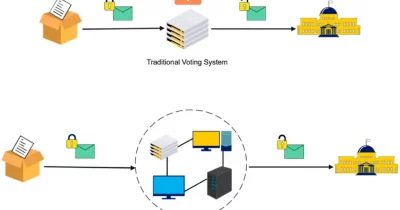
⛓️Interfold has introduced CRISP, a blockchain-based system designed to enable secure and privacy-preserving digital voting. The technology addresses longstanding concerns about transparency, security, and voter privacy in democratic processes, with potential applications extending globally across both traditional elections and decentralized governance systems.
AINeutralarXiv – CS AI · May 286/10
🧠Researchers introduce mixture mechanisms for differential privacy that combine multiple Gaussian distributions to reduce noise in data queries while maintaining privacy guarantees. These mechanisms substantially outperform existing analytic Gaussian approaches in low-privacy regimes, approaching theoretical optimality with significantly lower noise amplitudes and variances.
GeneralBullishGoogle Research Blog · May 276/10
📰Zero-trust aggregation enables private analytics by aggregating sensitive data without exposing individual records, combining security protocols with privacy-preserving computation. This approach addresses the growing tension between data utility and user privacy, allowing organizations to extract insights while maintaining cryptographic guarantees against unauthorized access or data breaches.
AINeutralarXiv – CS AI · May 276/10
🧠Researchers introduce an anonymous gradient-boosted decision tree (GBDT) protocol enabling secure training on vertically partitioned data between two parties while hiding record identifiers. The approach uses dual circuit-PSI and oblivious pseudorandom functions to eliminate ID exposure risks inherent in standard private set intersection methods, while achieving computational efficiency comparable to non-private approaches.
CryptoNeutralNewsBTC · May 46/10
⛓️Bitcoin researchers emerging from industry discussions argue that Satoshi Nakamoto's 22,000 distributed wallets actually reduce quantum computing risk to the network, since an attacker would need to compromise thousands of individual addresses rather than one massive target. A consensus has formed that these coins should never be moved or frozen to address quantum threats, as doing so would violate property rights principles fundamental to Bitcoin's credibility.
$BTC$XRP🧠 Gemini
CryptoNeutralBitcoinist · May 16/10
⛓️A Bitcoin hard fork proposal targeting quantum computing threats has sparked debate about the safety of Satoshi Nakamoto's estimated 600,000 BTC holdings. On-chain analyst Tyler highlighted the proposal, which the developer claims will protect Satoshi's coins despite concerns about potential risks to inactive legacy addresses.
$BTC
CryptoBullishCrypto Briefing · May 16/10
⛓️Solana has implemented NIST-approved quantum-resistant signatures, positioning itself ahead of Ethereum in quantum security preparedness. This development could enhance investor confidence in Solana's long-term viability while highlighting potential vulnerabilities in Ethereum's current cryptographic infrastructure.
$ETH$SOL
AIBullisharXiv – CS AI · Apr 206/10
🧠Researchers propose PPRoute, a privacy-preserving framework for LLM routing that uses Secure Multi-Party Computation (MPC) to protect user data while dynamically selecting between model providers. The system achieves 20x speedup over naive MPC implementations through optimized encoder inference, multi-step model training, and an efficient Top-k algorithm, maintaining routing quality without sacrificing privacy.
AINeutralarXiv – CS AI · Apr 206/10
🧠Researchers introduce DPrivBench, a benchmark for evaluating how well large language models can reason about differential privacy algorithms and verify their correctness. Testing shows current LLMs handle basic DP mechanisms competently but fail significantly on advanced algorithms, exposing critical gaps in automated privacy reasoning capabilities.
CryptoBullishBlockonomi · Apr 176/10
⛓️VerifiedX has launched Prism, a privacy layer enabling encrypted balances and confidential transactions for vBTC and VFX tokens on its blockchain. The system allows users to toggle between private and public transaction modes while maintaining cryptographic verifiability, with viewing keys enabling selective disclosure of transaction details.
AI × CryptoNeutralBitcoinist · Apr 116/10
🤖A cryptocurrency analyst examines the potential threat quantum computers pose to XRP holders, exploring how different account types face varying levels of risk. The analysis breaks down exposure scenarios and what XRP investors should understand about quantum computing's implications for blockchain security.
$XRP
AI × CryptoBullishBitcoinist · Apr 116/10
🤖Bernstein analysts counter recent quantum computing concerns raised by Google's findings, arguing that quantum computing poses only a manageable technical challenge rather than an existential threat to Bitcoin's cryptography. The research firm's pushback suggests the Bitcoin network possesses sufficient time and adaptability to implement quantum-resistant solutions before any practical threat materializes.
$BTC