CryptoBearishCrypto Briefing · Jun 226/10
⛓️Securitize has filed a patent complaint against tZERO, marking an escalation in intellectual property disputes within the tokenized securities market. The case underscores emerging legal challenges that could reshape competitive dynamics and innovation strategies among blockchain-based asset platforms.
GeneralBearishCrypto Briefing · Jun 216/10
📰Joby Aviation and Archer Aviation are engaged in ongoing lawsuits involving trade secrets and patent disputes, creating potential delays in air taxi innovation and dampening investor confidence in the emerging urban air mobility sector.
AINeutralarXiv – CS AI · Jun 196/10
🧠A philosophical paper challenges the requirement that intentional agency is necessary for creativity, arguing that generative AI demonstrates creative capabilities despite lacking conscious intent. The authors propose that creativity should be evaluated based on 'creative ability' rather than intentional agency, reconciling AI creativity with human intuitions about the importance of perceived intentions.
AINeutralarXiv – CS AI · Jun 116/10
🧠Researchers propose T2S, a rehearsal-based watermarking framework that protects AI models against extraction attacks by simulating the theft process during training. The method embeds watermarks that remain detectable even when adversaries steal and replicate models, addressing a critical vulnerability in AI intellectual property protection.
AINeutralarXiv – CS AI · Jun 26/10
🧠Researchers introduce PatentXAI, a framework using Shapley values and graph-conditioned Markov Blankets to fairly allocate patent valuations within complex products containing thousands of patents. The method scales computationally by restricting coalition analysis to relevant patent subsets, achieving sub-100 millisecond processing times while maintaining accuracy within 6.2% of Monte Carlo benchmarks.
🏢 Meta
AINeutralarXiv – CS AI · Jun 26/10
🧠Researchers propose Agent Guide, a behavioral watermarking framework designed to trace and protect intelligent agents deployed in digital ecosystems by embedding watermarks in high-level decision patterns rather than token sequences. The framework addresses vulnerabilities in traditional LLM watermarking by decoupling agent behavior from specific actions, enabling reliable watermark detection while maintaining natural execution patterns.
AIBearishWired – AI · May 296/10
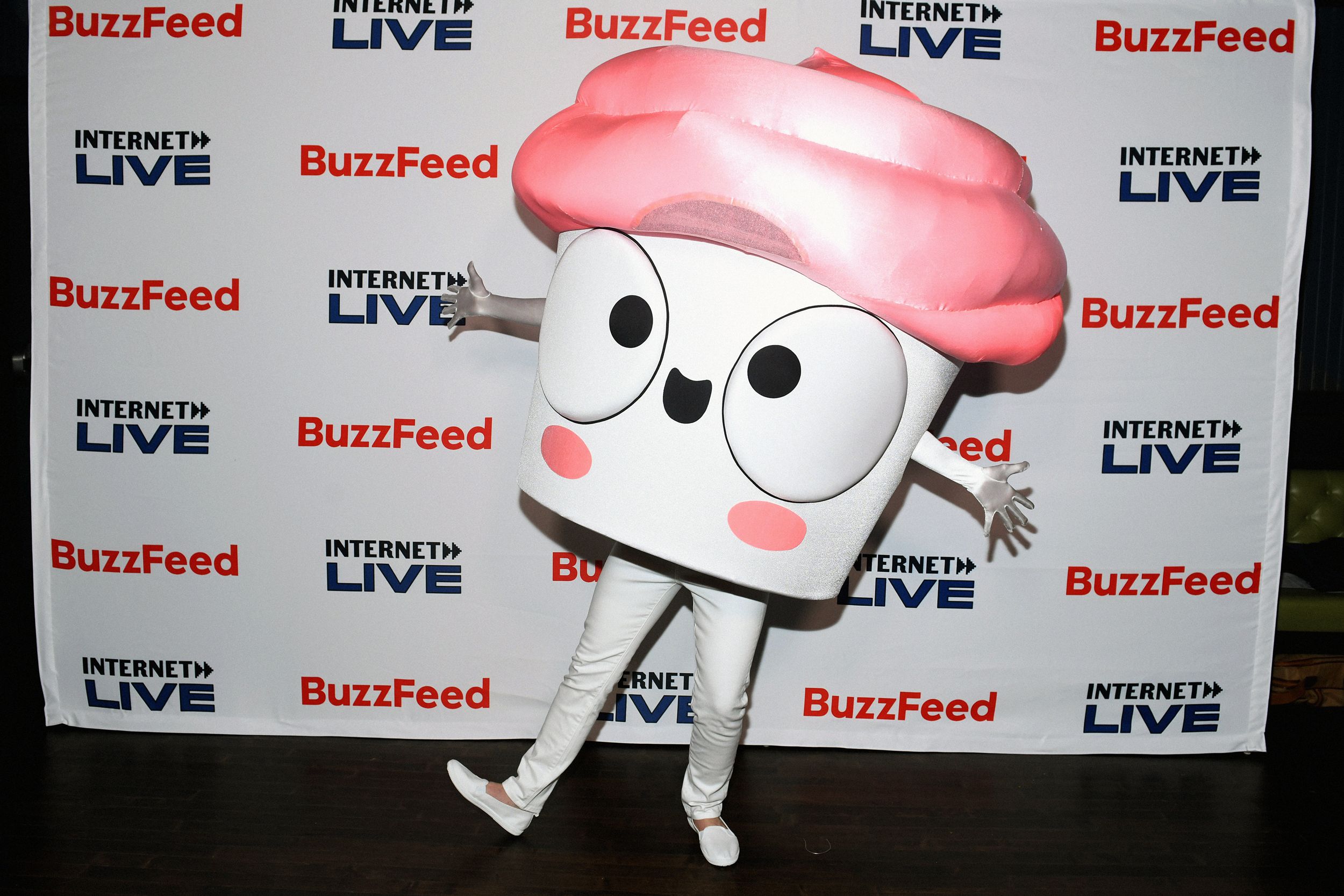
🧠Amazon is producing an AI-animated TV series based on The Good Advice Cupcake character created by Loryn Brantz for BuzzFeed, but the original creator was not consulted or given consent for the project. The situation highlights emerging tensions between IP holders, original creators, and companies leveraging AI to adapt existing intellectual property without proper attribution or compensation agreements.
AINeutralarXiv – CS AI · May 296/10
🧠Researchers have developed Synthesis Data Reversion (SDR), a technique to detect unauthorized LLM training data even when that data has been deliberately obfuscated through stylistic transformation. The method works by inferring laundering patterns and generating synthetic queries that mimic the transformed data, effectively countering data laundering practices that previously evaded detection.
🧠 Llama
AINeutralarXiv – CS AI · May 286/10
🧠Researchers introduce SourceTracker, a 300M-parameter encoder combined with a hybrid two-stage pipeline that uses vector search and fingerprinting to efficiently track code provenance in LLM-generated snippets. The system achieves logarithmic-time query complexity while maintaining high precision on billion-scale datasets, addressing scalability challenges in detecting plagiarism and license violations in AI-generated code.
AINeutralDecrypt · May 276/10
🧠ElevenLabs has licensed the voice and likeness of Stan Lee, the late Marvel Comics creator, to create an AI replica. This move reflects the expanding market for AI-generated celebrity digital assets, raising questions about consent, intellectual property, and the commercialization of deceased public figures.
AINeutralarXiv – CS AI · May 276/10
🧠A legal research paper examines intellectual property challenges arising from autonomous AI-generated creative and inventive works, comparing regulatory frameworks across Iran, the EU, UK, and US. The analysis reveals significant gaps in current Iranian IP law and recommends establishing new legal mechanisms to address ownership and protection of AI-generated outputs while balancing innovation with human creativity preservation.
AINeutralarXiv – CS AI · May 276/10
🧠Researchers propose SWAP, a sequential watermarking technique to protect copyright of soft prompts used in vision-language models like CLIP. The method embeds watermarks through ordered out-of-distribution classes, addressing fundamental limitations of existing auditing approaches that fail due to conflicting objectives between watermarking and primary task performance.
AINeutralTechCrunch – AI · May 266/10
🧠Universal Music Group and TikTok have renewed their agreement to combat unauthorized AI-generated music on the platform. The deal reflects UMG's ongoing effort to establish stricter content moderation standards across digital platforms and AI companies, addressing growing concerns about copyright infringement and uncompensated AI music generation.
CryptoBullishU.Today · May 266/10
⛓️Ripple has filed two new U.S. trademark applications for its Triskelion design and Word Mark, signaling an expanded strategic push into institutional Wall Street services. The filings suggest Ripple's commitment to establishing formal brand protection as it deepens its presence in traditional financial markets.
$XRP
AINeutralarXiv – CS AI · May 116/10
🧠Researchers propose a new mechanism for fairly distributing compensation among creators whose intellectual property appears in AI model context windows, using cooperative game theory's least core solution. The approach efficiently approximates fair value distribution while requiring significantly fewer computational resources than existing methods.
AINeutralarXiv – CS AI · May 96/10
🧠Researchers introduce PragLocker, a technical framework that protects LLM agent prompts by making them non-portable across different language models. The system obfuscates prompts using code symbols and target-model feedback to prevent adversaries from copying proprietary prompts for use with competing LLMs, addressing a growing intellectual property concern in AI deployments.
AINeutralarXiv – CS AI · May 96/10
🧠Researchers introduce LicenseGPT, a fine-tuned AI model that significantly improves dataset license compliance analysis by achieving 64.30% prediction accuracy compared to 43.75% for existing legal AI models. Testing with software IP lawyers shows the tool reduces license analysis time by 94.44%, from 108 seconds to 6 seconds per document, while maintaining accuracy and serving as a valuable supplementary tool for legal practice.
AIBearishTechCrunch – AI · May 36/10
🧠An artist known for the 'This is Fine' meme has accused Artisan, an AI startup, of using his artwork without permission in billboard advertisements promoting automation over human hiring. The incident highlights ongoing tensions between AI companies and creators regarding unauthorized use of copyrighted content for training and commercial purposes.
AINeutralWired – AI · Apr 306/10
🧠Elon Musk testified under oath that xAI has used OpenAI's models to train its own AI systems, claiming this is standard industry practice among competing AI labs. The admission raises questions about intellectual property practices in the AI sector and potential competitive dynamics between Musk's xAI and his former company OpenAI.
🏢 OpenAI🏢 xAI
AINeutralarXiv – CS AI · Apr 206/10
🧠Researchers propose trace rewriting techniques to protect language models from unauthorized knowledge distillation, a process where smaller models learn from larger ones without permission. The methods preserve model accuracy while degrading distillation usefulness and embedding detectable watermarks in student models.
AINeutralarXiv – CS AI · Apr 136/10
🧠A research paper proposes that generative AI licensing requires nuanced, conditional consent rather than binary opt-in/opt-out frameworks. The study argues inference-time verification can better balance rights holders' interests with AI developers' capabilities, using music licensing as a practical case study to demonstrate how contextual consent conditions can be enforced.
AIBearishThe Verge – AI · Apr 56/10
🧠AI music platform Suno's copyright filters can be easily bypassed with minimal effort, allowing users to generate AI imitations of popular songs from artists like Beyoncé, Black Sabbath, and Aqua. Despite Suno's policy prohibiting copyrighted material use, the platform's detection system proves inadequate at preventing copyright infringement.
AINeutralarXiv – CS AI · Mar 176/10
🧠Researchers have developed a new white-box watermarking framework that uses chaotic sequences to embed ownership information into deep neural network parameters for intellectual property protection. The method uses logistic maps and genetic algorithms to verify model ownership without degrading performance, showing effectiveness on MNIST and CIFAR-10 datasets.
AIBearishThe Verge – AI · Mar 166/10
🧠Encyclopedia Britannica and Merriam-Webster filed a lawsuit against OpenAI, alleging the company used their copyrighted content without permission to train ChatGPT and other AI models. The publishers claim GPT-4 has 'memorized' their content and can output near-verbatim copies of significant portions on demand.
🏢 OpenAI🧠 GPT-4🧠 ChatGPT
AINeutralarXiv – CS AI · Mar 126/10
🧠Researchers propose RandMark, a new method for watermarking visual foundation models to protect intellectual property rights. The approach uses a small encoder-decoder network to embed random digital watermarks into internal representations, enabling ownership verification with low false detection rates.