
CryptoBullishBlockonomi · Apr 27🔥 10/10
#privacy News & Analysis
Recent coverage of #privacy has grown substantially, with 136 articles published in the last 30 days across the indexed collection of 441 total pieces. Discussion sentiment has shifted notably bullish, rising to 86.8% positive—an 18.8 percentage point increase compared to the previous quarter. The conversation centers heavily on artificial intelligence systems, with OpenAI, ChatGPT, and Gemini featuring prominently alongside broader concerns about #security and #machine-learning. Academic research from arXiv dominates the source landscape, complemented by specialist coverage from crypto-focused outlets. The topic frequently intersects with blockchain discussions, particularly around Bitcoin and Ethereum. Scan the articles below to explore how privacy considerations are shaping current debates across technology and digital assets.
sentiment · last 30d (136 articles) · +18.8pp bullish vs prior 90d
Top sources:arXiv – CS AI · 194Blockonomi · 20CoinDesk · 16crypto.news · 15U.Today · 14
Most-discussed entities:OpenAI · 8ChatGPT · 7Gemini · 6Claude · 6Anthropic · 6
1255 articles
AIBullishCrypto Briefing · Mar 19🔥 10/10

CryptoBearishNewsBTC · Mar 12🔥 10/10

CryptoBearishBlockonomi · Apr 27🔥 8/10
GeneralBearishCrypto Briefing · Jun 257/10
📰
White House helps Meta, Google CEOs avoid Senate grilling on child safety
Meta and Google CEOs reportedly avoided Senate testimony on child safety issues with White House assistance, potentially delaying regulatory scrutiny and policy actions. The evasion raises concerns about corporate influence on legislative processes and may slow the implementation of digital child safety and privacy protections.

DeFiBullishCrypto Briefing · Jun 247/10
💎
BNB Chain launches zkTLS verification layer for privacy-preserving data
BNB Chain has deployed a zkTLS (zero-knowledge Transport Layer Security) verification layer that enables cryptographic proof of sensitive data without exposing the underlying information. This privacy-enhancing infrastructure addresses a critical gap in blockchain data handling, particularly for DeFi applications requiring secure verification of off-chain information.

$BNB
CryptoBullishBlockonomi · Jun 237/10
⛓️
European Parliament Committee Advances Digital Euro Framework in Historic Vote
The European Parliament's economic committee voted 43-14 to advance a Digital Euro framework that establishes privacy protections and aims to reduce dependence on Visa and Mastercard. This historic vote represents a significant step toward EU monetary sovereignty in digital payments and signals growing regulatory momentum for central bank digital currencies in Europe.
DeFiBullishCrypto Briefing · Jun 237/10
💎
Starknet outlines steps to access private DeFi with wallets
Starknet has introduced streamlined privacy features designed to enable private DeFi transactions while maintaining regulatory compliance. The development aims to address a critical gap in the DeFi ecosystem by allowing users to access decentralized finance without sacrificing privacy, potentially driving broader adoption.

CryptoBullishCrypto Briefing · Jun 227/10
⛓️
Ethereum Foundation’s strategy chief lays out plan to kill MEV and make privacy a protocol default
Ethereum Foundation's strategy chief has announced plans to eliminate MEV (maximal extractable value) and establish privacy as a protocol default. These initiatives aim to enhance network neutrality and could drive broader institutional adoption by addressing long-standing concerns about fairness and data protection.
$ETH
AI × CryptoBearishCrypto Briefing · Jun 227/10
🤖
Vitalik Buterin challenges AI to find anonymous Ethereum document he secretly wrote
Vitalik Buterin publicly challenged AI systems to identify an anonymous Ethereum document he secretly authored, demonstrating how advanced AI could potentially de-anonymize pseudonymous contributions in crypto. The challenge underscores growing privacy vulnerabilities in blockchain ecosystems and raises concerns about regulatory surveillance capabilities.

$ETH
AIBullishCrypto Briefing · Jun 227/10
🧠
Pew Research finds 49% of US adults now use AI chatbots
According to Pew Research, nearly half of US adults (49%) now use AI chatbots, marking significant mainstream adoption of generative AI technology. This rapid penetration highlights emerging regulatory challenges around privacy and data protection, while creating substantial market opportunities for AI developers and privacy-focused technology providers.

CryptoBullishCrypto Briefing · Jun 207/10
⛓️
Nigel Farage urges Bank of England to abandon digital pound plans
Nigel Farage has publicly called for the Bank of England to abandon its digital pound (CBDC) initiative, citing concerns over state control of money. His opposition reflects a broader ideological divide between those favoring decentralized cryptocurrency solutions and governments pursuing centralized digital currency systems.

AINeutralarXiv – CS AI · Jun 197/10
🧠
TRAP: Benchmark for Task-completion and Resistance to Active Privacy-extraction
Researchers introduce TRAP, a benchmark evaluating AI agents' ability to complete document-intensive tasks using private information while resisting extraction attempts. Testing 22 models reveals all exhibit privacy leakage, with instruction-following ability correlating to higher exposure risk, though a proposed structural isolation method using hash keys shows promise in mitigating the fundamental trade-off between task accuracy and privacy protection.
DeFiBullishNewsBTC · Jun 187/10
💎
Zama And Morpho Push Confidential DeFi With New USDC Yield Vault
Zama and Morpho have launched a USDC yield vault leveraging fully homomorphic encryption (FHE) on Ethereum, advancing the confidential DeFi space by enabling yield farming with encrypted transactions. This development combines privacy-preserving computation with decentralized finance, addressing growing demand for confidential on-chain activities while maintaining composability with existing DeFi protocols.

$ETH
AI × CryptoBullishCrypto Briefing · Jun 127/10
🤖
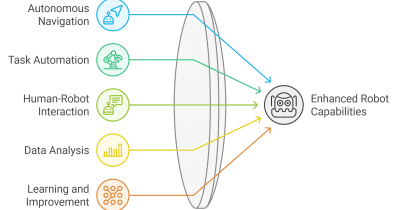
ERC-8126 standardizes AI agent verification for enhanced privacy
ERC-8126 introduces a standardized framework for verifying AI agents on Ethereum while preserving privacy. The standard aims to build trust and security within the growing ecosystem of autonomous AI systems operating on the blockchain.
$ETH
CryptoNeutralCrypto Briefing · Jun 117/10
⛓️
EIP-8182 proposed for Hegotá hard fork to enable privacy transfers on Ethereum
EIP-8182 has been proposed as part of Ethereum's Hegotá hard fork to introduce privacy-preserving transfer mechanisms at the protocol level. This enhancement aims to strengthen user anonymity while simultaneously raising regulatory concerns about privacy features embedded in blockchain infrastructure.

$ETH
GeneralBearishFortune Crypto · Jun 117/10
📰
Westchester County built a 600-camera plate reader network that shared 1.6 billion scans with ICE, lawsuit says
Westchester County operated a network of 600 license plate readers that captured 1.6 billion vehicle scans and shared the data with over 50 agencies including ICE without public authorization, according to a class action lawsuit. The case raises significant privacy concerns about mass surveillance infrastructure and government data-sharing practices.

CryptoBullishcrypto.news · Jun 117/10
⛓️
Circle unveils Arc Privacy to bring confidential smart contracts to institutions
Circle has launched Arc Privacy, a confidential smart contract engine for its Arc blockchain that encrypts sensitive financial data while maintaining compliance and audit capabilities for institutions. This development addresses a critical gap in blockchain privacy for regulated financial institutions seeking to leverage smart contracts without exposing proprietary transaction details.

CryptoNeutralcrypto.news · Jun 117/10
⛓️
Crypto becomes 2026 election issue as DCG poll shows voter shift
A DCG-Harris Poll reveals that 40% of U.S. voters now view cryptocurrency as a major issue for the 2026 midterm elections, driven by ongoing debates around privacy protections and the CLARITY Act. This marks a significant shift in how crypto is perceived by the electorate and signals mounting congressional pressure on digital asset regulation.

GeneralBearishCrypto Briefing · Jun 117/10
📰
Coupang fined a record $409 million over massive data breach affecting 33 million users
South Korean e-commerce giant Coupang has been hit with a record $409 million fine for a data breach affecting 33 million users, marking a significant regulatory escalation in data protection enforcement. The unprecedented penalty underscores intensifying global scrutiny on corporate security practices and the substantial financial consequences companies now face for inadequate safeguarding of customer information.

DeFiBullishBlockonomi · Jun 107/10
💎
Helius Snaps Up Light Protocol in Major Solana Privacy Play
Helius, a Solana infrastructure provider, has acquired Light Protocol to enhance privacy capabilities on the Solana blockchain. The combination merges zero-knowledge cryptography with developer tools to enable private decentralized finance applications, addressing growing demand for transaction privacy in the Solana ecosystem.
$SOL
CryptoBullishCoinDesk · Jun 107/10
⛓️
Privacy returns to focus as Ethereum developers explore new token standards
Ethereum developers are prioritizing privacy enhancements through new token standards, signaling a broader industry shift toward confidential transactions. This development addresses growing demand for privacy-preserving features in decentralized applications while balancing regulatory and usability concerns.

$ETH
DeFiBullishCrypto Briefing · Jun 107/10
💎
Starknet Foundation launches Proof of Privacy incubator for teams building on STRK20
Starknet Foundation has launched the Proof of Privacy incubator to support teams developing privacy-focused applications on the STRK20 standard. The initiative aims to accelerate DeFi innovation while establishing stronger privacy protections across blockchain infrastructure.

GeneralBearishCrypto Briefing · Jun 107/10
📰
Signal president warns of potential UK exit over surveillance concerns
Signal's president has warned of a potential UK exit due to concerns over government surveillance legislation and encryption restrictions. The threat underscores the escalating conflict between privacy advocates and governments seeking expanded monitoring capabilities, with implications for digital rights globally.

GeneralBearishCrypto Briefing · Jun 107/10
📰
Signal threatens to withdraw from UK over encryption backdoor proposals
Signal, the encrypted messaging platform, threatens to exit the UK market in response to proposed encryption backdoor legislation. The standoff highlights the growing conflict between government surveillance demands and digital privacy protections, with potential implications for how other privacy-focused platforms operate globally.

Page 1 of 51Next →