AINeutralCrypto Briefing · Jun 117/10
🧠Google has selected Samsung as a production partner for its future AI chips, marking a significant shift away from TSMC's semiconductor manufacturing dominance. This strategic diversification could reshape the competitive landscape of AI chip production and reduce concentration risk in the global semiconductor supply chain.
AIBullishCrypto Briefing · Jun 27/10
🧠STMicroelectronics is planning to expand its Crolles fabrication facility by 2026 to meet surging demand for silicon photonics components driven by AI infrastructure growth. The expansion underscores the strategic importance of optical interconnect technology in supporting next-generation AI systems and reflects intensifying competition in semiconductor manufacturing.
AIBullishCrypto Briefing · Jun 17/10
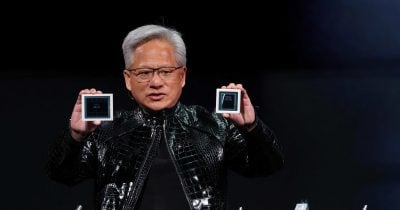
🧠Nvidia has achieved full production of its Vera Rubin chip and improved assembly speed by 95%, enhancing supply chain stability. This manufacturing breakthrough could reduce earnings volatility and mitigate geopolitical risks for the semiconductor giant, benefiting both AI infrastructure developers and investors exposed to semiconductor supply constraints.
🏢 Nvidia
AINeutralCrypto Briefing · May 277/10
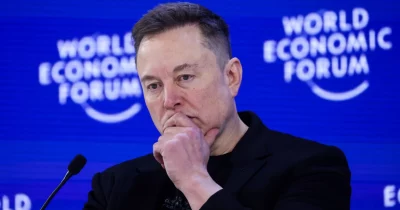
🧠Elon Musk has warned that the United States must significantly increase domestic chip manufacturing capacity to secure its position in AI development and protect against geopolitical vulnerabilities. Musk emphasizes that achieving energy independence alongside semiconductor self-reliance is critical for maintaining US AI leadership amid rising global competition and supply chain risks.
AINeutralThe Verge – AI · May 77/10
🧠SpaceX is planning to invest at least $55 billion to build a chip manufacturing facility called 'Terafab' in Austin, Texas, with potential expansion costs reaching $119 billion. The facility aims to produce sufficient AI chips to support up to 200 gigawatts of computing capacity annually, marking Elon Musk's significant entry into the semiconductor manufacturing industry.
AIBearishStratechery · Apr 207/10
🧠TSMC's recent earnings report reveals management skepticism toward near-term AI growth projections, despite industry enthusiasm. The company's cautious capital allocation for new N3 fab capacity suggests internal doubts about the sustainability and timeline of AI-driven semiconductor demand, contrasting sharply with Nvidia's aggressive expansion narrative.
🏢 Nvidia
AIBullishBlockonomi · Jun 236/10
🧠Piper Sandler upgraded Synopsys to Overweight with a $550 price target, citing momentum in Intel's foundry business and potential collaborations with Apple and Google. The upgrade reflects growing confidence in Synopsys' positioning within Intel's semiconductor manufacturing ecosystem and advanced chip design partnerships.
GeneralNeutralMIT Technology Review · Jun 236/10
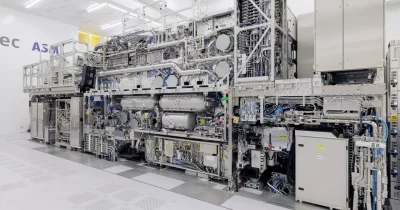
📰A $400 million chipmaking machine represents a significant leap in semiconductor manufacturing technology, with Jos Benschop's engineering team developing advanced precision equipment that could reshape the efficiency and capability of chip production for the next generation of computing.
GeneralBullishBlockonomi · Jun 196/10
📰Intel's stock surged 10.64% to $133.99 following the appointment of Seok-Hee Lee as Executive Vice President to oversee advanced packaging and back-end foundry manufacturing. The leadership move signals the company's commitment to strengthening its foundry business segment, a critical growth area as Intel competes with rivals in contract manufacturing.
GeneralBullishCrypto Briefing · Jun 116/10
📰Elon Musk is scheduled to speak at an ASML event while signaling plans for a $55 billion semiconductor manufacturing facility called Terafab. The initiative aims to vertically integrate chip production for SpaceX and potentially reshape global semiconductor supply chains by reducing dependence on external foundries.
AINeutralarXiv – CS AI · Jun 116/10
🧠Researchers propose physics-informed generative AI architectures that enforce hard physical constraints by construction rather than post-hoc filtering, using semiconductor manufacturing as a test case. The work surveys emerging techniques including physics-informed diffusion models, PDE-constrained variational approaches, and conservation-law-respecting networks to ensure generated designs, data, and processes are physically valid rather than merely plausible.
AIBullisharXiv – CS AI · Jun 106/10
🧠Researchers develop an event-driven reinforcement learning framework for optimizing semiconductor manufacturing operations, demonstrating significant improvements in throughput and utilization across complex production systems. The approach addresses long-horizon control challenges inherent in wafer fabrication by coordinating system-wide decisions through a centralized agent policy.
AINeutralCrypto Briefing · Jun 46/10
🧠TSMC's CEO is addressing the cost challenges associated with High-NA EUV lithography adoption, signaling the company's cautious approach to implementing next-generation semiconductor manufacturing technology. The effort reflects broader industry tensions between technological advancement and economic viability in advanced chip production.
AINeutralarXiv – CS AI · May 276/10
🧠Researchers propose an unsupervised anomaly detection framework using Diffusion Transformers to identify defects in semiconductor manufacturing at the 16nm node. The method combines autoencoders with diffusion models to screen for rare defects without labeled training data, achieving state-of-the-art results on industrial test data.
AINeutralBlockonomi · Apr 176/10
🧠TSMC and ASML represent two critical nodes in the AI semiconductor supply chain, with TSMC generating $122.4B in 2025 revenue compared to ASML's €32.7B. This comparison highlights the distinction between chip manufacturing and equipment supply, two complementary but structurally different investment opportunities in the AI hardware boom.
GeneralNeutralCrypto Briefing · Jun 185/10
📰Intel has retained Naga Chandrasekaran as Executive Vice President of its Foundry division, signaling leadership continuity in its semiconductor manufacturing operations. The decision prioritizes stability in Intel's foundry business, which is critical to meeting U.S. strategic semiconductor manufacturing goals.