AINeutralCrypto Briefing · Jun 277/10
🧠Meta has captured 84% of the smart glasses market, leveraging AI integration to establish significant competitive advantage. This dominance reflects broader industry consolidation around AI-powered wearables and may reshape consumer technology adoption patterns.
AIBullisharXiv – CS AI · May 287/10
🧠Researchers from Harvard's AI and Robotics Lab have developed HiT-HAR, a hierarchical deep learning model that enables AR smart glasses to recognize complex human behaviors beyond basic motion primitives using only head-mounted IMU sensors. The team created a 160K-sample dataset and demonstrated that architectural choices exploiting temporal context outperform simple model scaling, advancing the feasibility of always-on behavioral context awareness for augmented reality applications.
AIBullishCrypto Briefing · May 127/10
🧠Google is preparing to launch new smart glasses with an Android XR platform, with a preview expected in the near term. The company's strategy emphasizes developer engagement and AI integration to compete in the augmented reality wearable market.
AIBearishWired – AI · Apr 137/10
🧠Over 70 civil rights organizations, including the ACLU and EPIC, have formally warned against Meta's facial recognition technology in smart glasses, citing serious risks to vulnerable populations including abuse victims, immigrants, and LGBTQ+ individuals. The coalition argues the AI feature could enable stalking, harassment, and discrimination at scale.
AIBearishArs Technica – AI · Mar 57/10
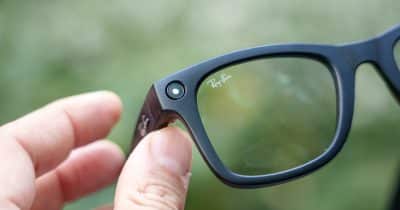
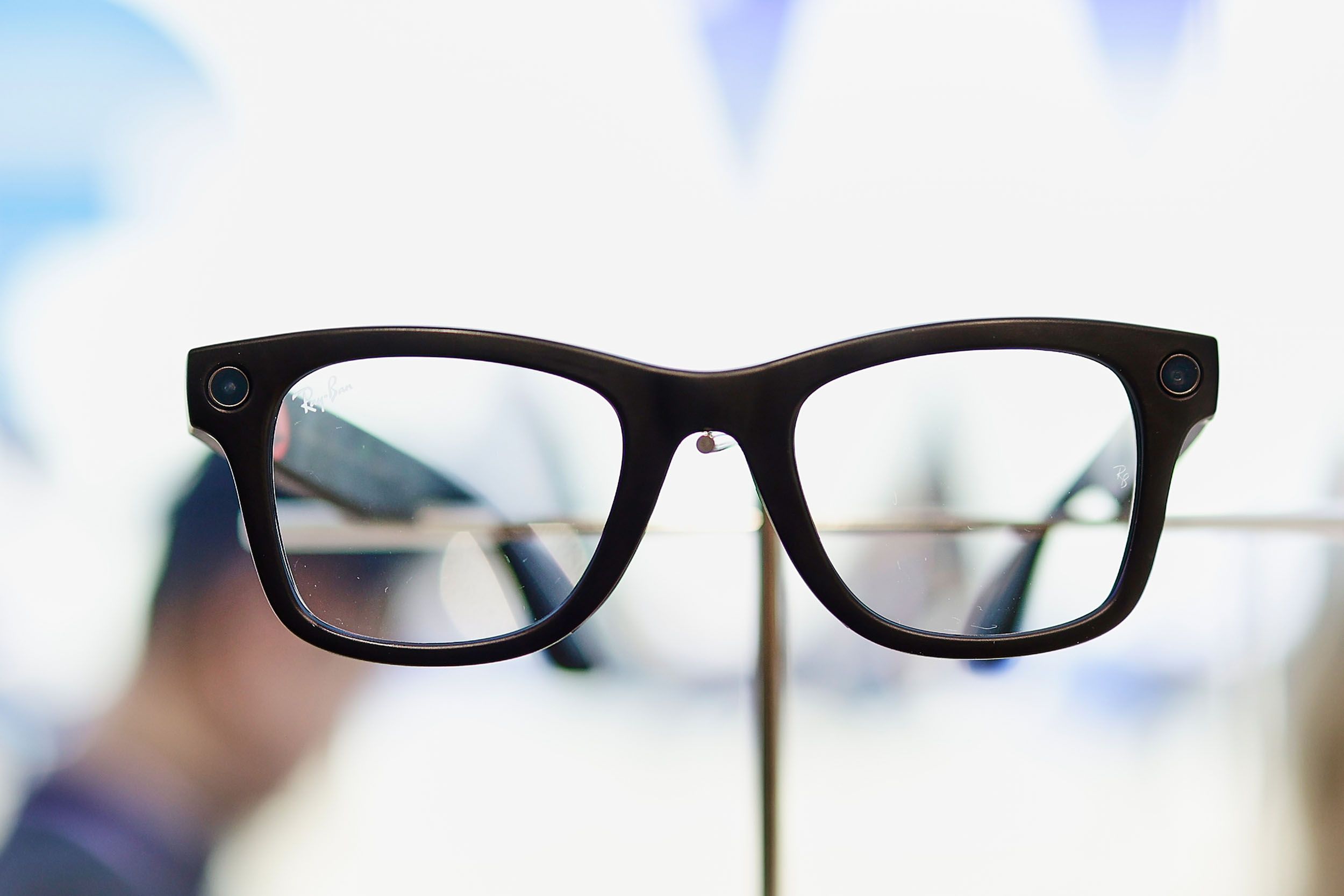
🧠Meta faces accusations of concealing privacy facts about Ray-Ban smart glasses after workers reported viewing footage of people in bathrooms. The allegations raise serious concerns about user privacy and data handling practices for wearable AI devices.
AIBearishThe Verge – AI · Mar 57/10
🧠Meta's AI-powered smart glasses are reportedly sending sensitive footage including intimate moments to human reviewers in Kenya, according to a Swedish investigation. A class action lawsuit has emerged accusing Meta of violating privacy laws and false advertising regarding their privacy claims.
AIBearishDecrypt – AI · Mar 57/10
🧠Meta's Ray-Ban smart glasses are under investigation due to privacy concerns regarding the collection and use of sensitive footage. Regulators and privacy advocates are raising significant concerns about the potential misuse of data captured through the wearable technology.
AIBullisharXiv – CS AI · Feb 277/107
🧠Researchers introduce SUPERGLASSES, the first comprehensive benchmark for evaluating Vision Language Models in AI smart glasses applications, comprising 2,422 real-world egocentric image-question pairs. They also propose SUPERLENS, a multimodal agent that outperforms GPT-4o by 2.19% through retrieval-augmented answer generation with automatic object detection and web search capabilities.
AIBullishBlockonomi · Jun 236/10
🧠Meta launches a $299 AI-powered smart glasses product under its own brand, undercutting its Ray-Ban Meta line by $80 and positioning itself as the market leader ahead of Apple's anticipated entry into the smart glasses category.
GeneralNeutralThe Verge – AI · Jun 236/10
📰Meta has launched its own branded smart glasses without Ray-Ban partnership for the first time in three years, offering multiple styles and colors including a collaboration with Kylie Jenner at a lower price point. This strategic pivot away from the EssilorLuxottica partnership marks a significant shift in Meta's wearables strategy and could reshape the consumer smart glasses market.
AIBullishCrypto Briefing · Jun 106/10
🧠Alex Himel discusses how AI-powered smart glasses will transform daily activities through proactive assistance and integrated AI capabilities. The article emphasizes that successful wearable devices must prioritize user experience design alongside technological advancement to achieve mainstream adoption.
AINeutralarXiv – CS AI · Jun 106/10
🧠Researchers introduce EDITH, a robot framework that interprets human intent through both verbal instructions and nonverbal signals like gestures and gaze captured via smart glasses. The system uses a hierarchical policy architecture to significantly reduce user effort in human-robot interaction compared to language-only interfaces.
AIBearishWired – AI · Jun 86/10
🧠Meta has removed face-recognition code from its Meta AI smart glasses app following a WIRED investigation, though the company has not disclosed why or whether the feature will return. The deletion raises questions about Meta's privacy practices and the oversight of facial recognition technology in consumer devices.
🏢 Meta
AIBullishTechCrunch – AI · May 246/10
🧠Xreal, a smart glasses manufacturer partnered with Google, claims the industry has reached an inflection point under CEO Chi Xu's leadership. The company believes it has solved long-standing challenges that have plagued the smart glasses market, positioning itself as a potential leader in this emerging category.
AINeutralarXiv – CS AI · May 126/10
🧠Researchers introduce EgoMemReason, a comprehensive benchmark for evaluating AI systems on week-long egocentric video understanding through memory-driven reasoning. The benchmark reveals that even state-of-the-art multimodal models achieve only 39.6% accuracy, indicating that long-horizon memory and temporal reasoning remain unsolved challenges for next-generation visual assistants.
AIBullishBlockonomi · Apr 106/10
🧠Snap's Specs division has partnered with Qualcomm in a multi-year deal to power next-generation AI smart glasses, with commercial availability expected in late 2026. The partnership announcement drove positive momentum in SNAP stock as investors respond to the company's strategic push into the augmented reality hardware market.
AIBullishThe Verge – AI · Mar 266/10
🧠Meta and EssilorLuxottica are preparing to launch two new Ray-Ban AI glasses models, according to recent FCC filings describing production units. The filings suggest an imminent launch, following a similar timeline to their second-generation Ray-Ban release in late 2023.
AIBullisharXiv – CS AI · Mar 37/108
🧠Researchers have developed Egocentric Co-Pilot, a web-native AI framework that runs on smart glasses and uses Large Language Models to provide assistive AI without requiring screens or free hands. The system combines perception, reasoning, and web tools to support accessibility for people with vision impairments or cognitive overload, showing superior performance compared to commercial baselines.
AINeutralarXiv – CS AI · Mar 34/105
🧠Researchers have developed a new resource-rational framework for modeling visual attention as a sequential decision-making process using AI techniques like Partially Observable Markov Decision Processes. The framework successfully models human eye-movement behaviors in tasks like reading and multitasking, offering potential applications for Human-Computer Interaction design.
AINeutralTechCrunch – AI · Feb 264/105
🧠Mark Zuckerberg attended Prada's fashion week event in Milan, sparking speculation about a potential collaboration between Meta and Prada for AI-powered smart glasses. The appearance suggests Meta may be exploring luxury brand partnerships for its wearable technology products.