
GeneralBearishCrypto Briefing · May 57/10
AI Pulse News
Models, papers, tools. 109,942 articles with AI-powered sentiment analysis and key takeaways.
109942 articles

GeneralBearishCrypto Briefing · May 57/10

AIBearishDecrypt – AI · May 47/10
🧠
Someone Built an Open-Source 'Theoretical Mythos' to Reverse-Engineer Anthropic's Most Dangerous AI
A developer has created OpenMythos, an open-source project attempting to reverse-engineer Anthropic's unreleased Claude Mythos model, which the company has withheld due to concerning cyber-capabilities. The effort represents a broader trend of researchers probing safety boundaries in advanced AI systems through architectural reconstruction and public code releases.

🏢 Anthropic🧠 Claude
AIBullishCrypto Briefing · May 47/10
🧠
Palantir’s strong revenue forecast boosts defense AI investment amid US-Iran tensions
Palantir's strong revenue forecast is driving increased defense AI investment as geopolitical tensions between the US and Iran escalate. The convergence of robust corporate performance and heightened global instability is reshaping investor priorities toward defense technology and AI capabilities.

AI × CryptoBearishCrypto Briefing · May 47/10
🤖
Chris Perkins: April saw $600 million stolen in record hacking incidents, AI tools are both a threat and a defense, and a shift to offensive cybersecurity is crucial | The Pomp Podcast
April 2024 recorded $600 million in cryptocurrency thefts across hacking incidents, marking a concerning peak in digital asset security breaches. The discussion highlights AI's dual role as both a cybersecurity threat and defensive tool, with industry experts advocating for a shift toward offensive security strategies to combat increasingly sophisticated attacks.

AI × CryptoBullishcrypto.news · May 46/10
🤖
Why Pi Network’s Dr. Chengdiao Fan takes the Consensus 2026 stage with Protocol 23 six days away
Pi Network co-founder Dr. Chengdiao Fan will speak at Consensus 2026 in Miami on May 6, discussing Web3, AI, and blockchain integration just six days before Protocol 23 launches. The timing suggests Pi Network is positioning itself at the intersection of major technology trends while approaching a significant protocol upgrade.

AIBullishTechCrunch – AI · May 47/10
🧠
OpenAI’s cozy partner Cerebras is on track for a blockbuster IPO
Cerebras, an AI chip manufacturer with deep ties to OpenAI, is preparing for an IPO that could value the company at $26.6 billion or higher. The upcoming public offering highlights the growing strategic importance of specialized AI hardware providers in the competitive artificial intelligence ecosystem.
$MKR🏢 OpenAI
GeneralBearishCrypto Briefing · May 47/10
📰
Germany issues ultimatum to Iran amid US-Iran diplomatic tensions
Germany has issued an ultimatum to Iran amid escalating US-Iran diplomatic tensions, a move that threatens to further destabilize global geopolitical relations. The ultimatum complicates ongoing diplomatic efforts and introduces uncertainty into international economic conditions, with potential ripple effects across markets.

GeneralBullishCrypto Briefing · May 47/10
📰
US envoy submits nuclear amendments in Iran talks, signaling negotiation shift
The US has submitted nuclear amendments in talks with Iran, signaling a shift toward more flexible diplomacy. This development could reduce regional tensions and have ripple effects on global markets, including cryptocurrency and commodities sectors sensitive to geopolitical risk.

GeneralBearishCrypto Briefing · May 47/10
📰
UAE bans travel to Iran, Lebanon, Iraq amid rising regional tensions
The UAE has implemented a travel ban to Iran, Lebanon, and Iraq in response to escalating regional tensions. This geopolitical development carries implications for market risk perception and investor sentiment, particularly affecting assets sensitive to Middle Eastern stability.

AIBullishFortune Crypto · May 47/10
🧠
Trump’s former AI czar says the quiet part out loud on the economy: ‘Stopping progress in AI would be equivalent to halting the US economy’
Trump's former AI czar argues that halting AI progress would devastate the US economy, highlighting how AI investment is currently sustaining economic activity amid weak job growth. The statement underscores the critical role AI development plays in propping up broader economic indicators and suggests regulatory restrictions could have severe macroeconomic consequences.
GeneralBearishCrypto Briefing · May 47/10
📰
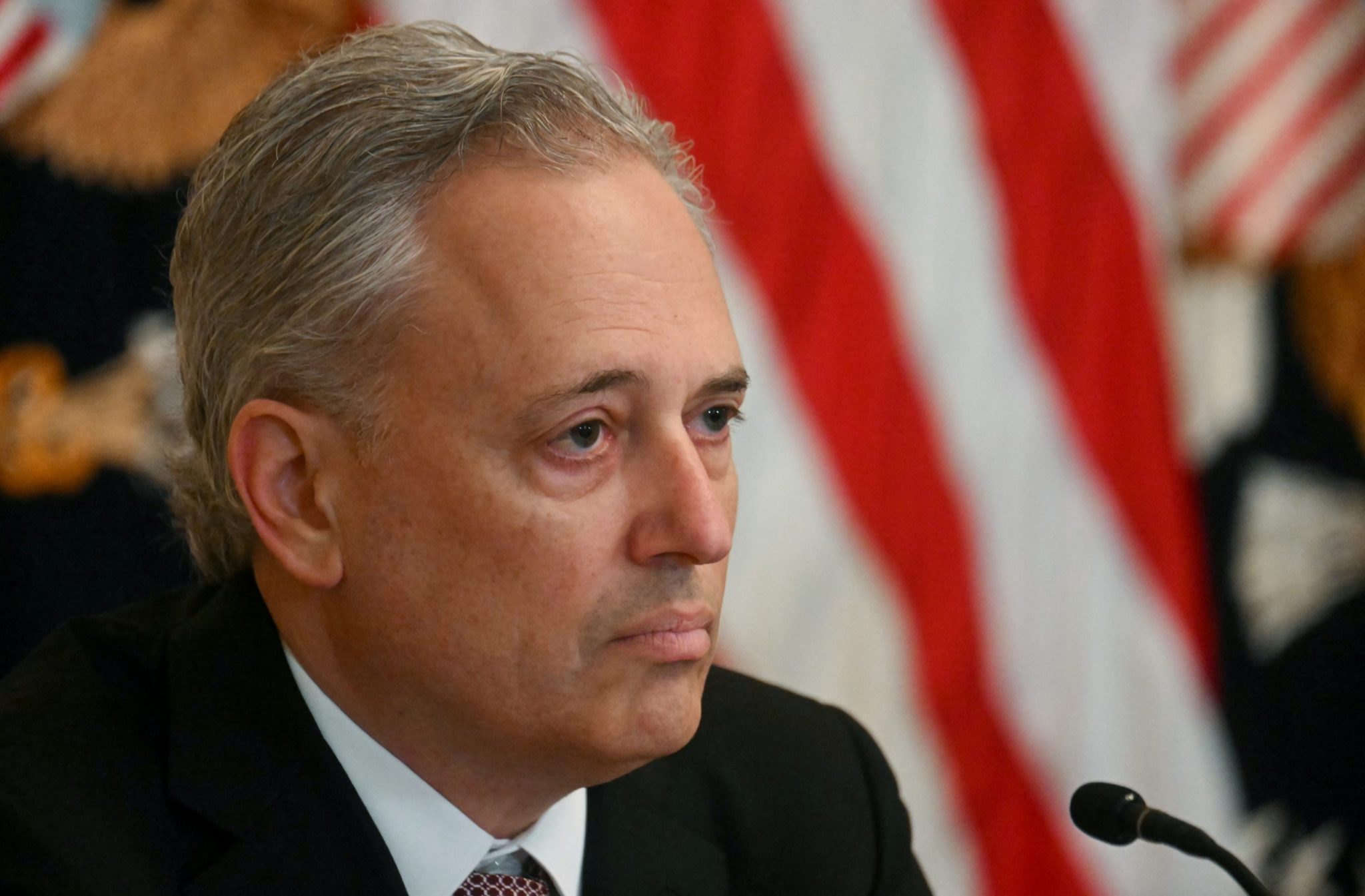
Nagel warns prolonged conflict may sustain eurozone inflation, complicating ECB policy
ECB official Nagel warns that prolonged geopolitical conflict risks embedding inflation in the eurozone economy, complicating the central bank's dual mandate to control price pressures while supporting economic growth. This tension between competing policy objectives could force difficult monetary decisions as energy disruptions and supply chain constraints persist.

AIBearishCrypto Briefing · May 47/10
🧠
Musk lawsuit adds uncertainty to OpenAI IPO plans before 2027
Elon Musk's lawsuit against OpenAI creates legal and reputational uncertainty that could impact the company's anticipated pre-2027 IPO timeline. The litigation may reduce investor appetite for AI sector IPOs while prompting increased regulatory scrutiny of artificial intelligence companies and their governance structures.

🏢 OpenAI
GeneralBullishCrypto Briefing · May 47/10
📰
Trump: Iran shows more flexibility in US diplomatic talks
Trump reports that Iran is demonstrating increased diplomatic flexibility in negotiations with the US, potentially signaling a shift toward de-escalation. This development could reduce geopolitical tensions and positively influence market confidence in diplomatic outcomes, though the article provides limited specifics on the nature or scope of these talks.

GeneralBearishCrypto Briefing · May 47/10
📰
Fed’s Williams cites Iran war supply disruptions as inflation risk factor
Federal Reserve official John Williams has identified geopolitical tensions involving Iran as a potential inflation risk factor that could complicate the Fed's monetary policy decisions. Supply disruptions from regional instability could reignite inflationary pressures, adding complexity to the central bank's rate-setting strategy.
GeneralBearishCrypto Briefing · May 47/10
📰
Iran airspace closure risk rises amid ongoing conflict, disrupts travel, energy markets
Escalating geopolitical tensions in Iran risk closing its airspace, potentially disrupting global aviation routes and energy markets. Such closure would increase travel costs, redirect shipping lanes, and create volatility in oil prices, with ripple effects across cryptocurrency and broader financial markets.

GeneralBearishCrypto Briefing · May 47/10
📰
Brent crude oil surges past $119 amid US-Iran tensions
Brent crude oil has surged past $119 per barrel amid escalating US-Iran tensions, creating macroeconomic headwinds that could undermine investor confidence in cryptocurrencies and other risk assets. Rising energy prices typically trigger broader economic instability concerns that reverberate across financial markets.

GeneralBearishCrypto Briefing · May 47/10
📰
Trump warns Iran of severe retaliation if US ships attacked in Hormuz
President Trump has warned Iran of severe retaliation if US naval vessels are attacked in the Strait of Hormuz, escalating existing tensions between the two nations. This geopolitical risk could destabilize global oil markets and increase cryptocurrency volatility as investors seek safe-haven assets.

GeneralBearishCrypto Briefing · May 47/10
📰
Bahrain declares national emergency amid Iran military threat
Bahrain has declared a national emergency in response to Iranian military threats, signaling escalating regional tensions in the Middle East. This geopolitical development could impact cryptocurrency markets and blockchain infrastructure, particularly exchanges and financial services operating in the region.

AI × CryptoBullishcrypto.news · May 47/10
🤖
Applied Digital lines up $300M bridge loan to accelerate AI data center build
Applied Digital secured a $300M Goldman Sachs-led bridge loan to fund expansion of its AI data center infrastructure, targeting an additional 150 MW of capacity. The financing layers on existing $2.15B in notes and a $7.5B hyperscaler lease agreement, positioning the company to capitalize on surging demand for GPU-intensive computing infrastructure.

$BTC
GeneralBearishCrypto Briefing · May 47/10
📰
IRGC maintains control over Strait of Hormuz, ensuring vessel safety
The Iranian Revolutionary Guard Corps (IRGC) maintains military control over the Strait of Hormuz, a critical chokepoint through which approximately 20% of global petroleum passes. This sustained control perpetuates regional geopolitical tensions and creates uncertainty in global energy markets, with potential ripple effects on cryptocurrency valuations and macroeconomic conditions affecting digital asset investors.

GeneralBearishCrypto Briefing · May 4🔥 8/10
📰
Congress misses War Powers deadline amid Trump Iran conflict
Congress failed to meet the War Powers Resolution deadline regarding Trump's Iran conflict, creating political uncertainty without immediate military escalation. The missed deadline reflects legislative gridlock and may impact both U.S. foreign policy stability and market sentiment amid geopolitical tensions.

AIBullishFortune Crypto · May 47/10
🧠
A Harvard study just found AI can now out-diagnose physicians in the ER: ‘We’re already at the ceiling’
A Harvard study reveals that AI diagnostic systems now outperform emergency room physicians in diagnostic accuracy, surprising even the research team. The findings suggest AI has reached a performance plateau in medical diagnostics, raising critical questions about the future role of human doctors in emergency medicine.

AIBullishTechCrunch – AI · May 47/10
🧠
Anthropic and OpenAI are both launching joint ventures for enterprise AI services
Anthropic and OpenAI are establishing joint ventures with asset managers to accelerate enterprise AI product commercialization. This strategic move signals intensifying competition in the enterprise AI market and reflects both companies' shift toward aggressive go-to-market strategies beyond direct sales channels.
🏢 OpenAI🏢 Anthropic
AINeutralMIT Technology Review · May 47/10
🧠
Week one of the Musk v. Altman trial: What it was like in the room
Elon Musk's lawsuit against OpenAI began in Oakland court, with Musk alleging that OpenAI misused his early investments and departed from its nonprofit mission. The trial centers on fundamental questions about AI governance and corporate structure in the industry's most prominent firms.
🏢 OpenAI