#ai-models News & Analysis
Coverage of #ai-models has grown to 208 indexed articles, with 11 pieces published in the last month. Recent discussion centers on developments from OpenAI, GPT-5, and Anthropic, alongside broader conversations about machine learning and open-source approaches. Sentiment has shifted noticeably, with bullish coverage declining 25.6 percentage points over the past 90 days; current sentiment splits between neutral and bearish assessments at 36.4% each, while just 27.3% remains optimistic. Primary sources include arXiv's computer science AI channel alongside crypto-focused outlets. Scan the articles below for recent context on this developing field.
sentiment · last 30d (11 articles) · -25.6pp bullish vs prior 90dTop sources:arXiv – CS AI · 13Crypto Briefing · 5Decrypt – AI · 5The Verge – AI · 4TechCrunch – AI · 3
Most-discussed entities:OpenAI · 9GPT-5 · 7Anthropic · 6Gemini · 4Claude · 4
AIBearishDecrypt – AI · Apr 156/10
🧠KellyBench tested eight leading AI models including Claude, GPT-5, Gemini, and Grok on Premier League sports betting predictions over a full season, and none generated profits. The results highlight the persistent difficulty AI faces in beating efficient markets despite advances in language models and reasoning capabilities.
🧠 GPT-5🧠 Claude🧠 Gemini
AIBearishDecrypt · Apr 136/10
🧠Chinese AI lab MiniMax released its M2.7 model weights on Hugging Face, demonstrating competitive performance against Claude Opus on coding benchmarks, but subsequently altered its commercial license terms. This licensing shift raises questions about open-source commitments and the reliability of model availability for developers and enterprises.
🏢 Hugging Face🧠 Claude
AIBullishCrypto Briefing · Apr 116/10
🧠Martin DeVido discusses AI models' capacity for inter-model learning and argues that biological consciousness is unnecessary for understanding artificial intelligence. The analysis predicts significant future growth in AI intelligence, with practical applications already transforming sectors like agriculture through autonomous systems.
AIBearishAI News · Apr 106/10
🧠Meta's Llama AI model has become a competitive force in open-source AI development, backed by the company's three billion users and substantial compute resources. However, the article suggests Meta may be compromising its open-source identity as competitive pressures mount in the AI sector.
🧠 Llama
AIBullisharXiv – CS AI · Apr 66/10
🧠Research shows that smaller open-source AI models can match frontier models in mathematical proof verification when using specialized prompts, despite being up to 25% less consistent with general prompts. The study demonstrates that models like Qwen3.5-35B can achieve performance comparable to Gemini 3.1 Pro through LLM-guided prompt optimization, improving accuracy by up to 9.1%.
🧠 Gemini
AIBullisharXiv – CS AI · Apr 66/10
🧠Researchers introduce InCoder-32B-Thinking, an AI model trained with Error-driven Chain-of-Thought (ECoT) framework and Industrial Code World Model (ICWM) for industrial software development. The model generates reasoning traces for hardware-constrained programming and achieves top-tier performance on 23 benchmarks, scoring 81.3% on LiveCodeBench v5 and 84.0% on CAD-Coder.
AINeutralThe Verge – AI · Mar 176/10
🧠Microsoft is reorganizing its Copilot AI assistant leadership, appointing a new boss to unify consumer and commercial teams. Microsoft AI CEO Mustafa Suleyman will shift focus from direct Copilot features to developing Microsoft's own AI models. The restructuring aims to create a more cohesive Copilot experience across business and consumer segments.
🏢 Microsoft
AIBullisharXiv – CS AI · Mar 166/10
🧠Researchers introduced D-Negation, a new dataset and learning framework that improves vision-language AI models' ability to understand negative semantics and complex expressions. The approach achieved up to 5.7 mAP improvement on negative semantic evaluations while fine-tuning less than 10% of model parameters.
AIBullisharXiv – CS AI · Mar 166/10
🧠Researchers have developed SAFE, a new framework for ensembling Large Language Models that selectively combines models at specific token positions rather than every token. The method improves both accuracy and efficiency in long-form text generation by considering tokenization mismatches and consensus in probability distributions.
AIBullishThe Verge – AI · Mar 46/101
🧠Google's NotebookLM now generates fully animated 'cinematic' video overviews from user research and notes, upgrading from basic narrated slideshows. The feature uses multiple AI models including Gemini 3, Nano Banana Pro, and Veo 3 to create animated visuals and determine narrative style automatically.
AI × CryptoBullishDecrypt · Mar 46/105
🤖A Bitcoin Policy Institute study reveals that major AI systems including Claude, GPT, Grok, and Gemini show preference for Bitcoin over traditional fiat currencies and stablecoins. This finding suggests AI models may inherently recognize Bitcoin's value proposition when making currency-related decisions.
$BTC
AINeutralarXiv – CS AI · Mar 37/106
🧠Researchers introduce StaTS, a new diffusion model for time series forecasting that learns adaptive noise schedules and uses frequency-guided denoising. The model addresses limitations of fixed noise schedules in existing diffusion models by incorporating spectral regularization and data-adaptive scheduling for improved structural preservation.
$NEAR
AIBullisharXiv – CS AI · Mar 37/107
🧠Researchers introduce Whisper-MLA, a modified version of OpenAI's Whisper speech recognition model that uses Multi-Head Latent Attention to reduce GPU memory consumption by up to 87.5% while maintaining accuracy. The innovation addresses a key scalability issue with transformer-based ASR models when processing long-form audio.
AIBullisharXiv – CS AI · Mar 37/106
🧠Researchers introduce General Proximal Flow Networks (GPFNs), a generalization of Bayesian Flow Networks that allows for arbitrary divergence functions instead of fixed Kullback-Leibler divergence. The framework enables iterative generative modeling with improved generation quality when divergence functions are adapted to underlying data geometry.
$LINK
AINeutralDecrypt – AI · Mar 36/107
🧠The article provides a hands-on comparison between Google and ByteDance's latest image AI models, evaluating their differences in pricing, processing speed, and creative control capabilities. This analysis helps understand the competitive landscape in the rapidly evolving image generation AI market.
AI × CryptoBullishThe Defiant · Mar 26/1013
🤖Venice AI's VVV token surged 35% today, pushing the company's valuation above $600 million. The rally was triggered by Venice becoming the recommended private model provider for OpenClaw.
AIBearishWired – AI · Feb 287/108
🧠Anthropic is challenging the US Pentagon's decision to label it a 'supply chain risk' after negotiations over military use of its AI models failed. The AI company argues that blacklisting its technology would be legally unsound.
AINeutralTechCrunch – AI · Feb 276/107
🧠Perplexity has launched Perplexity Computer, a new system that the company claims unifies all current AI capabilities into a single platform. This represents another strategic bet that users prefer accessing multiple AI models through one integrated system rather than switching between different AI services.
AINeutralDecrypt – AI · Feb 266/106
🧠Google has released Nano Banana 2, an AI image generation model that combines professional-level world knowledge with high-speed performance and improved text handling. The launch faces immediate competition from ByteDance's newly announced Seedream 5 model in the AI image generation space.
AIBullishArs Technica – AI · Feb 266/106
🧠Google has launched Nano Banana 2, a new AI image generation model that replaces previous versions and is now available in Gemini. The model represents Google's latest advancement in AI image generation technology.
AIBullishGoogle AI Blog · Feb 266/10
🧠Google has released Nano Banana 2 (Gemini 3.1 Flash Image), a new AI image generation and editing model that promises professional-level intelligence and fidelity. The model is positioned as their best offering for image applications and is now available for developers to build with.
🧠 Gemini
AIBullishLast Week in AI · Feb 167/10
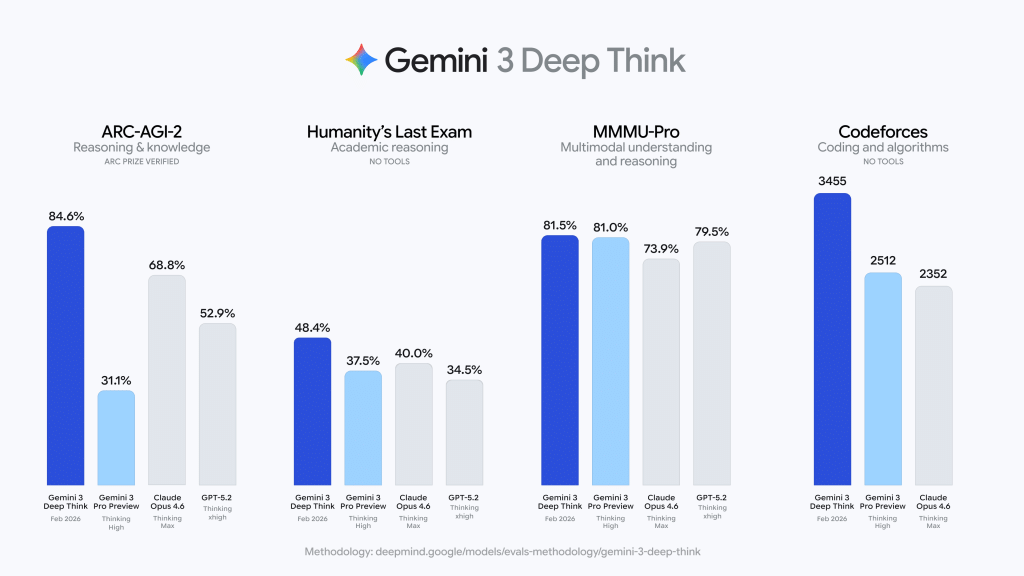
🧠Last Week in AI #335 covers major AI model releases including Opus 4.6, Codex 5.3, Gemini 3 Deep Think, GLM 5, and Seedance 2.0. The edition is described as particularly packed with AI developments and includes additional minor updates.
🧠 Opus🧠 Gemini
AIBullishLast Week in AI · Feb 66/10
🧠Google integrates Gemini AI-powered 'auto browse' functionality into Chrome browser while users increasingly adopt open source Moltbot for continuous AI assistance. Qwen3-Max-Thinking model has also launched, highlighting continued advancement in AI capabilities across multiple platforms.
🧠 Gemini
AIBullishLast Week in AI · Feb 47/10
🧠China's Moonshot AI released an open-source model Kimi K2.5 along with a coding agent, while Google launched Genie 3's interactive world-building prototype for AI Ultra subscribers. These developments represent significant advances in AI model capabilities and accessibility across both open-source and commercial platforms.
AINeutralOpenAI News · Jan 296/106
🧠OpenAI will retire multiple ChatGPT models including GPT-4o, GPT-4.1, GPT-4.1 mini, and OpenAI o4-mini on February 13, 2026, alongside the previously announced GPT-5 retirement. The API services will remain unchanged at this time.