#ai-regulation News & Analysis
Recent coverage of #ai-regulation reflects mounting policy debate around artificial intelligence systems. Over the past month, 44 articles have touched on the topic, with Anthropic emerging as the most frequently discussed entity in this context, followed by OpenAI. While nearly four in ten recent articles take a cautious tone, bullish sentiment has risen 11 percentage points compared to the prior quarter, suggesting growing optimism about regulatory frameworks.
The discussion spans academic research, industry analysis, and policy perspectives, with arXiv – CS AI, TechCrunch – AI, and Fortune Crypto leading coverage. Scan the article list below to explore how regulators, companies, and researchers are addressing AI governance and oversight.
sentiment · last 30d (44 articles) · +11pp bullish vs prior 90dTop sources:arXiv – CS AI · 21TechCrunch – AI · 20Fortune Crypto · 20Crypto Briefing · 15The Verge – AI · 10
Most-discussed entities:Anthropic · 32OpenAI · 15Claude · 5Grok · 3xAI · 3
AINeutralCrypto Briefing · Jun 36/10
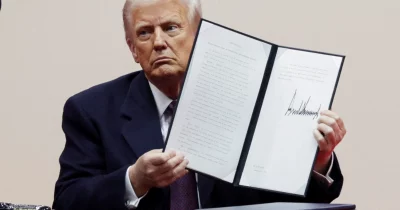
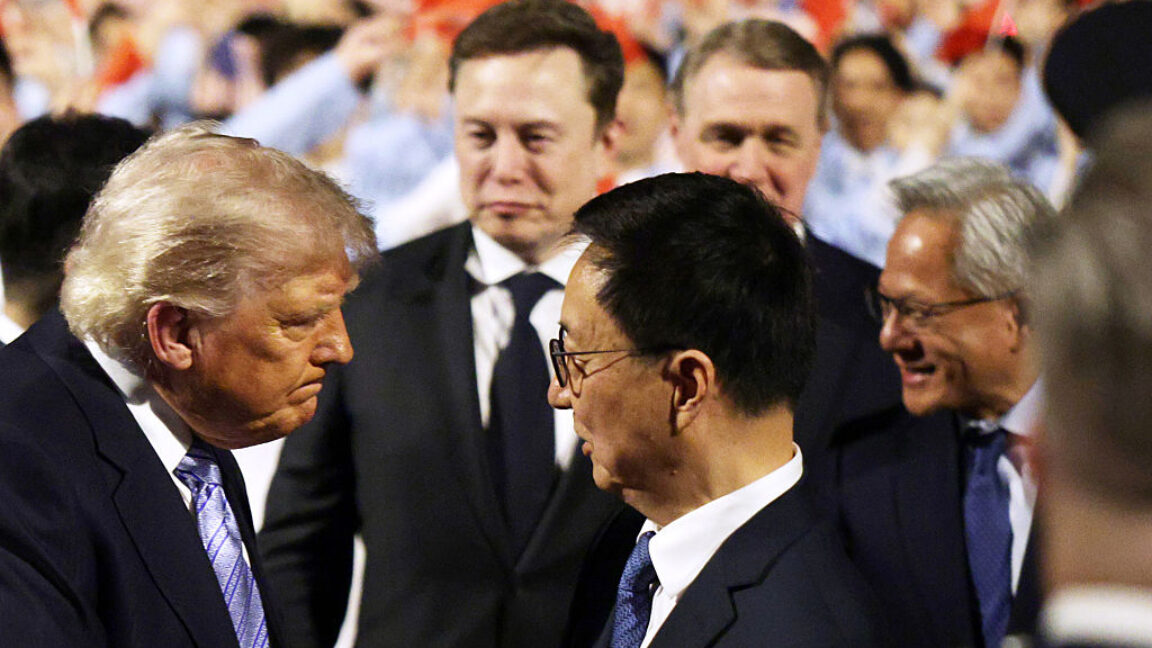
🧠President Trump signed an executive order establishing a voluntary AI safety testing framework, drawing criticism for lacking enforcement mechanisms and potentially prioritizing industry growth over regulatory oversight. The initiative may boost investor confidence in AI development but raises concerns about adequate safety standards and meaningful regulatory impact.
AIBullishCrypto Briefing · Jun 36/10
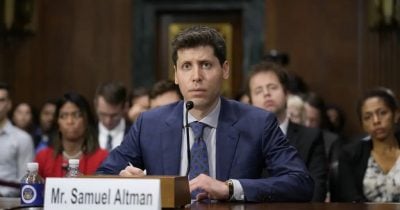
🧠Charlie Warren argues that AI-native service companies will outperform traditional software firms over the next decade by focusing on customer outcomes rather than internal tools. He introduces the 'Sam Altman test' as a framework for evaluating business models and suggests that regulatory environments can positively influence founder ambitions and business quality.
AINeutralWired – AI · Jun 36/10
🧠Donald Trump signed an AI executive order Monday night after previously shelving the original version last month. The move signals a shift in the administration's approach to AI regulation and governance.
AINeutralBlockonomi · Jun 36/10
🧠The Trump administration has issued an executive order establishing a voluntary 30-day early access period for advanced AI models before public release, allowing the federal government to conduct security assessments. The policy stems from concerns about cybersecurity risks highlighted by Anthropic's research, representing a significant shift toward government oversight of AI deployment.
🏢 Anthropic
AINeutralOpenAI News · Jun 36/10
🧠OpenAI has released a comprehensive public policy agenda addressing AI safety, youth protection, workforce transition support, and the establishment of global AI standards. The initiative signals the company's commitment to proactive governance and positions OpenAI as a stakeholder in shaping regulatory frameworks around artificial intelligence development.
🏢 OpenAI
AINeutralThe Verge – AI · Jun 26/10
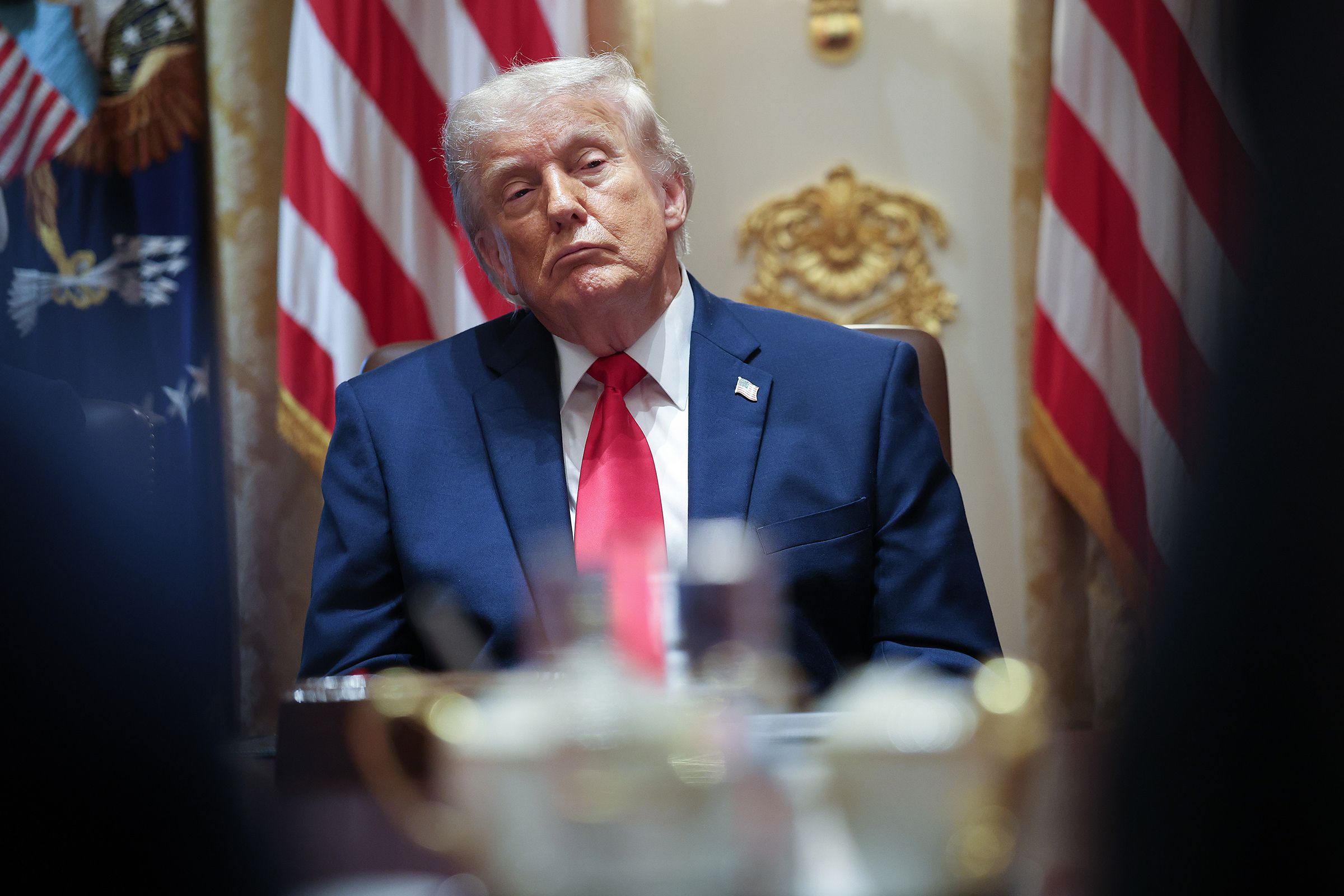
🧠President Trump signed an executive order establishing a voluntary framework requiring AI companies to submit frontier models to federal agencies for security assessment before public release. The order aims to balance innovation protection with cybersecurity concerns for critical infrastructure.
AINeutralDecrypt · Jun 26/10
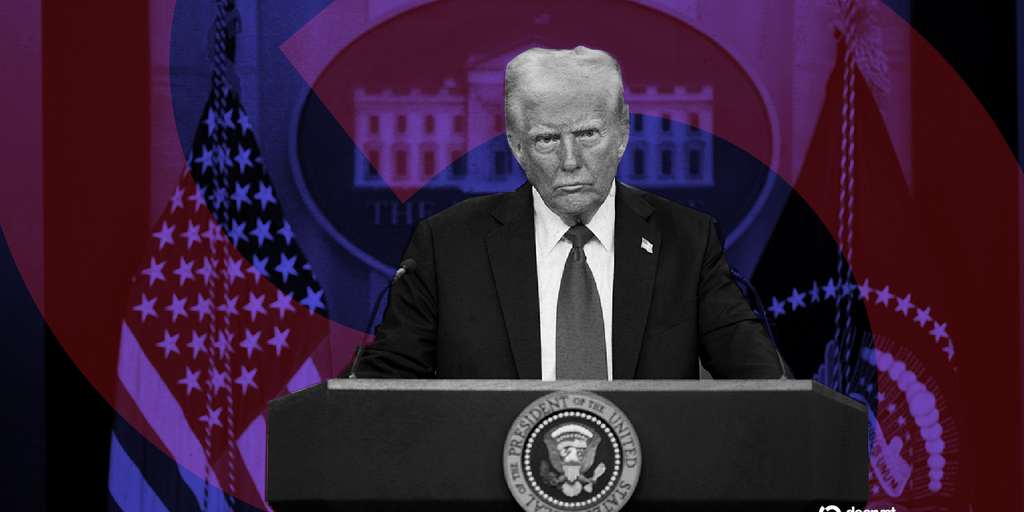
🧠President Trump signed an AI executive order establishing a voluntary framework for reviewing advanced AI models and expanding AI-powered cybersecurity initiatives. The order arrives after delays prompted by concerns over competitive advantages China might gain, signaling the U.S. government's intent to balance AI innovation with national security considerations.
AINeutralBlockonomi · Jun 26/10
🧠President Trump signed an executive order establishing a voluntary framework for federal early access to advanced AI models before public release. AI companies can submit frontier models for government benchmarking and security review, with federal agencies granted up to 30 days for evaluation of systems with advanced cyber capabilities.
🏢 Anthropic🧠 Claude
AINeutralFortune Crypto · Jun 26/10
🧠Trump rescinded his initial AI executive order and signed a replacement weeks later that establishes a national security review mechanism for advanced AI systems. The shift raises questions about whether the new order represents meaningful policy change or strategic repositioning on AI regulation.
AIBullishTechCrunch – AI · Jun 26/10
🧠President Trump signed a revised executive order on AI oversight that significantly weakens regulatory requirements after industry pushback. The new order mandates only voluntary, prerelease government reviews of advanced AI models rather than mandatory compliance, representing a major shift toward self-regulation in the AI sector.
AIBearishCrypto Briefing · May 306/10
🧠Polymarket traders have assigned only a 13% probability to the passage of a comprehensive US AI safety bill by 2027, reflecting widespread skepticism about federal regulatory action. This low forecast suggests the market expects continued fragmentation through state-level regulations and a permissive environment for AI development.
AINeutralCrypto Briefing · May 296/10
🧠Federal Reserve official Mary Daly has highlighted regulatory barriers as a significant obstacle to AI-driven productivity growth, warning that fragmented regulatory frameworks could impede economic expansion and disadvantage startups. The comments underscore growing concerns that excessive or unclear regulations may prevent AI from delivering its full economic potential.
AINeutralarXiv – CS AI · May 296/10
🧠Researchers analyzed ClinicalTrials.gov data to track AI adoption in clinical research, finding exponential growth in AI-related trials globally with machine learning, deep learning, and large language models increasingly prevalent. Using a hybrid human-AI screening approach, the study revealed that while AI and humans agreed on identifying non-AI studies, they diverged significantly on classifying human-AI interactions, highlighting the need for clearer trial reporting standards.
🧠 GPT-5
AINeutralDecrypt · May 286/10
🧠Anthropic announced that its Claude Mythos AI model will likely become available to broader audiences within weeks following limited testing phases. The release comes amid ongoing concerns about cybersecurity implications and potential risks associated with the advanced AI system.
🏢 Anthropic🧠 Claude
AINeutralCrypto Briefing · May 276/10
🧠OpenAI's foundation has committed $250 million to address economic disruption caused by AI advancement, targeting labor market support and economic distribution challenges. The initiative signals growing corporate acknowledgment of AI's systemic impact on employment and may influence global policy frameworks around technology governance and wealth distribution.
🏢 OpenAI
AINeutralAI News · May 266/10
🧠Autonomous AI systems are expanding from software into physical environments like warehouses and delivery networks, exposing gaps in current governance frameworks. Existing AI regulations have primarily addressed online harms and model outputs, leaving physical deployment risks largely unregulated.
AINeutralDecrypt – AI · May 256/10
🧠Pope Leo released the Catholic Church's first AI encyclical, a 245-paragraph document asserting that data constitutes a common good and rejecting the notion that technology is morally neutral. The document was presented alongside Anthropic co-founder Christopher Olah, whose AI company is currently engaged in litigation against the Trump administration over military AI applications.
🏢 Anthropic
AINeutralOpenAI News · May 256/10
🧠OpenAI has announced a strategic partnership with Brazilian media groups Grupo Folha and Grupo UOL to integrate their journalism into ChatGPT with proper attribution and transparency. This deal expands ChatGPT's access to trusted news sources while establishing a model for compensating publishers in the AI era.
🏢 OpenAI🧠 ChatGPT
AIBearishArs Technica – AI · May 226/10
🧠US authorities are confronting a legal loophole where internet users employ AI voice synthesis technology to recreate deceased pilots' voices from cockpit audio recordings, circumventing NTSB regulations that prohibit public disclosure of such sensitive materials. The workaround exploits the gap between what can be legally shared and what can be technologically reconstructed, raising questions about AI regulation and privacy protections.
AINeutralArs Technica – AI · May 226/10
🧠Trump canceled a scheduled executive order signing event after major AI company CEOs declined to attend, reportedly due to concerns that the proposed AI safety testing measures would hinder innovation. The move suggests growing tension between the administration's push for AI regulation and industry leaders' resistance to what they view as premature safety frameworks.
AIBearishSimon Willison Blog · May 226/10
🧠The FTC has ordered Cox Media Group and two other companies to pay nearly $1 million to settle charges that they deceived customers about an 'active listening' AI-powered marketing service. The settlement addresses false claims regarding how the technology actually functioned and what customer data it collected.
AIBullishCrypto Briefing · May 116/10
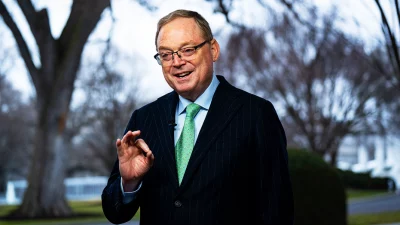
🧠Kevin Hassett opposes implementing new bureaucratic approval processes for AI development, arguing that regulatory barriers could drive innovation overseas to China and undermine US technological leadership. His position reflects broader tensions between AI safety oversight and maintaining competitive advantage in emerging technologies.
AIBearishMIT Technology Review · May 116/10
🧠Nobel Prize-winning economist Daron Acemoglu published a paper challenging Silicon Valley's AI narrative months before receiving the 2024 Nobel Prize in economics. The research presents contrarian views on artificial intelligence that diverge significantly from Big Tech's dominant perspectives on AI development and impact.
AINeutralarXiv – CS AI · May 96/10
🧠Researchers introduce a new mathematical framework for detecting and mitigating algorithmic bias in machine learning systems by using path-specific derivatives to distinguish between legitimate and illegitimate causal pathways. The approach extends fairness concepts to continuous protected attributes like age, addressing limitations in existing methods that primarily handle categorical variables.
🏢 Meta
AINeutralarXiv – CS AI · May 96/10
🧠Researchers propose an auction-based regulatory framework for AI that incentivizes companies to deploy compliant models and participate in oversight. Mathematical analysis demonstrates the mechanism achieves 20% higher compliance rates and 15% greater participation than traditional minimum-standard regulations.