#policy News & Analysis
Coverage tagged #policy has published 16 articles in the last 30 days, with sentiment turning softer. Bullish sentiment dropped to 18.8% from a higher baseline three months ago, while neutral coverage dominates at 56.3% and bearish sentiment holds at 25%. The shift reflects cooling optimism around policy developments in the crypto and AI sectors.
Top sources including CoinTelegraph, CoinDesk, and The Block have driven discussion, frequently connecting #policy to broader conversations about #regulation, #trump, #government, and #congress. Bitcoin anchors most policy-related analysis, though recent coverage has touched on regulatory implications for altcoins and AI governance. Browse the articles below for the latest developments.
sentiment · last 30d (16 articles) · -10.4pp bullish vs prior 90dTop sources:CoinTelegraph · 15CoinDesk · 11The Block · 10Fortune Crypto · 10arXiv – CS AI · 8
Most-discussed entities:OpenAI · 4Anthropic · 2GPT-4 · 1GPT-5 · 1Gemini · 1
AINeutralCrypto Briefing · Jun 36/10
🧠OpenAI has proposed a framework requiring mandatory safety evaluations for advanced AI models, positioning itself at odds with the White House's current regulatory approach. This divergence signals a shift toward civilian-led oversight mechanisms rather than national security-focused frameworks, potentially reshaping how AI governance develops globally.
🏢 OpenAI
AINeutralCrypto Briefing · Jun 36/10
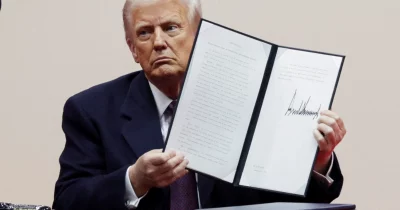
🧠President Trump signed an executive order establishing a voluntary AI safety testing framework, drawing criticism for lacking enforcement mechanisms and potentially prioritizing industry growth over regulatory oversight. The initiative may boost investor confidence in AI development but raises concerns about adequate safety standards and meaningful regulatory impact.
CryptoBearishCoinDesk · Jun 36/10
⛓️The article examines two critical perspectives on crypto's future: Alex Tapscott discusses how the stalled CLARITY Act affects everyday American consumers, while Aisha Hunt argues that crypto will achieve mainstream adoption by enhancing traditional Wall Street products rather than replacing them.
AINeutralWired – AI · Jun 36/10
🧠Donald Trump signed an AI executive order Monday night after previously shelving the original version last month. The move signals a shift in the administration's approach to AI regulation and governance.
CryptoBullishCrypto Briefing · Jun 36/10
⛓️Defend Developers PAC (DDPAC) has launched to advocate for software developer protections in the cryptocurrency sector ahead of upcoming elections. The initiative reflects crypto's expanding political influence and signals a push toward clearer regulatory frameworks that could enhance market stability.
AINeutralBlockonomi · Jun 36/10
🧠The Trump administration has issued an executive order establishing a voluntary 30-day early access period for advanced AI models before public release, allowing the federal government to conduct security assessments. The policy stems from concerns about cybersecurity risks highlighted by Anthropic's research, representing a significant shift toward government oversight of AI deployment.
🏢 Anthropic
AINeutralOpenAI News · Jun 36/10
🧠OpenAI has released a comprehensive blueprint proposing a federal governance framework for frontier AI in the United States, addressing safety, resilience, and national security concerns. The proposal seeks to establish structured oversight mechanisms for advanced AI development, signaling the industry's move toward proactive regulatory engagement rather than resistance.
🏢 OpenAI
CryptoBullishU.Today · Jun 26/10
⛓️Bill Pulte, a pro-Bitcoin conservative and current head of the Federal Housing Finance Agency, has been appointed as acting director of national intelligence. This appointment signals a potential shift toward cryptocurrency-friendly policies within U.S. intelligence and national security infrastructure.
$BTC
CryptoNeutralCoinDesk · Jun 16/10
⛓️U.S. Congress returns from recess during the week of June 1 as comment periods close on potential cryptocurrency regulations (GENIUS framework). The concurrent release of the jobs report creates a macro backdrop that could influence both regulatory sentiment and market volatility for digital assets.
AINeutralFortune Crypto · May 306/10
🧠A Harvard fellow and former financial intelligence official proposes a new AI governance framework modeled after the international financial system used to combat ISIS financing, rather than nuclear arms control analogies. The approach emphasizes collaborative oversight mechanisms and transparency protocols that have proven effective in tracking illicit financial flows.
🏢 Anthropic
AINeutralMIT Technology Review · May 296/10
🧠Pope Leo XIV's encyclical 'Magnifica Humanitas' addresses artificial intelligence development, asserting that technology is inherently non-neutral and calling for coordinated global action. The document provides a framework for individuals and policymakers to navigate AI's transformative impact on society.
GeneralBullishCrypto Briefing · May 286/10
📰The Trump administration has launched an app enabling management of child investment accounts, each funded with $1,000 government deposits. The initiative aims to introduce financial literacy and investment exposure to younger generations while potentially reshaping wealth accumulation patterns across American households.
AINeutralCrypto Briefing · May 276/10
🧠OpenAI has partnered with social media platforms to develop safeguards against AI-generated election misinformation. The collaboration signals potential industry self-regulation that could shape future AI governance policy and reduce regulatory pressure on technology companies.
🏢 OpenAI
GeneralBullishU.Today · May 266/10
📰California's 32nd Congressional District is facing a potentially significant Democratic primary that could reshape crypto policy representation. The race involves an anti-crypto incumbent congressman whose seat may be vulnerable, signaling potential shifts in political attitudes toward digital assets.
GeneralNeutralCrypto Briefing · May 116/10
📰The Council of Economic Advisers projects a $35 billion GDP boost from allowing 401(k) retirement accounts to invest in private markets. While the expansion could unlock capital for alternative investments, it introduces liquidity risks and volatility concerns that could jeopardize retirement security for millions of Americans.
GeneralNeutralCrypto Briefing · May 116/10
📰Reform UK achieved significant gains in local elections while Labour lost over 1,400 seats, signaling potential shifts in UK political dynamics. This electoral outcome reflects voter sentiment changes that could influence future policy direction, including positions on cryptocurrency regulation and financial innovation.
AINeutralWired – AI · May 76/10
🧠The Trump administration is considering a federal executive order to establish oversight of new AI models, signaling a potential shift toward regulatory frameworks for artificial intelligence development. This move reflects growing government interest in AI governance amid broader policy discussions within the administration.
$DOGE
AINeutralDecrypt · May 46/10
🧠Colorado lawmakers are proposing new legislation to replace an existing AI regulation, aiming to balance industry concerns with consumer protections. The bill represents a policy recalibration following pushback from the tech sector over compliance burdens.
GeneralNeutralCrypto Briefing · Apr 216/10
📰Christopher Warsh, nominated for Federal Reserve Chair, committed to Senator Elizabeth Warren that he would divest his assets if confirmed, addressing concerns about conflicts of interest. This pledge may improve his confirmation prospects, though political opposition and market volatility remain obstacles to his appointment.
CryptoNeutralCoinDesk · Apr 216/10
⛓️Bitcoin is trading above a critical technical level ahead of a significant hearing involving Warsh, suggesting market participants are positioning ahead of potential policy announcements that could impact cryptocurrency regulation and adoption.
$BTC
CryptoNeutralCoinDesk · Apr 196/10
⛓️Consensus' Policy Summit is gaining prominence as cryptocurrency policy discussions become increasingly critical to the industry's development. The event highlights growing recognition that regulatory clarity and government engagement are essential for crypto's mainstream adoption and institutional integration.
AINeutralarXiv – CS AI · Apr 156/10
🧠A philosophical paper argues that deepfakes violate a fundamental right to authority over one's own image and identity, distinct from harm-based objections. The work establishes that algorithmic simulation of biometric features constitutes wrongful 'identity conscription' that warrants legal and ethical protection, separating this from permissible artistic depictions.
AI × CryptoNeutralCoinDesk · Apr 135/10
🤖Tom Duff Gordon, Coinbase's VP of international policy, has departed the cryptocurrency exchange to join OpenAI as head of EMEA (Europe, Middle East, Africa) policy. The move reflects growing talent migration between crypto and AI sectors as both industries navigate complex regulatory environments.
🏢 OpenAI
AINeutralarXiv – CS AI · Apr 136/10
🧠A research paper proposes that generative AI licensing requires nuanced, conditional consent rather than binary opt-in/opt-out frameworks. The study argues inference-time verification can better balance rights holders' interests with AI developers' capabilities, using music licensing as a practical case study to demonstrate how contextual consent conditions can be enforced.
CryptoNeutralDL News · Mar 276/10
⛓️David Sacks is stepping down from his position as President Trump's crypto czar but will continue to assist the administration in a new capacity. The transition represents a role change rather than a complete departure from crypto policy influence.