#robotics News & Analysis
The #robotics tag covers 249 indexed articles, with 35 published in the last month. Recent coverage leans bullish at 57.1%, though sentiment has softened by 15.8 percentage points compared to the prior quarter, with 40% neutral and 2.9% bearish articles. ArXiv's computer science and AI sections dominate the source list, alongside coverage from AI News and TechCrunch's AI beat. Nvidia and OpenAI appear most frequently in related discussions.
#robotics content intersects regularly with #machine-learning, #reinforcement-learning, #computer-vision, and #ai-research. Scan the articles below for the latest developments and perspectives in the field.
sentiment · last 30d (35 articles) · -15.8pp bullish vs prior 90dTop sources:arXiv – CS AI · 167AI News · 7TechCrunch – AI · 6Crypto Briefing · 4Blockonomi · 3
Most-discussed entities:Nvidia · 5OpenAI · 4Haiku · 1Gemini · 1Hugging Face · 1
AIBullishTechCrunch – AI · Mar 117/10
🧠Mind Robotics, a spin-out from Rivian founded by RJ Scaringe, has raised $500 million in funding to develop AI-powered industrial robots. The startup plans to leverage data from Rivian's manufacturing facilities to train its AI systems and deploy robotics solutions within the electric vehicle company's factories.
AI × CryptoBullishCrypto Briefing · Jun 257/10
🤖General Intuition secured $320 million in funding at a $2 billion valuation to scale its AI training methodology using gameplay data. The approach focuses on enhancing spatial-temporal reasoning in AI systems, with potential applications in robotics and autonomous navigation.
AIBullishCoinDesk · Jun 257/10
🧠BlackBerry's stock is surging following strong earnings results as the company strategically repositions itself as a provider of secure, reliable software infrastructure for the AI and robotics sectors. The pivot leverages BlackBerry's legacy expertise in security and system stability to address critical needs in emerging technology markets.
AIBullishTechCrunch – AI · Jun 257/10
🧠General Intuition has secured $320 million in funding to develop AI agents trained on millions of hours of video game footage, leveraging gameplay data to teach artificial intelligence human-like intuition and decision-making capabilities. The approach represents a significant bet that interactive gaming environments can serve as effective training grounds for real-world AI applications, from robotics to autonomous systems.
AIBullisharXiv – CS AI · Jun 257/10
🧠Researchers introduce RAVEN, an agentic memory system that enables robots to perform long-horizon navigation and question-answering tasks by storing visual embeddings with spatial-temporal metadata in a vector database. The system achieves 10× lower retrieval costs than caption-based approaches while matching frontier vision-language models, and has been successfully deployed on physical robots for real-world navigation.
AIBullishCrypto Briefing · Jun 247/10
🧠Micron's CEO projects sustained multi-decade demand growth for memory chips driven by deployment of humanoid robots, signaling structural industry tailwinds beyond traditional semiconductor cycles. This forecast suggests robotics and AI infrastructure could reshape memory market dynamics and supply chain planning for the semiconductor sector.
AIBullishFortune Crypto · Jun 247/10
🧠Leading AI researchers, including the 'Godmother of AI,' are shifting focus from large language models and chatbots toward 'world models' that can perceive and react to physical environments in real-time. This paradigm shift represents a fundamental evolution in AI capabilities, moving beyond text-based understanding to embodied intelligence that interprets sensory data.
AIBullishCrypto Briefing · Jun 247/10
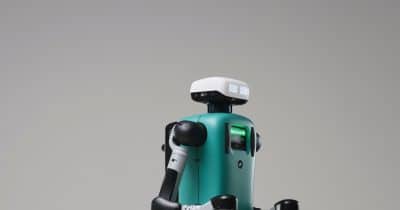
🧠Agility Robotics, a humanoid robotics company, is going public through a $2.5 billion SPAC merger backed by major investors including Foxconn and Michael Klein. The deal is expected to accelerate adoption of humanoid robots in logistics and warehouse automation, potentially reshaping labor dynamics and accelerating broader automation trends across industrial sectors.
AIBullishMIT Technology Review · Jun 237/10
🧠Researchers have developed a method using ultrasound imaging to help robotic hands achieve human-like dexterity by capturing detailed information about muscle and tendon movements beneath the skin. This breakthrough addresses a major limitation in robotics—the inability to replicate the complex coordination of 34 muscles, 27 joints, and over 100 tendons and ligaments that enable precise human hand movements.
GeneralNeutralCrypto Briefing · Jun 237/10
📰US Commerce Secretary Lutnick has signaled potential government action to counter Chinese dominance in robotics technology. Such measures could reshape global tech markets, accelerate domestic innovation, and have significant geopolitical implications for US-China relations.
AIBullisharXiv – CS AI · Jun 237/10
🧠Researchers propose a hierarchical reinforcement learning method that combines learned world models with dual-level policies to enable safe exploration in long-horizon tasks. The approach uses high-level subgoals to guide exploration toward safe regions and low-level imagined rollouts to minimize unsafe behaviors, demonstrating significant improvements over existing Safe RL baselines on complex navigation and manipulation tasks.
AIBullisharXiv – CS AI · Jun 237/10
🧠Researchers introduce GLAM (Grounded Latent-Action World Models), a machine learning framework that learns unified action representations across heterogeneous data sources with different action spaces and missing labels. The approach achieves 48% average improvement in task success rates for robotic manipulation tasks by grounding latent actions in environmental prediction rather than relying on hand-engineered alignment techniques.
AIBullisharXiv – CS AI · Jun 237/10
🧠Researchers introduce KITE, a machine learning framework that decouples task reasoning from embodiment-specific motor control to enable robot manipulation policies trained on one robot type to transfer zero-shot to structurally different robots. The approach uses learned latent representations of interaction intent based on contact patterns, requiring only kinematic model training for new embodiments without collecting new demonstration data.
AIBullisharXiv – CS AI · Jun 237/10
🧠AdaReP is a training-free algorithm that optimizes neural world-model predictive control by dynamically deciding when to replan versus reusing cached plans. By analyzing prediction mismatch propagation through local dynamics, the method achieves over 80% reduction in computational queries while maintaining task performance across simulated and real robotic manipulation tasks.
AIBullisharXiv – CS AI · Jun 237/10
🧠Researchers introduce a novel test-time scaling law for physical AI agents based on active inference principles, enabling agents to generalize to unforeseen scenarios by dynamically updating policies through reasoning about prediction errors. The approach outperforms existing reinforcement learning methods by 36% in inference efficiency on autonomous driving tasks and scales with real-world experience rather than just training data or model size.
AIBullisharXiv – CS AI · Jun 237/10
🧠Researchers introduce FOCA, a new framework for improving Vision-Language-Action (VLA) models in robotic control with limited training data. The method achieves significant performance gains in few-shot learning scenarios, reaching 95.7% success on benchmark tasks with just 20 demonstrations and up to 26% improvements on real robots.
AIBullisharXiv – CS AI · Jun 237/10
🧠Researchers introduce ALOE, an off-policy evaluation framework designed to improve vision-language-action (VLA) models through better value function estimation from heterogeneous real-world data. The method addresses a critical challenge in robotic learning by enabling more accurate credit assignment and stable policy improvement across complex manipulation tasks.
AIBullisharXiv – CS AI · Jun 237/10
🧠Researchers introduce Vesta, a unified foundation model for robotics that consolidates localization, spatial reasoning, navigation, and planning into a single generalist system rather than relying on multiple specialist models. The approach outperforms individual state-of-the-art baselines by over 20% and improves real-world robotic task success by 35%, demonstrating that generalist models can match or exceed specialized alternatives while reducing computational overhead and error cascades.
AIBullishCrypto Briefing · Jun 217/10
🧠Researchers from UC Berkeley, Nvidia, and Stanford have developed T-Rex, a framework enabling robots to respond to tactile sensations in real time. The technology enhances robotic adaptability in dynamic environments by processing physical contact feedback instantaneously, advancing automation capabilities across industrial and commercial applications.
🏢 Nvidia
AIBullishCrypto Briefing · Jun 197/10
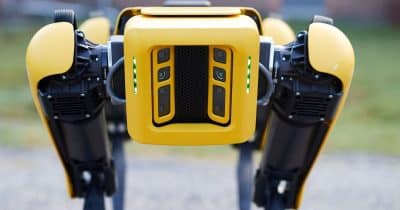
🧠Hyundai is acquiring SoftBank's remaining stake in Boston Dynamics for $325 million, completing its full ownership of the robotics company. This consolidation reflects Hyundai's strategic pivot toward autonomous robotics and industrial automation, positioning the conglomerate as a major player in the emerging robotics sector.
AIBullisharXiv – CS AI · Jun 197/10
🧠Researchers introduce ENPIRE, a framework that enables AI coding agents to autonomously improve robot manipulation policies through real-world feedback loops without human intervention. The system achieves 99% success rates on complex dexterous tasks like pin box organization and tool use, demonstrating that AI agents can now conduct independent robotics research in physical environments.
🏢 Meta
AIBullisharXiv – CS AI · Jun 197/10
🧠Researchers present HUG, a flow-matching AI model trained on 1M human grasping demonstrations that generates diverse, natural robot grasps from RGB-D images. The system outperforms existing baselines by 23-34% on real-world robotic grasping tasks and can be retargeted to various robot hands, advancing the generalization gap in robotic manipulation.
AIBullisharXiv – CS AI · Jun 197/10
🧠Researchers introduce RAINbow, a large-scale dataset of 238K episodes for DialNav, an embodied AI navigation system that requires dialog interaction. Through automatic dataset augmentation, dual-strategy training, and improved localization models, the team achieves significant performance improvements (89-100% gains), advancing the practical deployment of conversational embodied agents.
AIBullisharXiv – CS AI · Jun 197/10
🧠Researchers propose PiDR, a physics-informed neural network framework for autonomous navigation using only inertial sensors, achieving 29% positioning improvement over conventional approaches. The system addresses critical limitations of traditional deep learning by embedding physical principles directly into the model, enabling accurate dead reckoning in GPS-denied environments without requiring extensive training data.
AIBullisharXiv – CS AI · Jun 197/10
🧠Researchers demonstrate that Vision-Language-Action (VLA) models used in robotic manipulation contain significant layer-wise redundancy, enabling a training-free compression method that reduces model depth by up to 50% while improving downstream fine-tuning speed by 40-50% and inference speed by 30%. This finding suggests advanced robotics foundation models can operate effectively with substantially fewer parameters than currently assumed.