#us-iran-tensions News & Analysis
Coverage of #us-iran-tensions has generated 113 articles over the past month, with sentiment heavily skewed toward bearish outlooks at 84.1%. The small positive sentiment shift of 0.2 percentage points suggests relatively stable market perception despite ongoing developments. Bitcoin, Ethereum, and Solana feature prominently in related discussions, reflecting investor concerns about geopolitical risk and market volatility tied to regional instability.
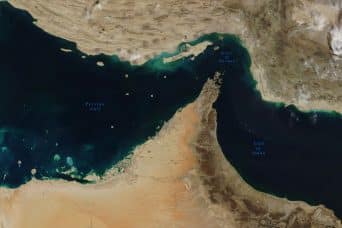
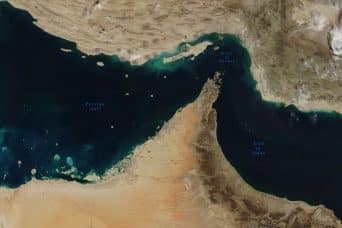
Most reporting comes through Crypto Briefing, with additional coverage from Blockonomi and CoinTelegraph. The topic frequently intersects with broader #geopolitical-risk and #market-volatility conversations, particularly around the Strait of Hormuz. Browse the articles below for recent reporting and analysis.
sentiment · last 30d (113 articles)Top sources:Crypto Briefing · 104Blockonomi · 3CoinTelegraph · 3crypto.news · 2Bitcoinist · 1
GeneralBearishCrypto Briefing · Apr 18🔥 8/10
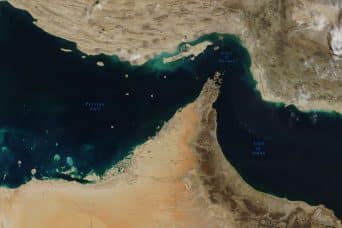
📰The Strait of Hormuz faces escalating geopolitical tensions involving US military presence and Iranian Revolutionary Guard Corps control, creating instability in one of the world's most critical maritime trade corridors. These developments pose risks to global energy supplies and trade routes, with potential ripple effects across international markets.
GeneralBearishCrypto Briefing · Apr 18🔥 8/10
📰Iran's Islamic Revolutionary Guard Corps (IRGC) has restricted passage through the Strait of Hormuz while Tehran rejects claims made by Trump, escalating geopolitical tensions. This move complicates potential US-Iran negotiations and threatens global oil market stability, with significant implications for energy prices and broader macroeconomic conditions affecting cryptocurrency markets.
GeneralBearishCrypto Briefing · Apr 18🔥 8/10
📰Iran threatens to close the Strait of Hormuz amid escalating tensions with the US, a move that could significantly disrupt global oil supply and create market volatility. The threat emerges during diplomatic tensions and has immediate implications for energy markets and broader geopolitical stability.
GeneralBearishCrypto Briefing · Apr 18🔥 8/10
📰US naval destroyers intercepted Iranian tankers in the Strait of Hormuz, escalating geopolitical tensions in a region critical to global energy markets. The incident underscores strategic vulnerabilities in one of the world's most important shipping chokepoints, with implications for market stability and commodity pricing.
GeneralBearishCrypto Briefing · Apr 18🔥 8/10
📰The US Navy seized an Iranian tanker near a Chinese warship in the Strait of Hormuz, escalating geopolitical tensions in a critical global shipping corridor. This action threatens to destabilize the region, reduce maritime traffic normalization, and increase market volatility across commodities and risk assets.
GeneralBearishCrypto Briefing · Apr 17🔥 8/10
📰A US military rescue operation has been launched following an airman being shot down by Iran, marking an escalation in regional military tensions. The incident reflects deteriorating diplomatic prospects and increasing instability that could have broader geopolitical and market implications.
CryptoBearishCrypto Briefing · Apr 17🔥 8/10
⛓️Spot cryptocurrency trading volumes have declined to their lowest levels since 2024 as US-Iran geopolitical tensions prompt investors to reallocate capital toward safer assets. This shift is expected to dampen crypto market growth and increase volatility across digital asset markets.
CryptoBearishCrypto Briefing · Apr 17🔥 8/10
⛓️Cryptocurrency markets experienced $817 million in liquidations over 24 hours as US-Iran geopolitical tensions triggered sharp volatility. The event underscores how external geopolitical risks can rapidly cascade through leveraged crypto positions, emphasizing the importance of risk management in volatile market conditions.
GeneralBearishCrypto Briefing · Apr 17🔥 8/10
📰The US Navy has issued a warning to ships regarding mine threats in the Strait of Hormuz and advised vessels to avoid the region. This security concern could trigger extended shipping disruptions with significant implications for global trade flows and regional geopolitical stability.
CryptoBullishCrypto Briefing · Apr 17🔥 8/10
⛓️Bitcoin surged to $77,000 as geopolitical tensions between the US and Iran over the Strait of Hormuz intensified, reinforcing cryptocurrency's perceived value as a hedge against macroeconomic instability. The price movement reflects broader market dynamics where institutional investors increasingly view Bitcoin as a safe-haven asset during periods of international conflict and uncertainty.
$BTC
GeneralBearishCrypto Briefing · Apr 17🔥 8/10
📰The US military has reportedly been ordered to target Iran-linked vessels globally, signaling potential military escalation in 2026. This geopolitical development could intensify regional tensions, trigger allied responses, and complicate diplomatic resolution efforts, with potential spillover effects on global markets and trade routes.
GeneralBearishCrypto Briefing · Apr 17🔥 8/10
📰Iran has acquired a Chinese spy satellite, escalating regional tensions and complicating US-Iran diplomatic efforts. China's involvement in the acquisition signals deepening geopolitical realignment and strategic cooperation between Beijing and Tehran that could impact global stability and market sentiment.
CryptoNeutralNewsBTC · Apr 13🔥 8/10
⛓️Bitcoin's price trajectory is increasingly dependent on US-Iran geopolitical tensions rather than internal crypto market dynamics. Analyst Sam Daodu presents three scenarios—a bullish $100K year-end case via peace deal, a neutral $75-80K base case around April 15 negotiations, and a bearish $55-65K case if ceasefire collapses—with the base case viewed as most probable.
$BTC$ETH
CryptoBearishCoinTelegraph · Apr 12🔥 8/10
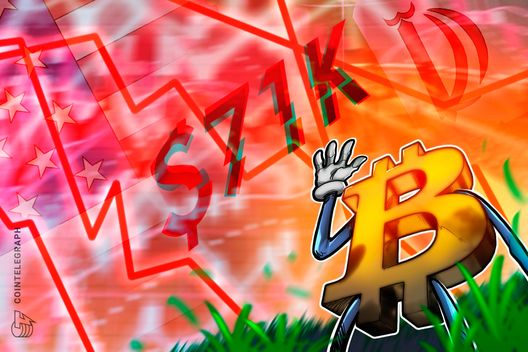
⛓️Bitcoin dropped below $71,000 as geopolitical tensions between the US and Iran escalated following failed diplomatic negotiations, with the Strait of Hormuz becoming a focal point for market concern. The sell-off reflects crypto's sensitivity to macroeconomic and geopolitical risk factors that typically drive safe-haven asset rotation.
$BTC
GeneralBearishCrypto Briefing · Apr 11🔥 8/10
📰Robert Pape estimates a 75% probability of escalating US-Iran conflict, raising critical questions about nuclear security and Iran's regime stability. The analysis highlights vulnerabilities in controlling Iran's nuclear capabilities amid heightened geopolitical tensions, with significant implications for regional stability and global markets.
CryptoNeutralcrypto.news · Mar 25🔥 8/10
⛓️US-Iran tensions in March 2026 caused significant market volatility with oil plunging 13% while Bitcoin rebounded above $71,000. Trump's 48-hour ultimatum to Iran created shockwaves across global financial markets, with quantitative strategies emerging as a safe haven during the geopolitical crisis.
$BTC
GeneralBearishCrypto Briefing · Jun 5🔥 8/10
📰The US military shot down Iranian drones near the Strait of Hormuz following tensions triggered by Trump's recent remarks, escalating geopolitical conflict in a critical global shipping corridor. This incident heightens regional instability and poses risks to energy markets and cryptocurrency volatility through broader macroeconomic disruption.
GeneralBearishCrypto Briefing · Jun 5🔥 8/10
📰OPEC oil production has fallen to decades-low levels amid escalating US-Iran tensions, creating significant vulnerabilities in global energy supply chains. This geopolitical friction threatens sustained price increases and heightened market volatility that could ripple across commodities and broader financial markets.
GeneralBearishCrypto Briefing · Jun 3🔥 8/10
📰Former President Trump claimed direct responsibility for initiating military conflict with Iran while denying Israeli influence on the decision. This assertion reflects escalating geopolitical tensions that reduce diplomatic resolution prospects and increase macro-level volatility affecting risk assets including cryptocurrencies.
GeneralBearishCrypto Briefing · Jun 3🔥 8/10
📰The US conducted self-defense strikes against Iranian drones and missiles targeting Kuwait and Bahrain, escalating Middle Eastern tensions. Prediction markets show a 17.5% probability of US invasion of Iran and 25.9% for US strikes across 8 countries in 2026, signaling investor concerns about broader regional conflict.
GeneralBearishCrypto Briefing · Jun 27/10
📰The US Central Command conducted military strikes against Iranian-flagged oil tankers in the Gulf of Oman as part of a blockade enforcement operation, disabling vessels with precision munitions. This geopolitical escalation in a critical shipping lane has potential implications for global energy markets and cryptocurrency volatility tied to macro risk sentiment.
CryptoNeutralCrypto Briefing · Jun 1🔥 8/10
⛓️US military strikes on Iranian sites triggered Iranian missile retaliation toward Kuwait, demonstrating how geopolitical crises drive real-time crypto market activity. The incident underscores cryptocurrency's 24/7 trading infrastructure as a hedge during traditional market closures, potentially reshaping how global investors approach safe-haven assets during international conflicts.
CryptoBearishCrypto Briefing · Jun 17/10
⛓️Bitcoin dropped below $72,000 as US-Iran geopolitical tensions triggered market volatility and forced liquidations in leveraged positions. The decline underscores cryptocurrency's sensitivity to macro risk events and highlights structural vulnerabilities in leveraged trading ecosystems.
$BTC
GeneralBearishCrypto Briefing · Jun 17/10
📰Oil prices are rising due to escalating US-Iran geopolitical tensions, despite signals from Trump administration officials suggesting willingness to negotiate. The tension highlights how regional conflicts continue to disrupt global energy markets and create uncertainty for commodity-dependent economies and crypto markets sensitive to macroeconomic volatility.
GeneralBearishCrypto Briefing · Jun 1🔥 8/10
📰US military strikes on Iranian air defenses and drone facilities have escalated tensions in the Strait of Hormuz, a critical global oil chokepoint. The geopolitical conflict threatens to disrupt oil supply chains and destabilize financial markets, creating ripple effects across cryptocurrency assets that typically correlate with macroeconomic uncertainty.